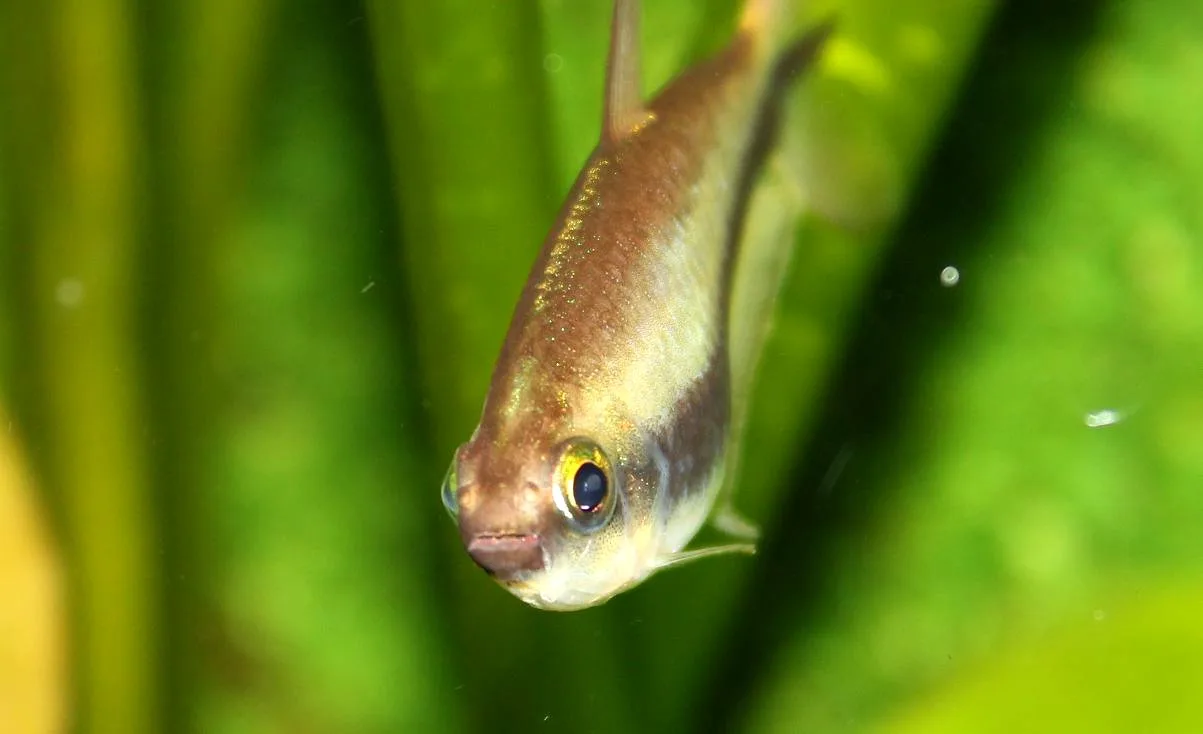
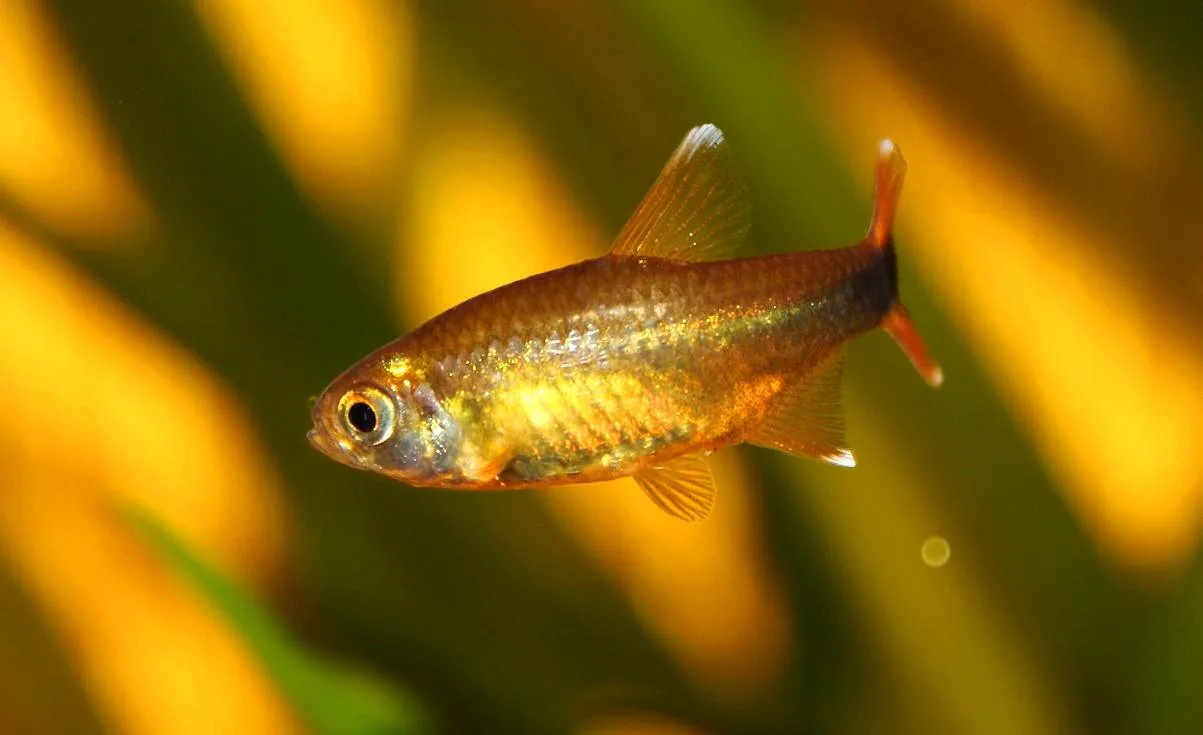
Hognose brochis
Brochis multiradiatus
18 views
A cory to 12 cm from the upper Napo. Not Brochis splendens. Corydoras multiradiatus is the synonym.
- Temperature
- 22 – 27 °C
- pH
- 6 – 7.5 pH
- General hardness
- 2 – 15 °dH
- Maximum size
- 12 cm
- Minimum group size
- 6
- Minimum tank size
- 200 L
2 min read · 238 words
Fresh water
Quick facts
Place in the aquarium
Highlighted are the water layer and the spots where the species usually stays in the tank.
- Near the bottom Mostly stays just above the bottom. Food has to reach the substrate.
- Substrate Sifts through the substrate or burrows into it. Fine, rounded sand without sharp edges suits it.
Shrimp in the tank
Shrimplets at risk
- Not shrimp safe
- Dwarf shrimp at risk
- Shrimplets at risk
- Shrimp safe
- Adult dwarf shrimp
- Safe
- Shrimplets
- Get eaten
- Safe from shrimp size
- about 1.5 cm
Adult dwarf shrimp are usually safe with the hog-nosed catfish. Size figures range from 6.7 to 12 cm, and it and eats worms, bottom-dwelling crustaceans, insects and plant matter. As a corydoras it has a small, underslung mouth. Shrimp from about 1.5 cm are safe. Juvenile shrimp on the bottom are prey, however.
Dense moss and plants away from the sand protect the young. For targeted shrimp breeding a separate tank is safer.
Home & range
Hatched countries are where the species occurs. It lives in particular waters there, not across the whole country. The points name known waters for orientation, not collection sites.
- Country of origin
- Water for orientation
Native
Overview
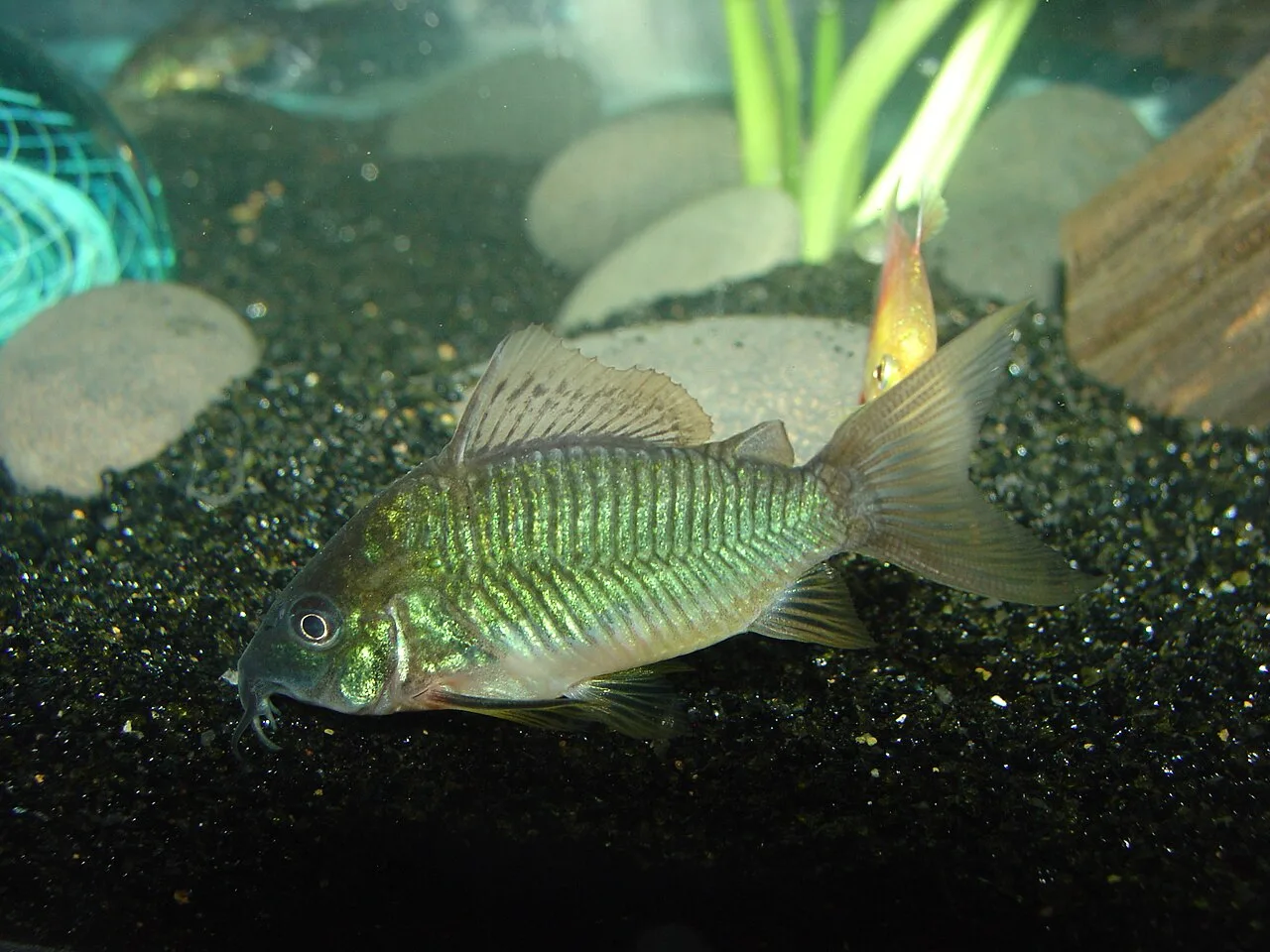
Similar to the emerald cory, but a more pointed snout, longer, a dorsal fin with 15 to 17 soft rays instead of 11 to 12. splendens stays at 7.5 cm for females and 9 cm for males. Those figures belong to the other species.
Systematics and features
Gustavo Orcés-Villagómez described the species in 1960 as Chaenothorax multiradiatus. It belongs to the corydoras catfishes (Corydoradinae) in the family Callichthyidae and is sometimes still listed under Corydoras.
Besides the pointier snout and the 15 to 17 soft rays of the dorsal fin, the bony plates also separate the species from the emerald catfish. Above the mid-line there are 25 plates instead of 24, below it 23 instead of 22. Only one plate lies between the dorsal and adipose fins, against one to two in the emerald catfish. Fin formula: dorsal i/15–17, anal 7, pectoral i/10.
Size figures range from 6.7 to 12 cm. The species is rare in the trade or confused with the emerald catfish.
Origin & habitat
This describes the origin, not how to furnish the aquarium.
The far west of the Amazon basin, upper Río Napo, Ecuador and Peru. Both countries stay coarse.
Its habitat has pH 6.0 to 7.2, a hardness of 15 °dGH and 21 to 24 °C.
Diet
The species eats worms, bottom-dwelling crustaceans, insects and plant matter.
Reproduction
The confusion with Brochis splendens is the reason for the separate characters.
The species probably spawns like Corydoras. The eggs are said to be laid in dense vegetation and not guarded by the parents, but this is not confirmed. In 2023 the IUCN assessed the species as least concern.
More species in this group

Similar water needs
Species with a similar temperature, a similar pH and a comparable adult size. Whether their behaviour fits as well is what the compatibility check is for.