
Playfair's panchax
Pachypanchax playfairii
1 view
A hardy killifish from the western Indian Ocean with red-dotted scales. It hunts at the surface and likes to jump.
- Temperature
- 22 – 26 °C
- pH
- 6.5 – 7.5 pH
- General hardness
- 5 – 15 °dH
- Maximum size
- 10 cm
- Minimum tank size
- 80 L
1 min read · 157 words
Quick facts
Place in the aquarium
Highlighted are the water layer and the spots where the species usually stays in the tank.
- Water surface Stays just below the surface. The top needs a calm current and a cover.
- Upper water Usually stays in the top third of the tank.
- Dense plants Looks for dense planting as cover, retreat or grazing ground.
Shrimp in the tank
Dwarf shrimp at risk
- Not shrimp safe
- Dwarf shrimp at risk
- Shrimplets at risk
- Shrimp safe
- Adult dwarf shrimp
- At risk
- Shrimplets
- Get eaten
- Safe from shrimp size
- about 4 cm
For dwarf shrimp Playfair's panchax is a risk. It reaches about 10 cm, has a large mouth and hunts small animals. Juvenile shrimp and dwarf shrimp are eaten when they come near. Larger shrimp from about 4 cm are usually safe.
It hunts mainly near the surface. Shrimp hidden on the bottom have better chances, but that is not enough for breeding.
Home & range
Hatched countries are where the species occurs. It lives in particular waters there, not across the whole country. The points name known waters for orientation, not collection sites.
- Country of origin
- Water for orientation
Native
Overview
Pachypanchax playfairii reaches about 10 cm. The body is yellowish to olive green, and males carry rows of red dots on the scales. Seen from above the scales stand out slightly. That is normal for this species and not a sign of disease. Females carry a dark spot in the dorsal fin.
It is not the striped panchax Aplocheilus lineatus, which comes from India and wears bars.
Origin & habitat
This describes the origin, not how to furnish the aquarium.
Waters in the Seychelles, on Madagascar and along the East African coast. The countries stay a coarse origin. Warm, plant-rich water matches that.
Care
Surface
22 to 26 °C, pH 6.5 to 7.5. One male with females from about 80 litres. Floating plants, hiding places, a tight cover.
Company
Fish that do not fit in its mouth. Males fight among themselves.
Diet
Meaty food. Mosquito larvae, fruit flies, brine shrimp, flakes from the surface.
Behavior
Males are rough toward each other. Toward larger fish it stays peaceful.
Reproduction
Plant spawner near the surface. The parents eat eggs and young.
More species in this group
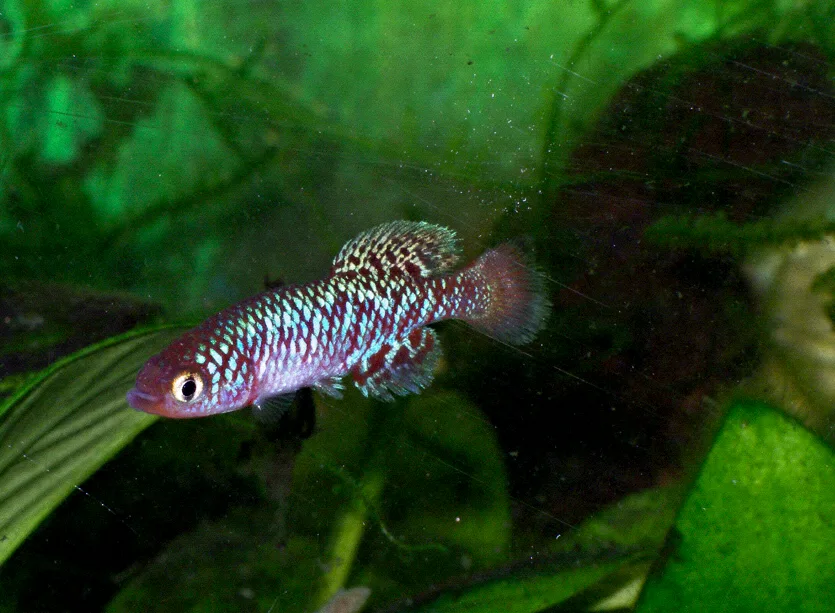
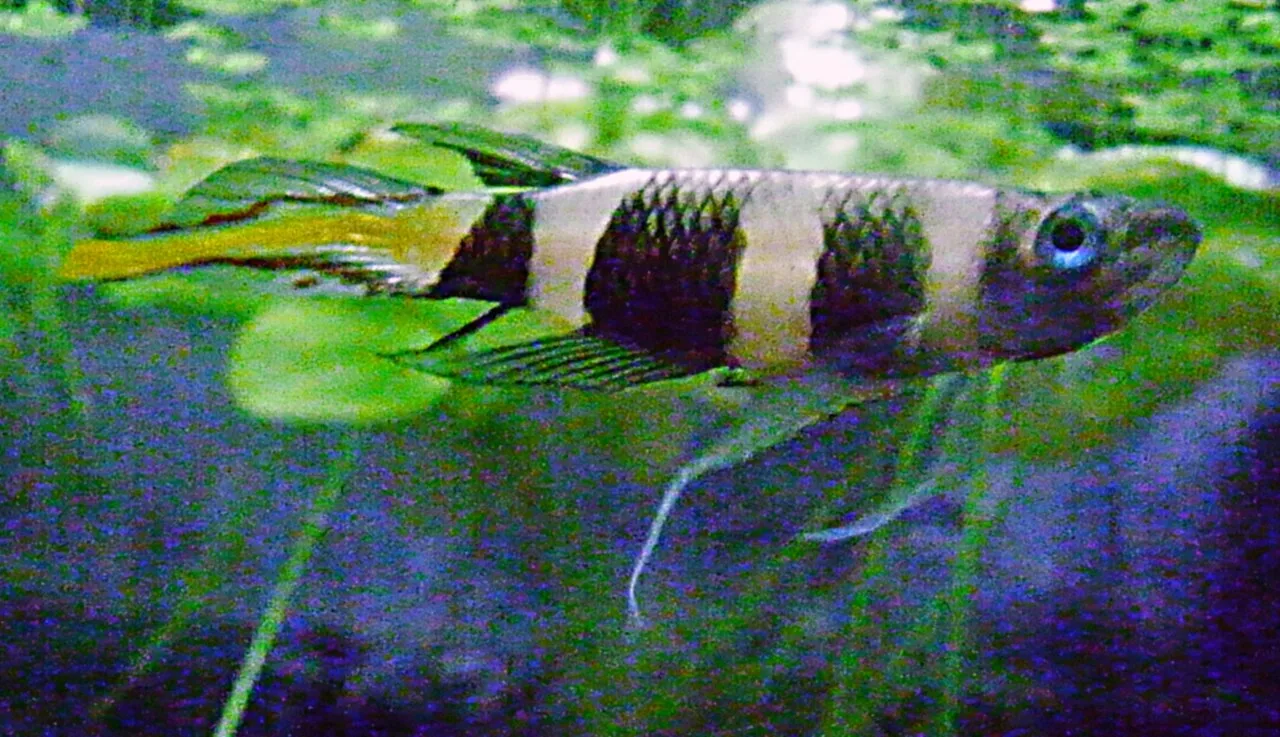
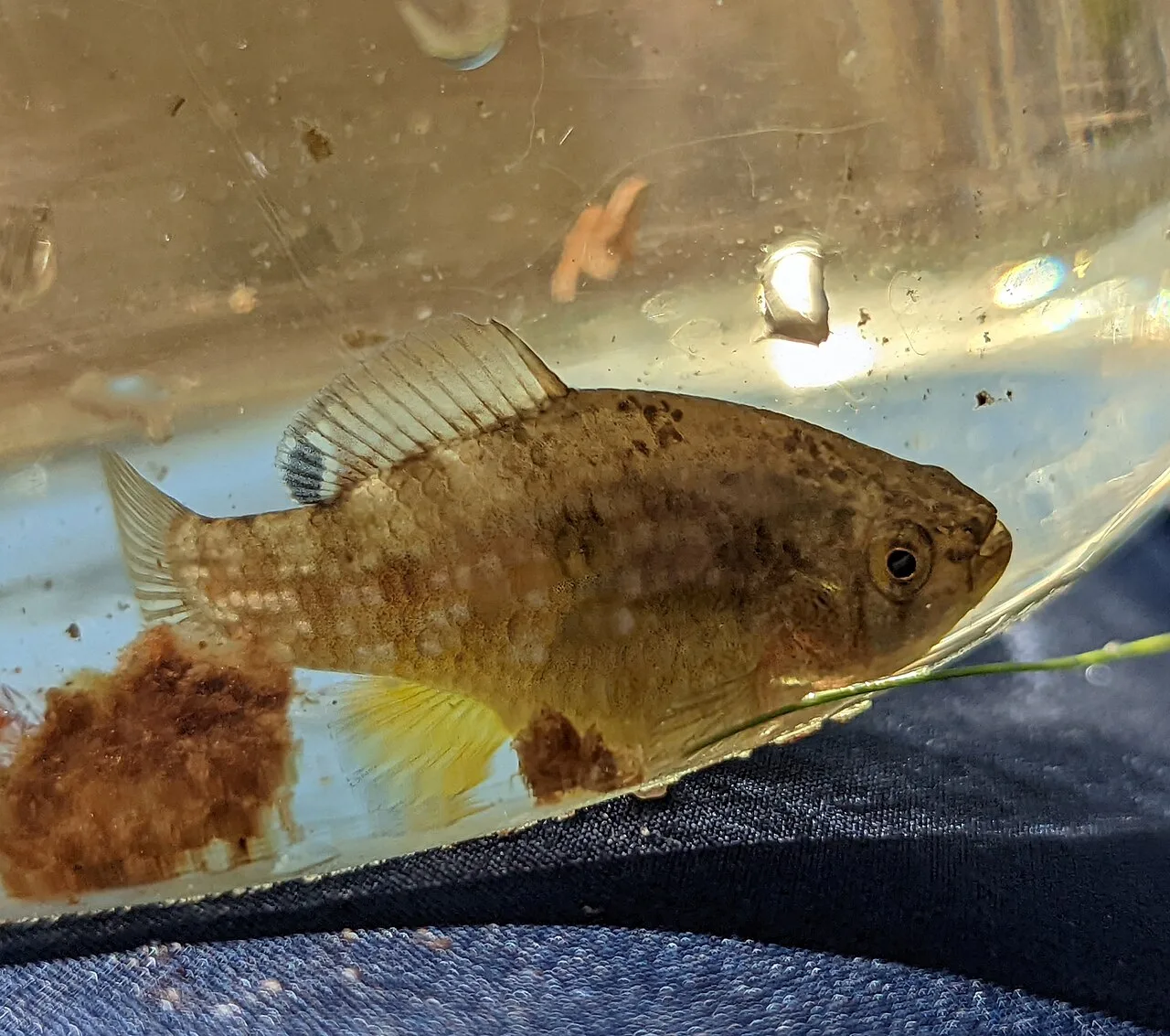
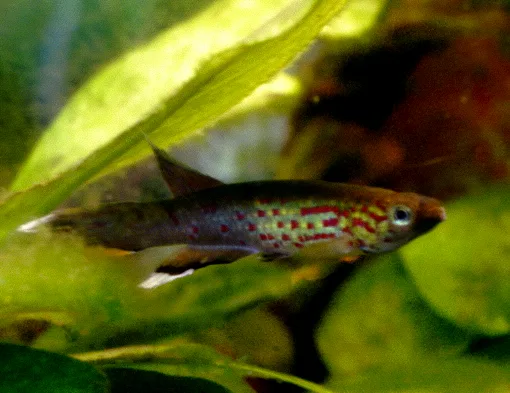
Similar water needs
Species with a similar temperature, a similar pH and a comparable adult size. Whether their behaviour fits as well is what the compatibility check is for.


