Lyretail killifish
Aphyosemion australe
17 views
A killifish from Gabon, about 6 cm. The eggs develop in water and in drought.
- Temperature
- 22 – 26 °C
- pH
- 5.5 – 6.5 pH
- General hardness
- 0 – 20 °dH
- Maximum size
- 6 cm
- Minimum tank size
- 20 L
3 min read · 387 words
Fresh water
Quick facts
Further published values
- Lifespan
- 3 a
Place in the aquarium
Highlighted are the water layer and the spots where the species usually stays in the tank.
- Upper water Usually stays in the top third of the tank.
- Dense plants Looks for dense planting as cover, retreat or grazing ground.
Shrimp in the tank
Dwarf shrimp at risk
- Not shrimp safe
- Dwarf shrimp at risk
- Shrimplets at risk
- Shrimp safe
- Adult dwarf shrimp
- At risk
- Shrimplets
- Get eaten
- Safe from shrimp size
- about 3 cm
The Cape Lopez lyretail is only partly suitable for dwarf shrimp. It grows to about 6 cm and does best on live food, that is, small animals of the kind young and small shrimp represent. Young shrimp are eaten, and smaller adult dwarf shrimp occasionally too. Animals from about 3 cm are usually safe. In a dark, densely planted species tank with moss and many hiding places hardy Neocaridina can survive, but their numbers stay small. For shrimp breeding a separate tank is the better choice.
Home & range
Hatched countries are where the species occurs. It lives in particular waters there, not across the whole country. The points name known waters for orientation, not collection sites.
- Country of origin
- Water for orientation
Native
Overview
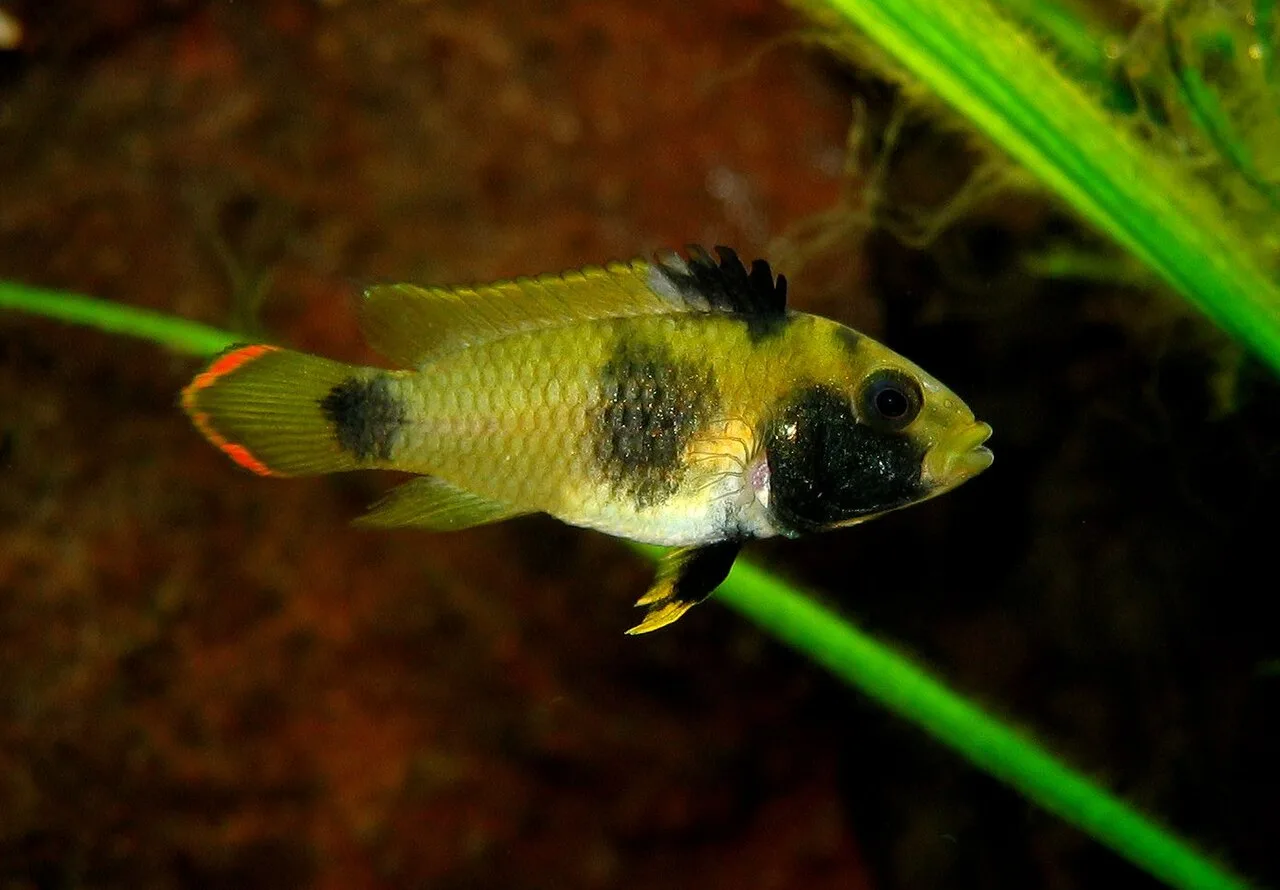
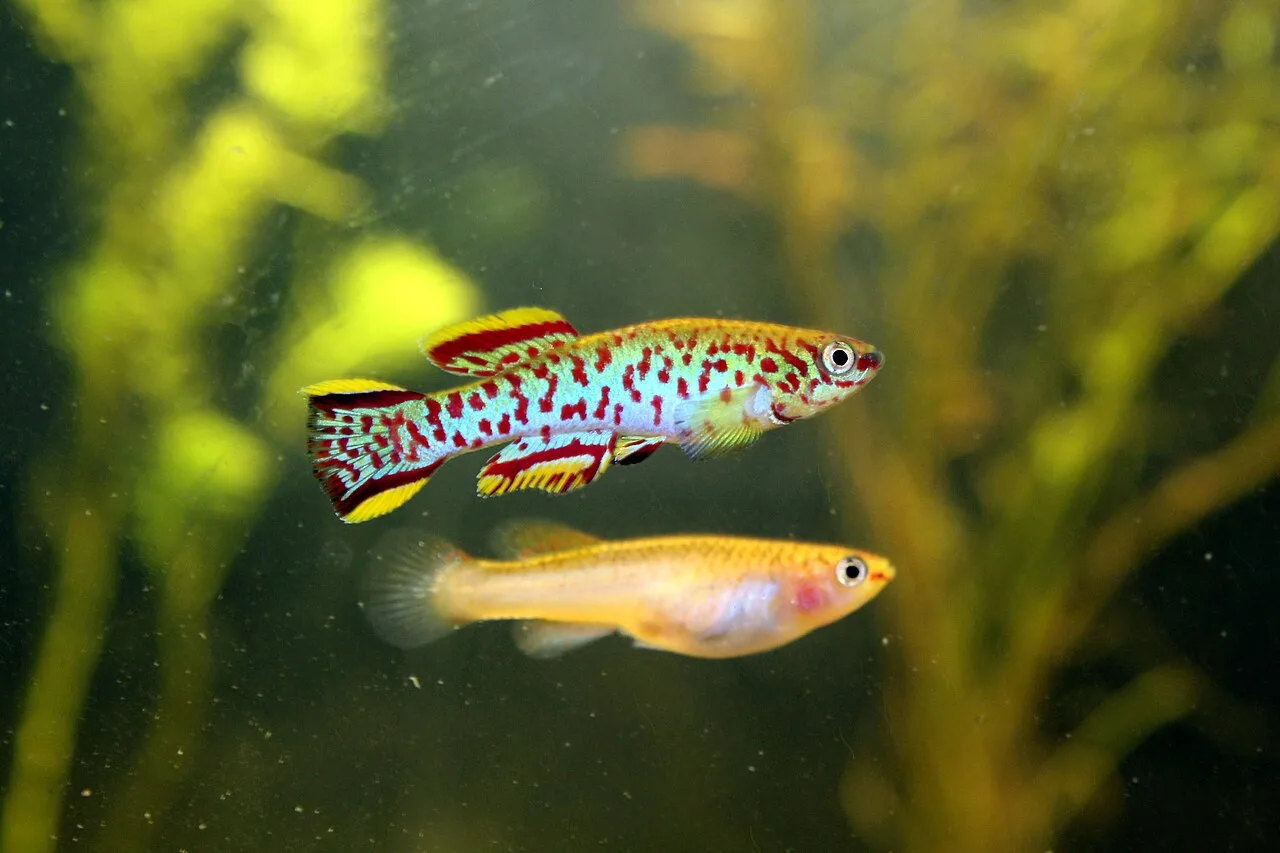
Also called the lyretail. Males are brightly coloured with extended fin tips, females a little smaller with rounded fins. An age of three years is reachable.
A semi-annual killifish
The Cape Lopez lyretail is a semi-annual species: its eggs develop both in water and during a dry phase. In English it is also called lyretail panchax or golden panchax. More recent classifications place it in the family Aplocheilidae. Rachow described it scientifically in 1921, but M. Wolmer had already brought live fish to Europe in 1913. For almost a hundred years it has been bred continuously and in large numbers in human care.
Forms and features
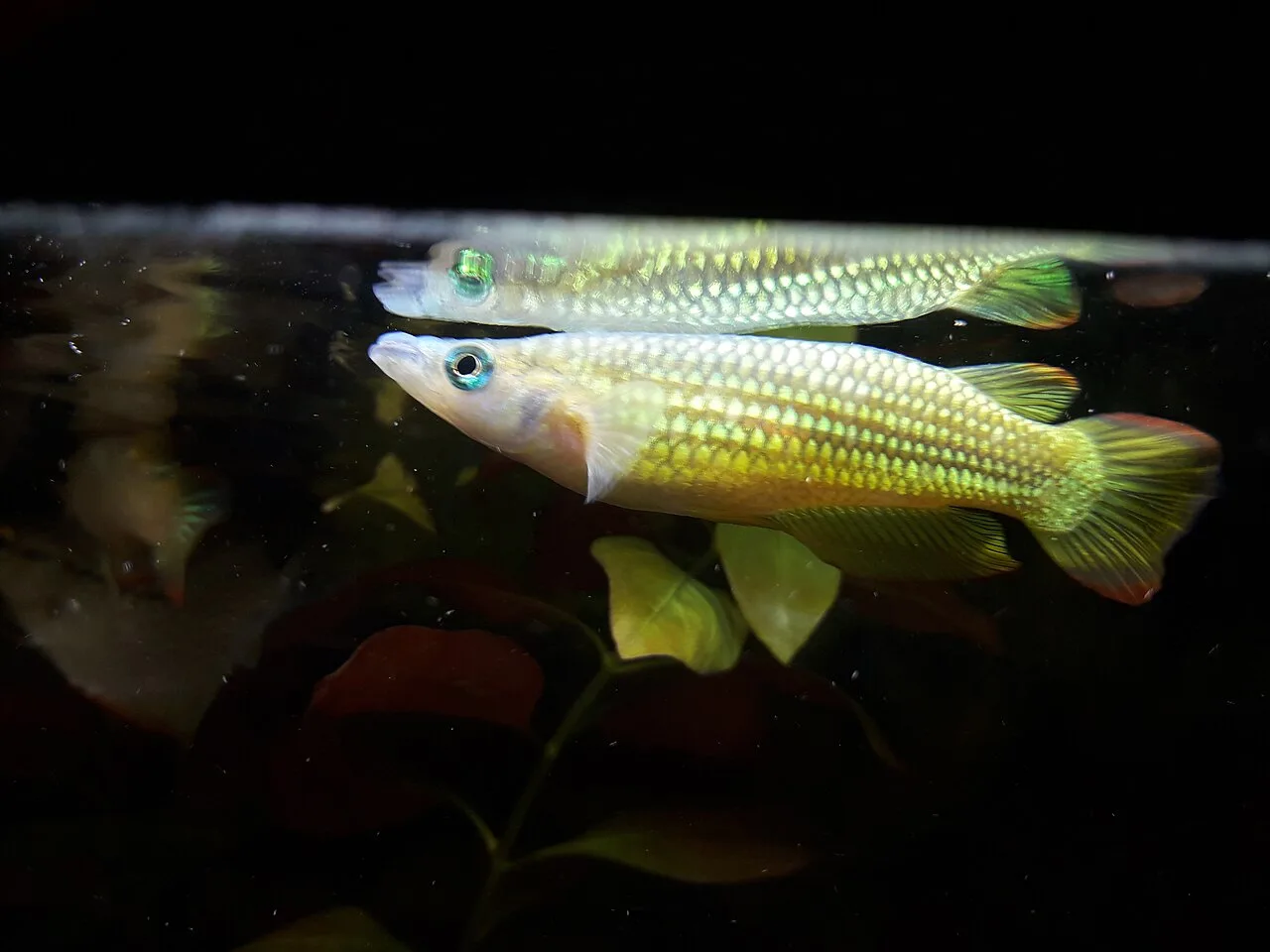
The tail fin is lyre-shaped, as is typical of the genus. The wild form is brown and called chocolate in the hobby. There is also an orange gold form, which arose in 1952 as a spontaneous mutation with the Finnish aquarist Hjerssen. J. J. Scheel noted in 1970 that these fish are not a separate species and rejected the name Aphyosemion australe hjersseni. Around 2022 an albino strain appeared from this line, and there are also darker chocolate and spotless varieties. Females are plainer, brownish tan in the wild form and light tan in the gold form.
Origin & habitat
This describes the origin, not how to furnish the aquarium.
Mainly the west coast of Africa, Gabon. Gabon stays coarse.
The species lives around Cape Lopez and in the surrounding areas of Gabon, hence the trade name.
Care
For a species tank from 20 litres, breeding better in 50 litres, soft water of 0 to 20 °dH and 22 to 26 °C, dark substrate, cover and shade. That is the figure for breeding and the species tank.
The Cape Lopez lyretail is one of the most popular and most easily available killifish. For breeding a tank of 50 litres with good planting, a dark bottom such as peat, many hiding places and shade suits.
Diet
The breeding fish should be well fed.
The fish readily take commercial flakes and frozen live food. Like all killifish, however, they do better on live food from clean cultures or clean waters.
Behavior
Suited to a community tank of peaceful fish.
Reproduction
Two or three females to one male. The eggs go into a spawning mop.
In the aquarium they spawn in almost any water, preferably in fine-leaved plants such as aquatic moss or in a spawning mop of nylon threads. At a preferred 26 °C the young hatch after 14 days.
Gallery
More species in this group
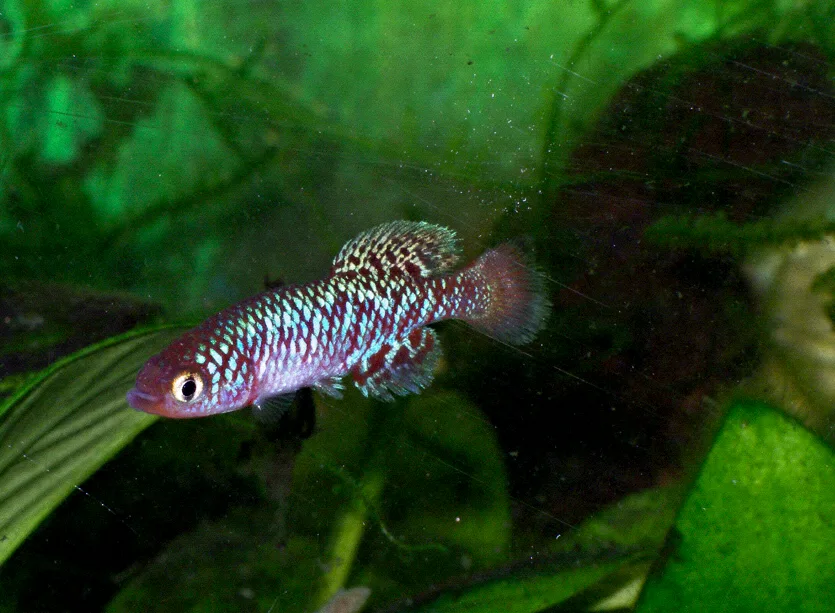
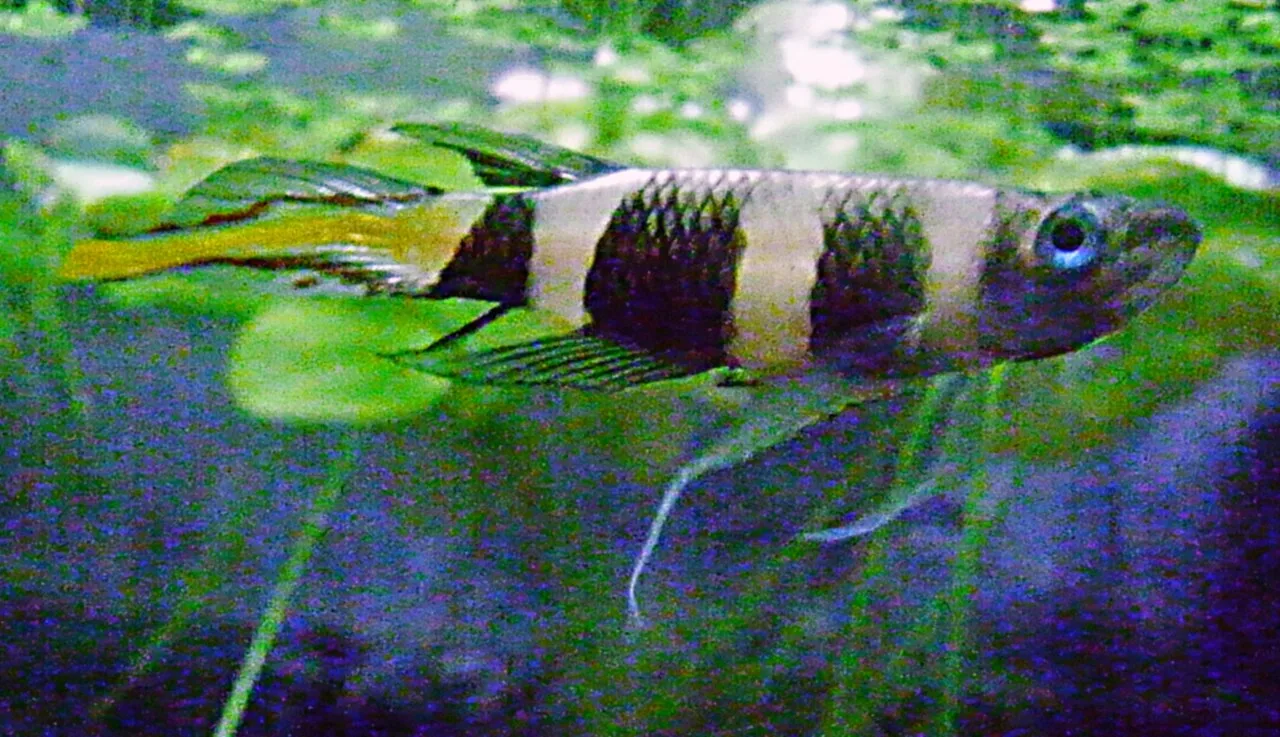
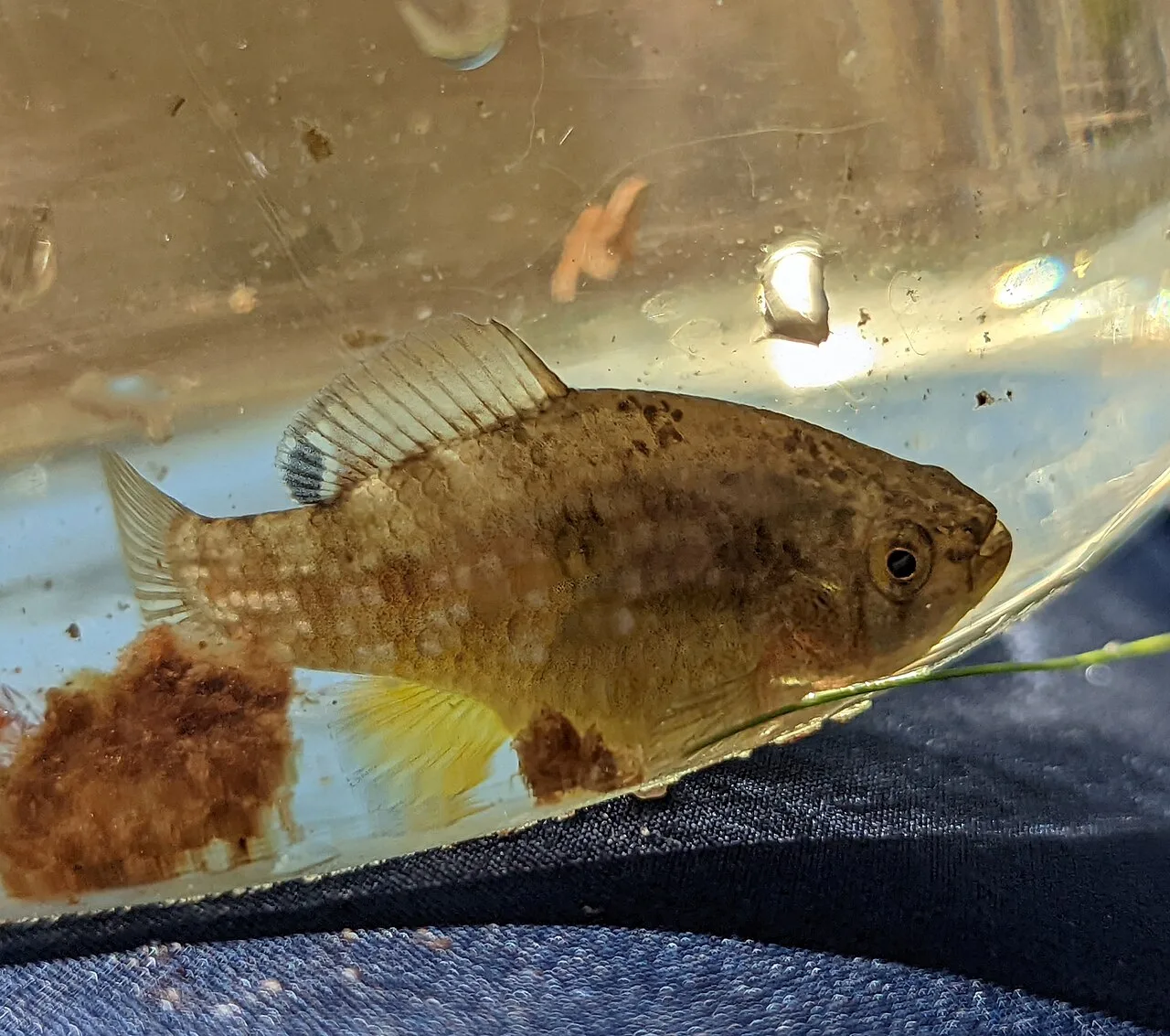
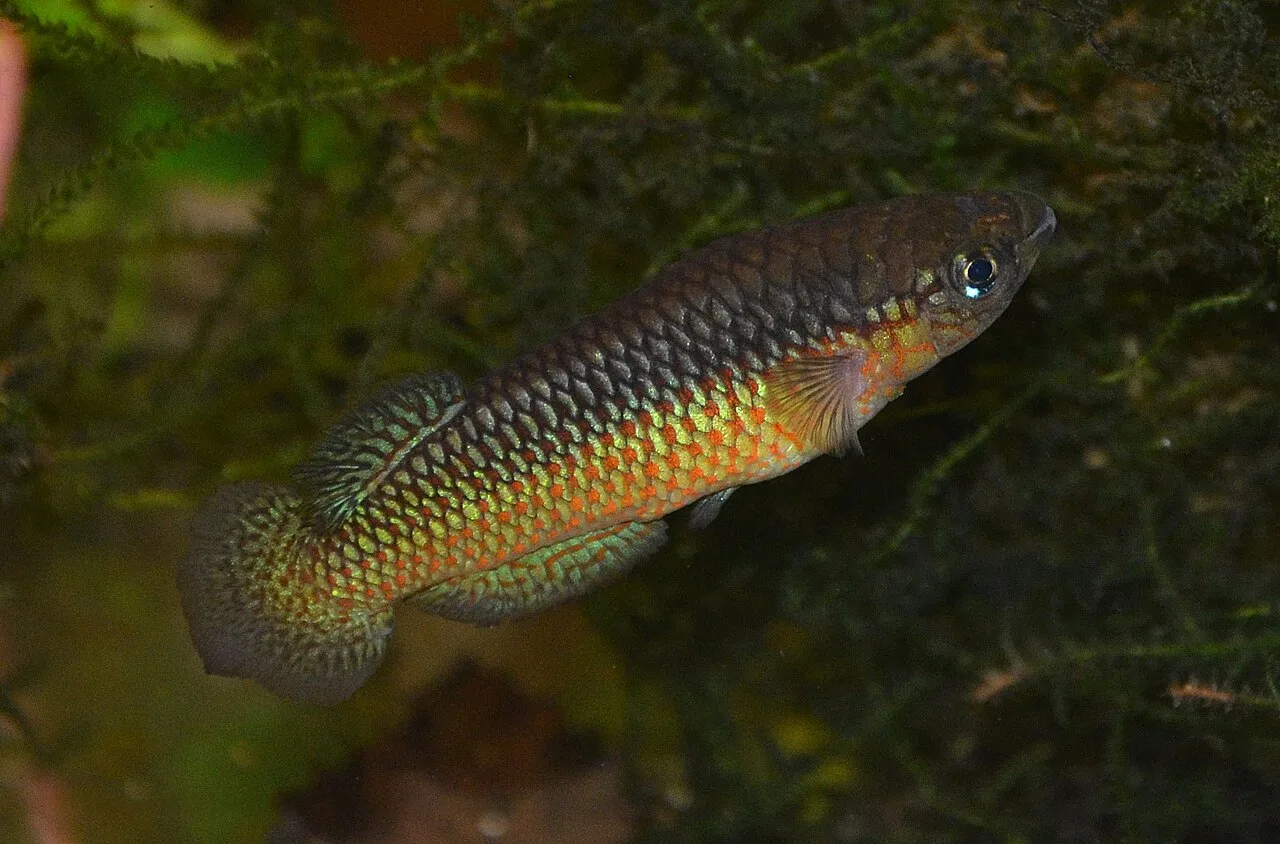
Similar water needs
Species with a similar temperature, a similar pH and a comparable adult size. Whether their behaviour fits as well is what the compatibility check is for.