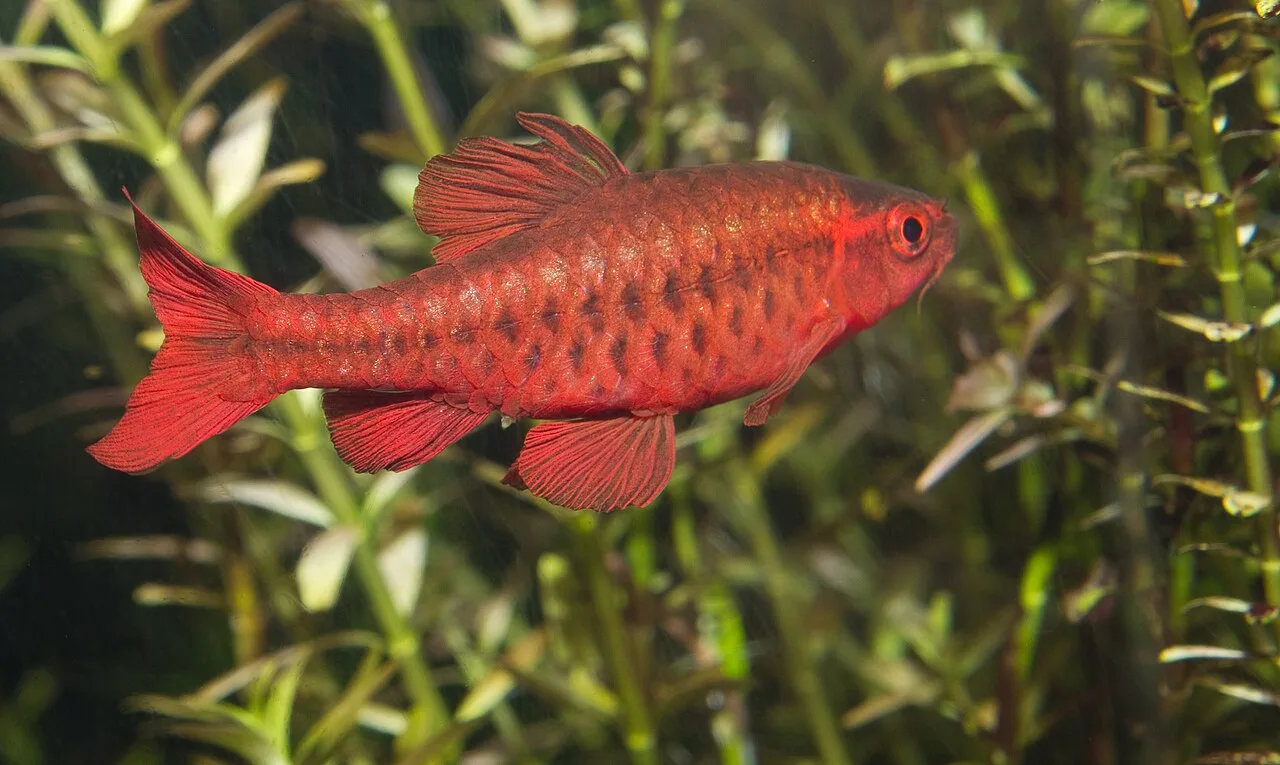
Bluefin notho
Nothobranchius rachovii
19 views
A seasonal fish, males 5 cm, females 4 cm. The emphasis is Mozambique.
- Temperature
- 20 – 24 °C
- pH
- 6 – 7 pH
- General hardness
- 4 – 12 °dH
- Maximum size
- 5 cm
- Minimum tank size
- 40 – 60 L
3 min read · 466 words
Fresh water
Quick facts
Further published values
- Lifespan
- 1 – 1.5 a
Place in the aquarium
Highlighted are the water layer and the spots where the species usually stays in the tank.
- Middle water Usually stays in the middle of the tank, between bottom and surface.
- Near the bottom Mostly stays just above the bottom. Food has to reach the substrate.
- Substrate Sifts through the substrate or burrows into it. Fine, rounded sand without sharp edges suits it.
Shrimp in the tank
Dwarf shrimp at risk
- Not shrimp safe
- Dwarf shrimp at risk
- Shrimplets at risk
- Shrimp safe
- Adult dwarf shrimp
- At risk
- Shrimplets
- Get eaten
- Safe from shrimp size
- about 3 cm
The bluefin notho is a risk for small dwarf shrimp. It grows to 5 to 6 cm, lives near the bottom and eats zooplankton and other small bottom animals. Small Neocaridina and Caridina fit that prey pattern.
Baby shrimp are certainly eaten, and young adults under about 3 cm are at risk too. Larger shrimp stand a better chance. Because the species is usually kept in its own tanks with a peat bottom, shrimp are out of place there anyway. A small separate tank with moss and leaf litter is the most reliable solution for a stable shrimp colony and needs little effort to run.
Home & range
Hatched countries are where the species occurs. It lives in particular waters there, not across the whole country. The points name known waters for orientation, not collection sites.
- Country of origin
- Water for orientation
Native
Overview
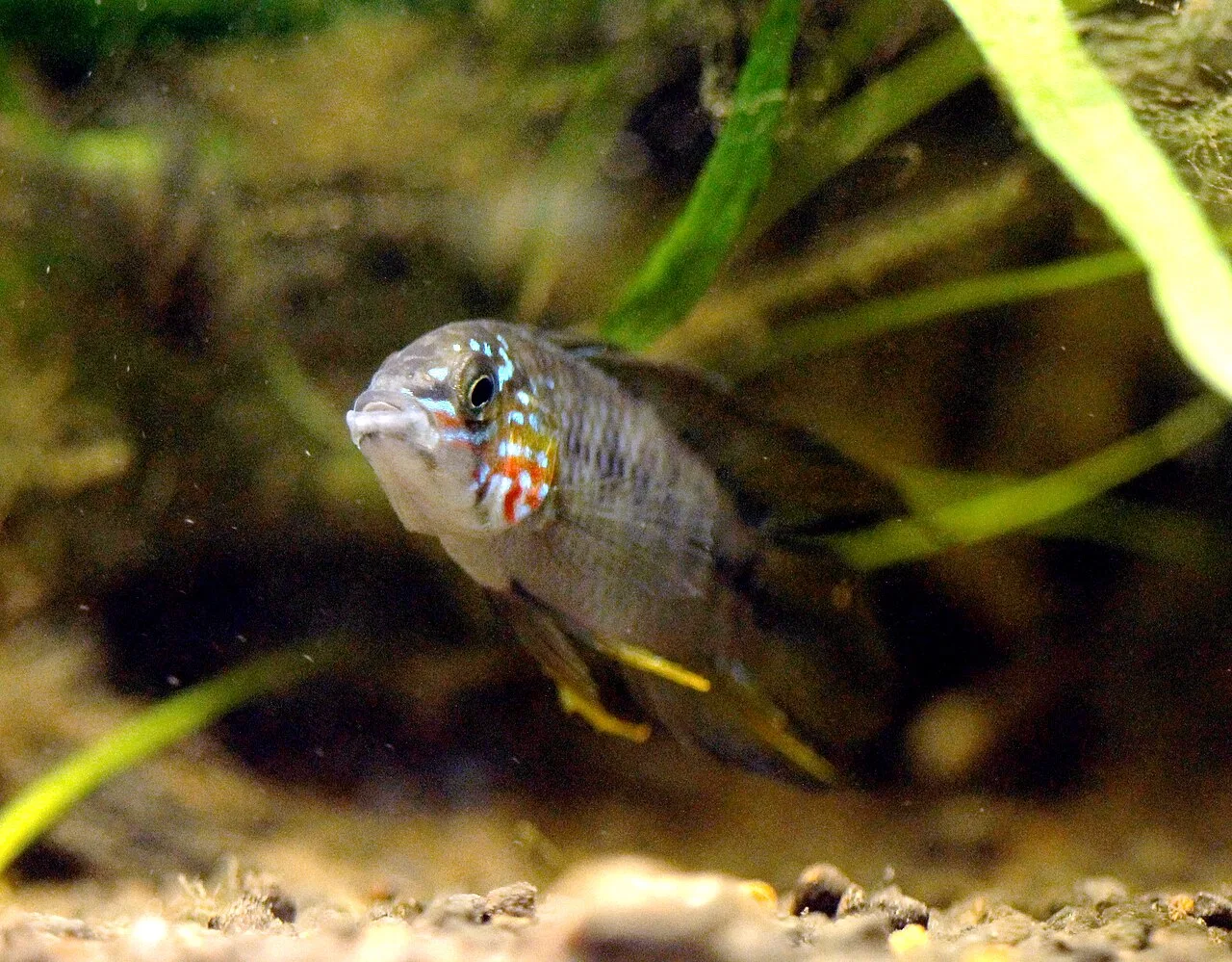
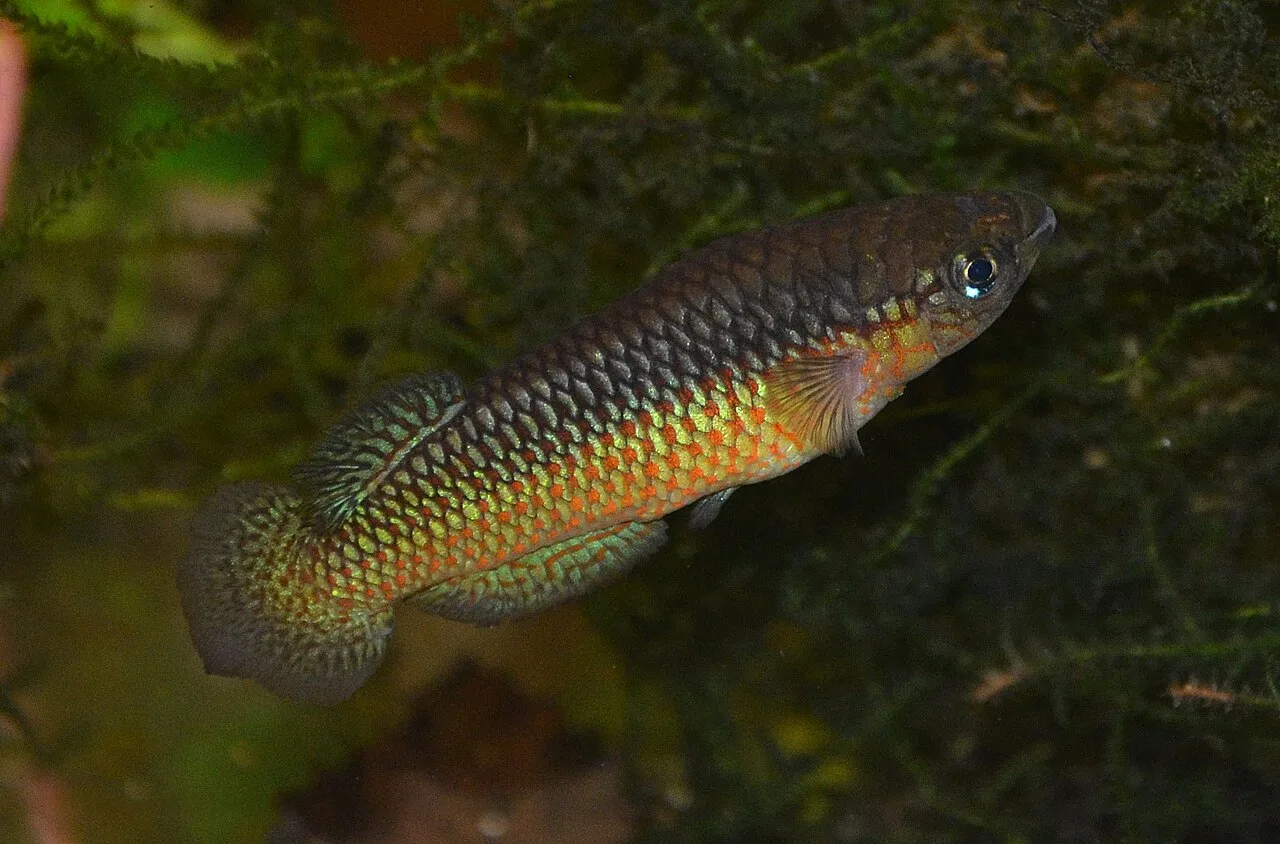
The colour of the males is very variable: blue-red, blue-white or red-white, often a red tail margin, dorsal and anal fins usually blue or brownish with red or white spots. The variations are not species.
Colour and name
Males grow to about 5 cm and females to about 4 cm, by other figures up to 6 cm. Males are very variably coloured, blue-red, blue-white or red-white. The edge of the tail is often red, and the dorsal and anal fins are blue or brownish with red or white dots. In the trade there are, for example, a dark form KNP Black and a form Red with a red head. Females are plainly coloured in all forms.
Ernst Ahl described the species in 1926 from Beira in Mozambique. The name honours the Hamburg aquarist Arthur Rachow, who donated fish to the Museum für Naturkunde in Berlin. The IUCN lists it as least concern.
The KNP Black form was collected in 1984 in Kruger National Park in South Africa, though this is disputed. One synonym is Adiniops rachovii. Because the fish die at the end of the breeding season, the species counts as an annual fish. In English it is called the bluefin notho.
Origin & habitat
This describes the origin, not how to furnish the aquarium.
East Africa, mainly Mozambique, seasonally filled pools and ponds. Only Mozambique stays coarse.
The species lives in Mozambique, in the strict sense on the floodplains of the lower Zambezi and the Pungwe. Its waters are pools and depressions that dry out every year. They usually lie unshaded and are not overgrown with aquatic plants. In the wild the fish rarely live longer than half a year, in aquaria up to about a year and a half.
Care
The natural lifespan ends when the pools dry. No figure for the aquarium is given there.
Unfertilised fibrous peat serves as the bottom. 20 to 24 °C, 4 to 12 °dH and pH 6 to 7 are given, along with soft water and 40 to 60 litres. Males are aggressive towards each other. Pencilfish, corydoras, kuhli loaches, peacock gudgeons and similarly calm species are named as tankmates, along with dense planting.
Diet
The fish live close to the bottom and eat zooplankton and other small bottom animals.
Behavior
A seasonal fish, not a fish from a permanent river.
Reproduction
A spawning protocol is not filled in.
The male courts in front of the female, circles her and leads her to the spawning site. The pair dives a few centimetres deep into the bottom. When the water dries out, the eggs remain in the damp soil and the young hatch with the next rain. In aquaria the peat with the eggs is dried to residual moisture and stored in a plastic bag without letting it mould. After five to seven months it goes into water, and the young hatch within a few hours. Males mature after about twelve weeks.
Gallery
More species in this group
Similar water needs
Species with a similar temperature, a similar pH and a comparable adult size. Whether their behaviour fits as well is what the compatibility check is for.