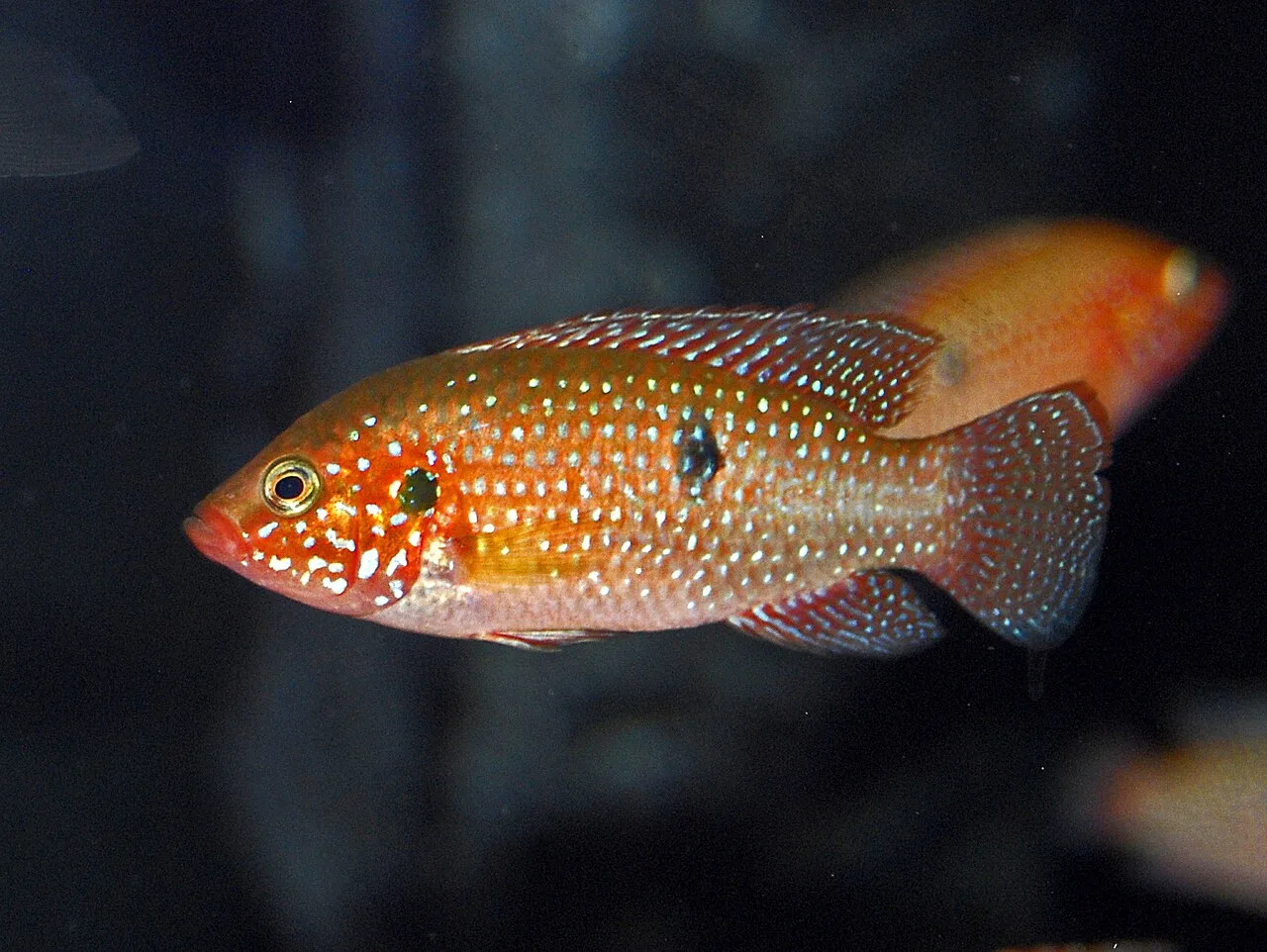
Chinese algae eater
Gyrinocheilus aymonieri
13 views
A fast-growing algae rasper that cleans glass as a juvenile and sucks onto other fish as an adult. The shop underestimates the adult size.
- Temperature
- 24 – 28 °C
- pH
- 6.5 – 8 pH
- General hardness
- 5 – 20 °dH
- Maximum size
- 25 cm
- Minimum tank size
- 250 L
4 min read · 534 words
Fresh water
Quick facts
Further published values
- Lifespan
- 10 a
Place in the aquarium
Highlighted are the water layer and the spots where the species usually stays in the tank.
- Near the bottom Mostly stays just above the bottom. Food has to reach the substrate.
- Wood and roots Uses roots as shelter or grazes biofilm from them.
Shrimp in the tank
Dwarf shrimp at risk
- Not shrimp safe
- Dwarf shrimp at risk
- Shrimplets at risk
- Shrimp safe
- Adult dwarf shrimp
- At risk
- Shrimplets
- Get eaten
- Safe from shrimp size
- about 4 cm
The Chinese algae eater is a harmless algae grazer only when young. It grows to 27 to 29 cm, juveniles graze algae, and adults become omnivores and behave territorially and aggressively.
Small dwarf shrimp are eaten or chased by older fish, and baby shrimp are at risk anyway. Larger shrimp from about 4 cm stand a better chance. Because the species grows very large, it belongs in a large tank without dwarf shrimp. A small separate tank with moss and leaf litter is the most reliable solution for a stable shrimp colony and needs little effort to run.
Home & range
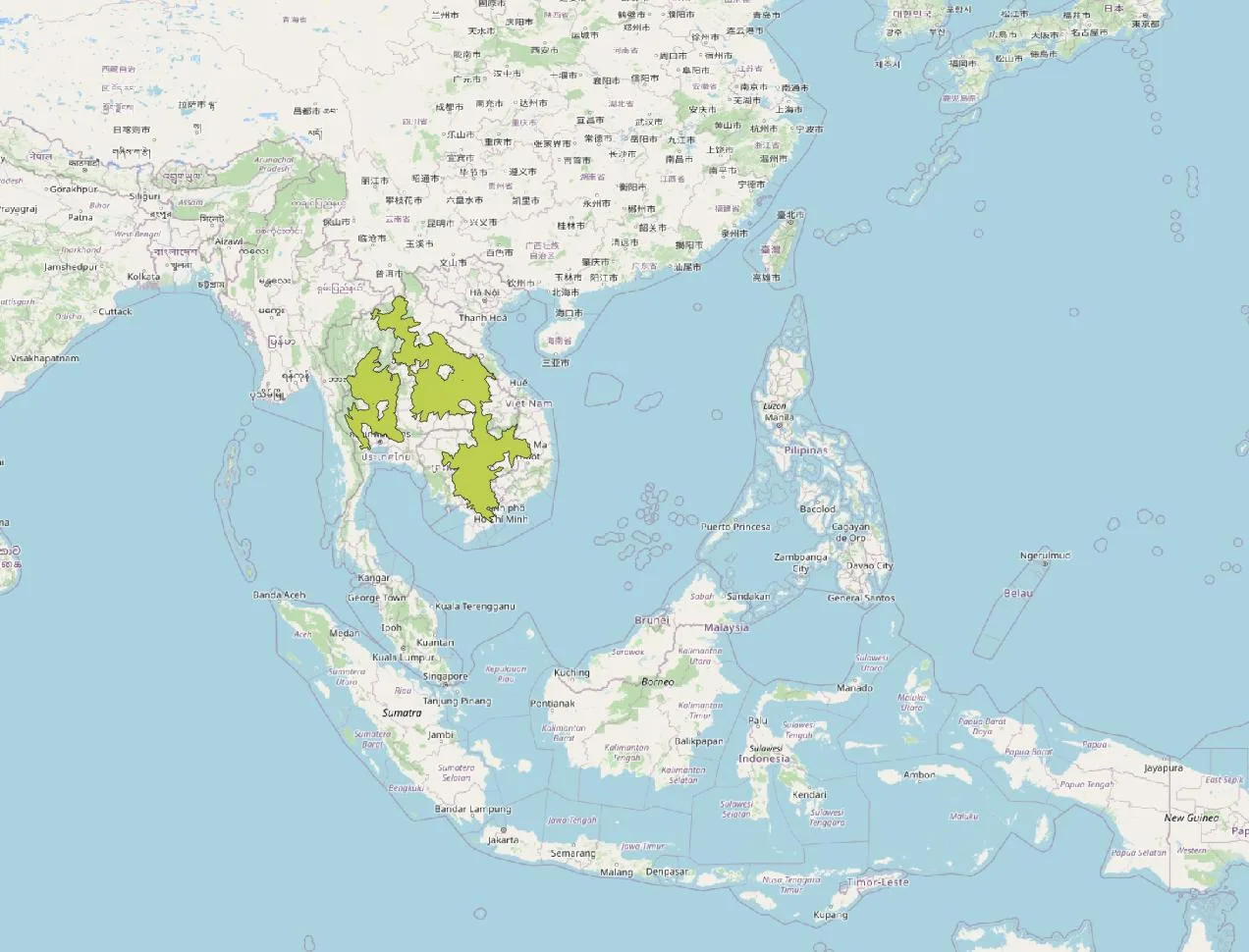
Hatched countries are where the species occurs. It lives in particular waters there, not across the whole country. The points name known waters for orientation, not collection sites.
- Country of origin
- Water for orientation
Native
Overview
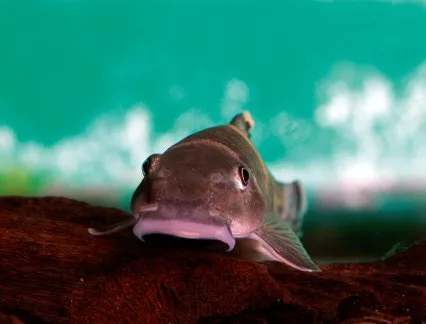
The Chinese algae eater reaches 20 cm and more. Juveniles are barred brown and hang on the glass. Adults become plainer, thicker and intolerant. The sucker mouth is large. It rasps aufwuchs and later also attaches to the flanks of slower fish.
Golden animals are a cultivated form, not a tamer species. They grow just as large and just as intrusive. Anyone who wants a small glass cleaner is better served by Otocinclus.
Features
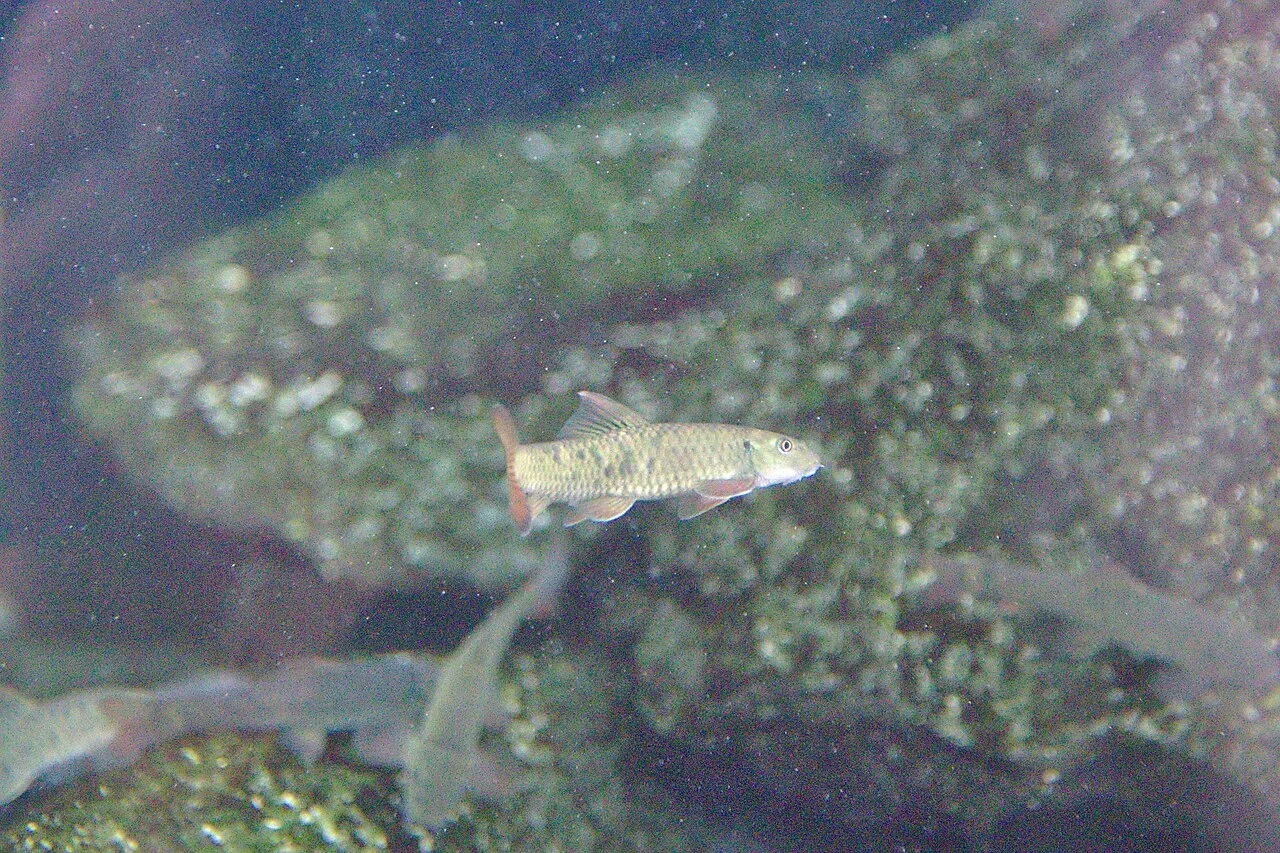
The Chinese algae eater grows to 27 to 29 cm but usually stays smaller. The body is elongated, the inferior mouth forms a sucker with thick lips, and barbels are absent. Because the mouth is occupied while sucking on, breathing water enters through a separate small opening at the top of the gill slit. Juveniles are grey-brown to olive-brown with a band of dark blotches, and older fish darken to almost black. Mature males can develop breeding tubercles on the snout, and females become plumper. It is easily confused with Crossocheilus oblongus, Epalzeorhynchos kalopterus and Garra cambodgiensis. The albino form is called the lemon sucking loach in German.
Tirant described the species in 1883 or 1884. The name honours the French linguist Étienne Aymonier. It is sold as a food fish in its home range. The IUCN lists it as least concern.
Origin & habitat
This describes the origin, not how to furnish the aquarium.
Flowing, oxygen-rich waters in Thailand and the neighbouring countries, on rock and wood. The countries stay a coarse origin. Current belongs to the keeping. A still tank without oxygen shows a fish hanging at the surface.
The species lives in Thailand in the Mae Klong, the Chao Phraya and on the northern Malay Peninsula, and in the Mekong basin in Cambodia, Yunnan, Laos and Vietnam. It lives mainly in large rivers and stays on flat surfaces such as stones in flowing water, where it holds on with its mouth. Occasionally it moves into flooded fields.
Care
Size
24 to 28 °C, pH 6.5 to 8. From about 250 litres and 120 cm for one fish that is allowed to grow up. Rock, wood, current, a hiding place. One fish. Two adults are a standing fight. The filter has to match the later size, not the size on the day of purchase.
Company
Robust, fast fish that can get away from being sucked on. Discus, angelfish and slow catfish are the worst partners. Shrimp are eaten. The species is not a tankmate for a planted community tank once it has passed 10 cm.
Diet
Aufwuchs, algae and a lot of plant food. Blanched vegetable strips, spirulina, sinking tablets. Animal food only rarely. If the film is gone and the fish is not fed, the mouth looks for other surfaces, including the mucus of tankmates.
Juveniles graze algae from stones, wood and plants, and adults are omnivores.
Behavior
Social on the glass while young, territorial and intrusive when old. Attaching to other fish is not play and not a cleaning behaviour. It injures the skin. Then the fish has to go into a tank of its own or be passed on, not be placated with more algae food while it keeps sucking.
Reproduction
Breeding in the aquarium is rare and not a way of keeping for the living room. The sexes are uncertain. For care, one single fish already fills a large tank.
Gallery
More species in this group
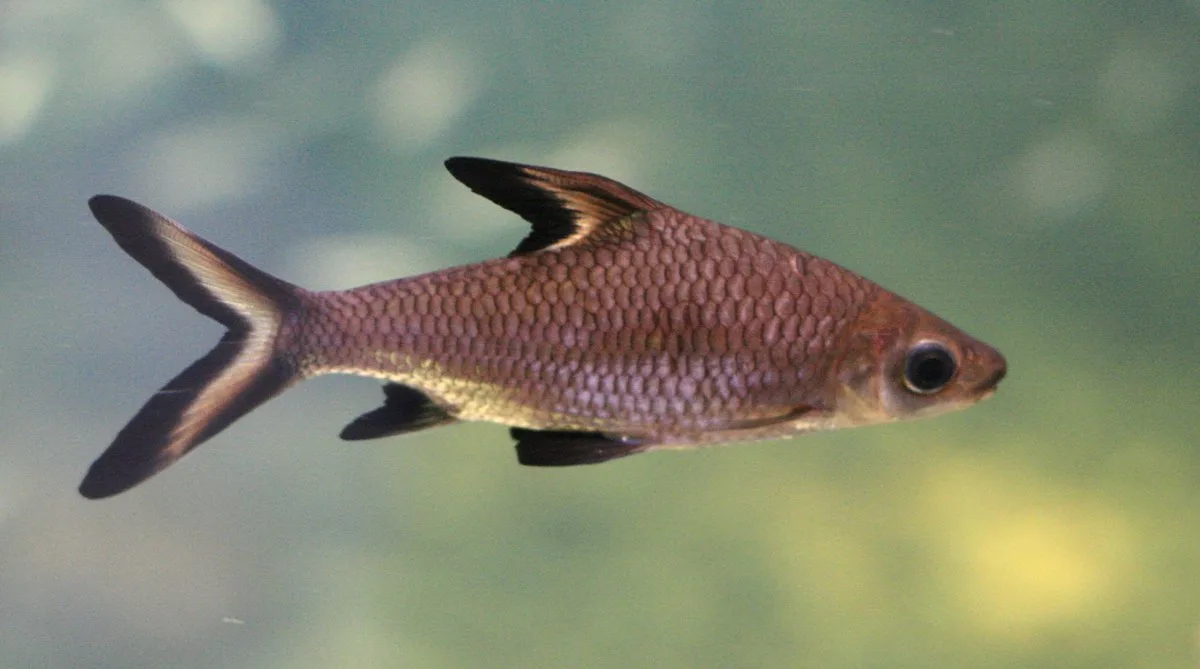
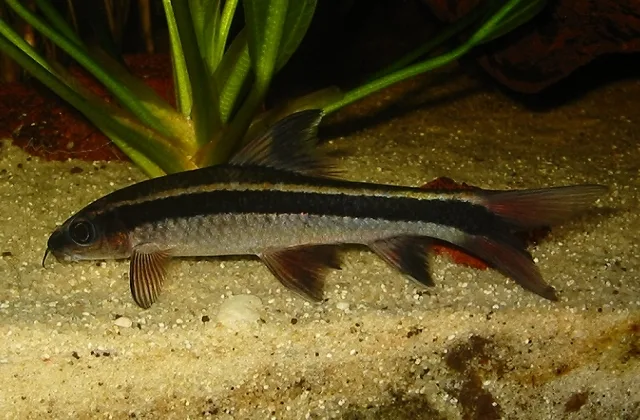
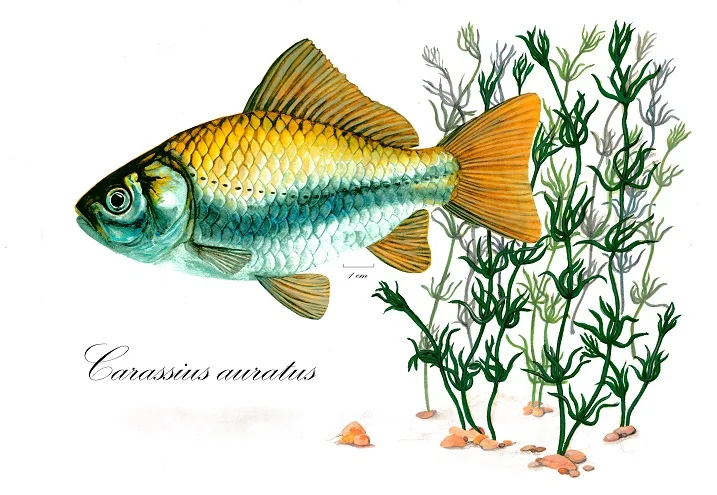
Similar water needs
Species with a similar temperature, a similar pH and a comparable adult size. Whether their behaviour fits as well is what the compatibility check is for.