
Panda garra
Garra flavatra
21 views
A small sucker barb from Myanmar with dark bars. It rasps aufwuchs, stays social and is not a substitute for a missing algae plan.
- Temperature
- 22 – 27 °C
- pH
- 6.5 – 7.5 pH
- General hardness
- 6 – 20 °dH
- Maximum size
- 9 cm
- Minimum group size
- 4
- Minimum tank size
- 100 L
4 min read · 660 words
Fresh water
Quick facts
Place in the aquarium
Highlighted are the water layer and the spots where the species usually stays in the tank.
- Near the bottom Mostly stays just above the bottom. Food has to reach the substrate.
- Rocks and caves Needs caves, crevices or rockwork as hiding place, territory or spawning site.
Shrimp in the tank
Shrimplets at risk
- Not shrimp safe
- Dwarf shrimp at risk
- Shrimplets at risk
- Shrimp safe
- Adult dwarf shrimp
- Safe
- Shrimplets
- Get eaten
- Safe from shrimp size
- about 2 cm
Adult shrimp usually live undisturbed with the panda garra. It grows to 8 to 10 cm and uses its inferior mouth mainly to graze algae and biofilm from stones. In aquaria, however, it also eats daphnia, cyclops and bloodworms.
Baby shrimp on open surfaces are therefore at risk. Larger shrimp from about 2 cm are usually ignored. Moss between stones and dense planted areas protect the young. Because the species needs current and plenty of oxygen, current-loving shrimp such as Amano shrimp suit it well.
Home & range
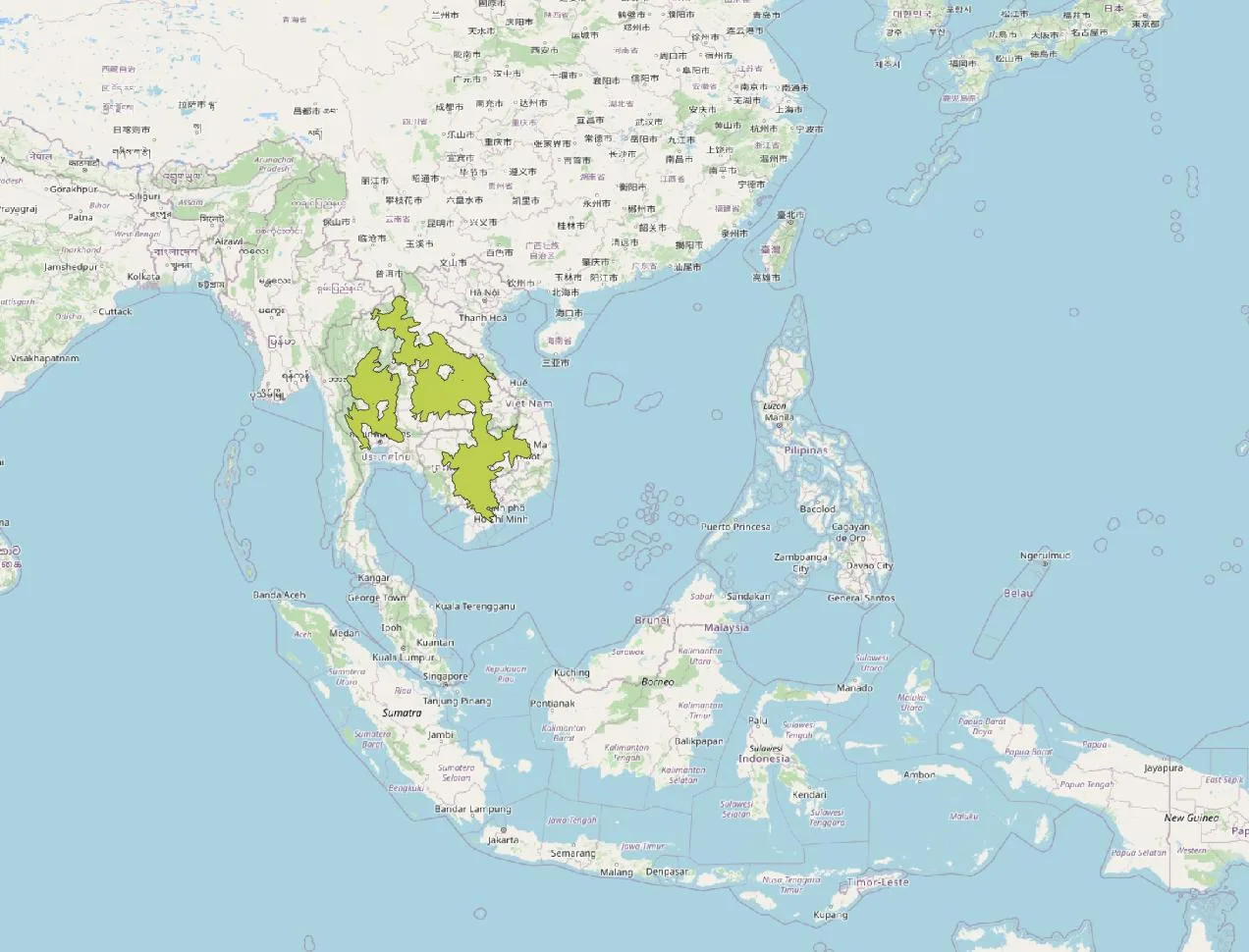
Hatched countries are where the species occurs. It lives in particular waters there, not across the whole country. The points name known waters for orientation, not collection sites.
- Country of origin
- Water for orientation
Native
Overview
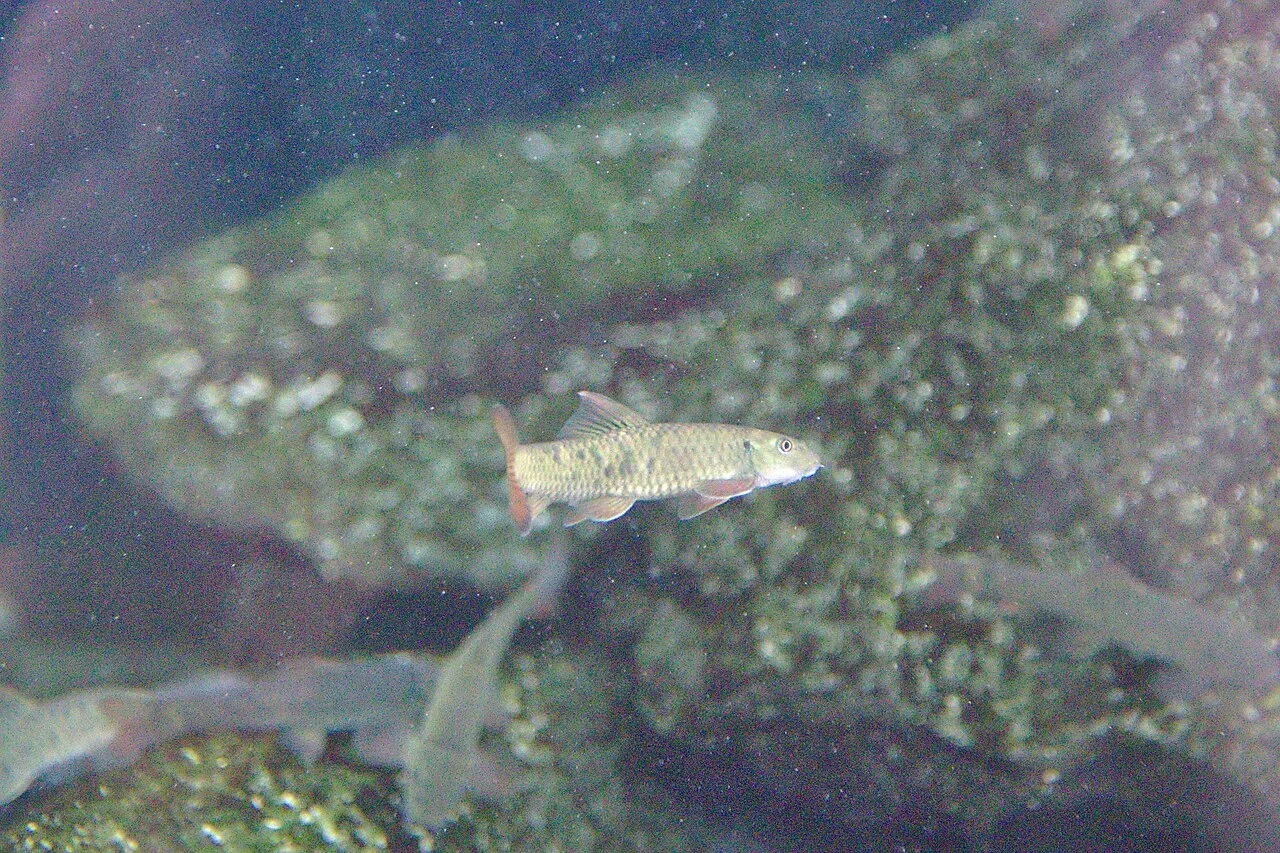
Garra flavatra reaches about 8 to 9 cm. Pale and dark bars and a reddish spot in front of the dorsal make the pattern that gave it the name panda. The mouth sits underneath and carries a sucking disc. Males show a stronger red on the head and small tubercles when courting.
The species is not the flying fox and not the red-tailed shark. It stays smaller and is more tolerant in a group than those two, as long as each fish has a surface to graze.
Appearance and sexes
Juveniles are pale with dark longitudinal stripes, and the dorsal and caudal fins carry a dark edge with a white tip. Adults are darker and show less white, and the fins turn bright red as the fish grows. Under stress the colour fades. The inferior mouth carries barbels. Length is about 8 to 10 cm. Males are slimmer and carry tubercles on the head. Kullander and Fang described the species in 2004 from the Rakhine Yoma. The IUCN lists it as vulnerable, with dam projects and more intensive farming named as causes.
Origin & habitat
This describes the origin, not how to furnish the aquarium.
Clear, current-rich streams in Myanmar, over gravel and rock with aufwuchs. Rich in oxygen, not acidic blackwater. Myanmar stays the coarse origin.\n\nThe stream explains current and resting surfaces. A still tank without rock and without wood shows fish that stick to the glass and do not feed.
The species is endemic to western Myanmar and known from the Chaung Kananmae, Baw Di Chaung and Kamyit Chaung rivers. It lives in shallow, oxygen-rich clear-water streams and rivers of the Arakan Mountains with slow to medium current over rock, gravel, sand or boulders. Aquatic plants are scarce there.
Care
Layout
22 to 27 °C, pH 6.5 to 7.5, rich in oxygen, with a noticeable current. From about 100 litres and 80 cm for a group from five. Smooth stones, wood, fine gravel or sand. The tank should be mature, so that aufwuchs is there. A factory-new glass is a hunger trap.
Company
Calm fish in the upper water. Other suckermouths only with a surface of their own. Shrimp are sometimes harassed, rarely hunted on purpose. The species does not dig. Soft plants can suffer while it grazes. Tough epiphytes usually do not.
The species has been in the trade since 2005, first through Thai dealers in Japan. It is usually kept in tanks around 200 litres and about 100 cm long, in groups of four to eight, at 20 °C (sometimes from 18 °C) to 25 °C, at most 27 °C. Medium-hard water up to 6 to 20 °GH is tolerated. A current pump and frequent water changes meet the oxygen demand. Sturdy ferns, Anubias and Vallisneria last better than soft plants, and round stones lower the risk of injury. Males fight persistent rank and territory battles that can also hit similarly shaped fish.
Diet
Aufwuchs, algae and a plant supplement. Thin blanched vegetable strips, spirulina, fine sinking tablets right on the stone. Animal food only as a side. If every pane is cleaned and no film remains on the stone, the food has to close the gap.
Several small feeds. Otherwise one dominant fish holds the only feeding stone.
Behavior
A group with a loose rank order around the best resting places. A short push with the sucker mouth is normal. Serious injury starts when too many fish stand on too little rock.
The species is active by day and stands visible on the surfaces. A fish that drifts in open water all the time usually has too little oxygen or is ill.
Reproduction
Breeding in the aquarium is possible, but it is not everyday keeping. The fish spawn on surfaces. The parents do not guard the brood. For keeping, the group matters, not a breeding protocol. The sexes are uncertain outside courtship.
In the wild the species spawns in early summer, May to July. In aquaria very soft water is used as a trigger. The eggs are mostly laid in the early morning and fall between coarse stones where the parents cannot reach them.
Gallery
More species in this group
Similar water needs
Species with a similar temperature, a similar pH and a comparable adult size. Whether their behaviour fits as well is what the compatibility check is for.




