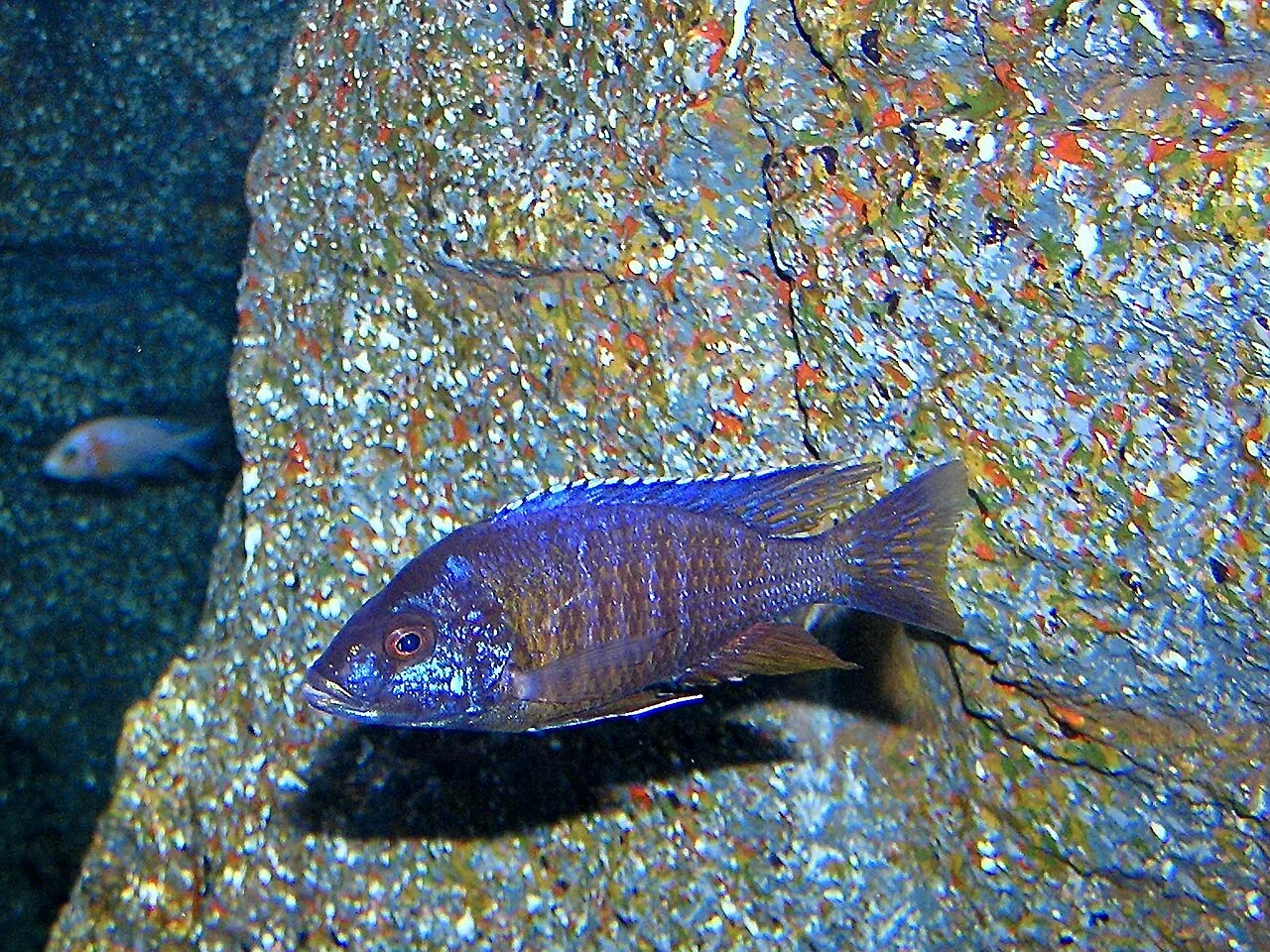
Frontosa
Cyphotilapia frontosa
1 view
A large, calm cichlid from Lake Tanganyika with broad dark bars and a nuchal hump. It grows very large and lives long.
- Temperature
- 24 – 27 °C
- pH
- 8 – 9 pH
- General hardness
- 10 – 20 °dH
- Maximum size
- 35 cm
- Minimum tank size
- 600 L
1 min read · 158 words
Quick facts
Place in the aquarium
Highlighted are the water layer and the spots where the species usually stays in the tank.
- Middle water Usually stays in the middle of the tank, between bottom and surface.
- Near the bottom Mostly stays just above the bottom. Food has to reach the substrate.
- Rocks and caves Needs caves, crevices or rockwork as hiding place, territory or spawning site.
Shrimp in the tank
Not shrimp safe
- Not shrimp safe
- Dwarf shrimp at risk
- Shrimplets at risk
- Shrimp safe
- Adult dwarf shrimp
- At risk
- Shrimplets
- Get eaten
- Safe from shrimp size
- No size is safe
Shrimp are not safe with the frontosa. It grows very large, eats fish and crustaceans and is active at night. Shrimp of any size are eaten.
On top of that comes the hard, alkaline water of Lake Tanganyika, which does not suit the usual dwarf shrimp. Keeping them together makes no sense.
Home & range
Hatched countries are where the species occurs. It lives in particular waters there, not across the whole country. The points name known waters for orientation, not collection sites.
- Country of origin
- Water for orientation
Native
- Burundi
- Range: Lake Tanganyika.
- Democratic Republic of the Congo
- Range: Lake Tanganyika.
- Tanzania
- Range: Lake Tanganyika.
Overview
Cyphotilapia frontosa reaches about 35 cm as a male, and females stay smaller. The body is white to bluish with six dark bars, and males develop a large nuchal hump. In captivity the fish live for several decades.
It is not Cyphotilapia gibberosa. That species lives in the south of the lake and usually carries more blue. Both grow slowly and need a lot of space.
Origin & habitat
This describes the origin, not how to furnish the aquarium.
Rocky areas of northern Lake Tanganyika, often at greater depth. The lake stays the coarse origin. Hard, alkaline, oxygen-rich water matches that.
Care
Size
24 to 27 °C, pH 8 to 9, hard. A group with one male and several females from about 600 litres and 180 cm. Large rock structures, open space.
Company
Other large Tanganyika fish. Small fish are eaten at night.
Diet
Meaty food. Mysis, krill, shrimp, substantial granules. No mammal meat.
Behavior
Calm, with a pecking order. Males stay dominant over other males.
Reproduction
Mouthbrooder. The female carries eggs and larvae in her mouth. The young grow slowly.
Gallery
More species in this group

Similar water needs
Species with a similar temperature, a similar pH and a comparable adult size. Whether their behaviour fits as well is what the compatibility check is for.