Tiger hillstream loach
Sewellia lineolata
19 views
A hillstream loach from China, Cambodia and mainly Vietnam.
- Temperature
- 18 – 24 °C
- pH
- 6 – 8 pH
- General hardness
- 5 – 20 °dH
- Maximum size
- 8
- Minimum group size
- 8
- Minimum tank size
- 80 L
3 min read · 451 words
Fresh water
Quick facts
Further published values
- Lifespan
- 10 a
Place in the aquarium
Highlighted are the water layer and the spots where the species usually stays in the tank.
- Near the bottom Mostly stays just above the bottom. Food has to reach the substrate.
- Rocks and caves Needs caves, crevices or rockwork as hiding place, territory or spawning site.
Shrimp in the tank
Shrimp safe
- Not shrimp safe
- Dwarf shrimp at risk
- Shrimplets at risk
- Shrimp safe
- Adult dwarf shrimp
- Safe
- Shrimplets
- Mostly safe
- Safe from shrimp size
- Any size
The reticulated hillstream loach is shrimp-safe. It grows to about 8 cm, has a small, inferior mouth and mainly scrapes algae and micro-organisms from stones. It takes small insect larvae only now and then.
Baby shrimp are hardly at risk either. Because both graze biofilm, the tank should offer enough of it. Current-loving shrimp such as Amano shrimp suit the cool, oxygen-rich conditions this loach needs particularly well. Food tablets on the bottom should be enough for both, so that neither fish nor shrimp go hungry, and regular small water changes keep the tank stable.
Home & range
Hatched countries are where the species occurs. It lives in particular waters there, not across the whole country. The points name known waters for orientation, not collection sites.
- Country of origin
- Water for orientation
Native
Overview
Flattened, adapted to strong current. Yellowish and dark brown lines. Pectoral and pelvic fins are sucker fins.
Built for the current
The reticulated hillstream loach grows to about 8 cm. The body is flat, and the pectoral and pelvic fins form suction surfaces that hold the fish in fast water. The pattern consists of yellowish, dark brown to blackish lines and stripes. It scrapes biofilm from stones with its inferior mouth. It moves quickly and in short jumps. Unlike Gastromyzon or Beaufortia it has a smaller mouth and glides on the current after pushing off from raised stones. On sand and fine gravel it stirs up the bottom with fluttering fins and searches for food there.
Achille Valenciennes described the species in 1846 as Balitora lineolata. It belongs to the hillstream loaches (Gastromyzontidae). The IUCN lists it as vulnerable.
Origin & habitat
This describes the origin, not how to furnish the aquarium.
China, Cambodia and mainly Vietnam. The three countries stay coarse.
The species lives in Vietnam in the provinces of Thua Thien-Hue, Quang Nam, Quang Ngai and Binh Dinh, and occurrences are also reported from China and Cambodia. Its waters are shallow, fast, very oxygen-rich streams and upper courses with riffles, pools and sometimes waterfalls. The bottom consists of gravel, stones, boulders, sand and bedrock. The banks are densely vegetated, aquatic plants are scarce, and a rich biofilm covers every surface. Some streams turn murky in heavy rain. Most exported fish come from a breeding farm near Saigon.
Care
Groups of about eight, at least 80 litres, strong current, high oxygen, rounded substrate.
Groups of about eight fish in tanks from 80 litres with strong current and plenty of oxygen are recommended, at 18 to 24 °C with a preference for cool water, pH 6 to 8 and 5 to 20 °dGH. The bottom is made of round, flat stones and sand, with hiding places. Plants are not needed, and Anubias and Microsorum on stone or wood fit. Bright light encourages algae. The species demands very good water quality. Males can fight over rank and territory.
Diet
The habitat is the stream.
In the wild the species eats algae and micro-organisms from the biofilm and now and then small insect larvae. In aquaria it takes bloodworms, brine shrimp, daphnia, mysis, flakes, small sinking pellets, algae wafers and blanched spinach or kale.
Behavior
The fish are sociable and live in groups. They use large leaves as resting places. In the current they push off from raised stones and glide for a stretch instead of hopping from stone to stone. On sand they flutter their fins and stir up food. In English the species is called the reticulated hillstream loach.
Reproduction
Social, not solitary.
The eggs are scattered over coarse gravel, though the species is also described as a substrate spawner. Breeding is regarded as demanding.
More species in this group
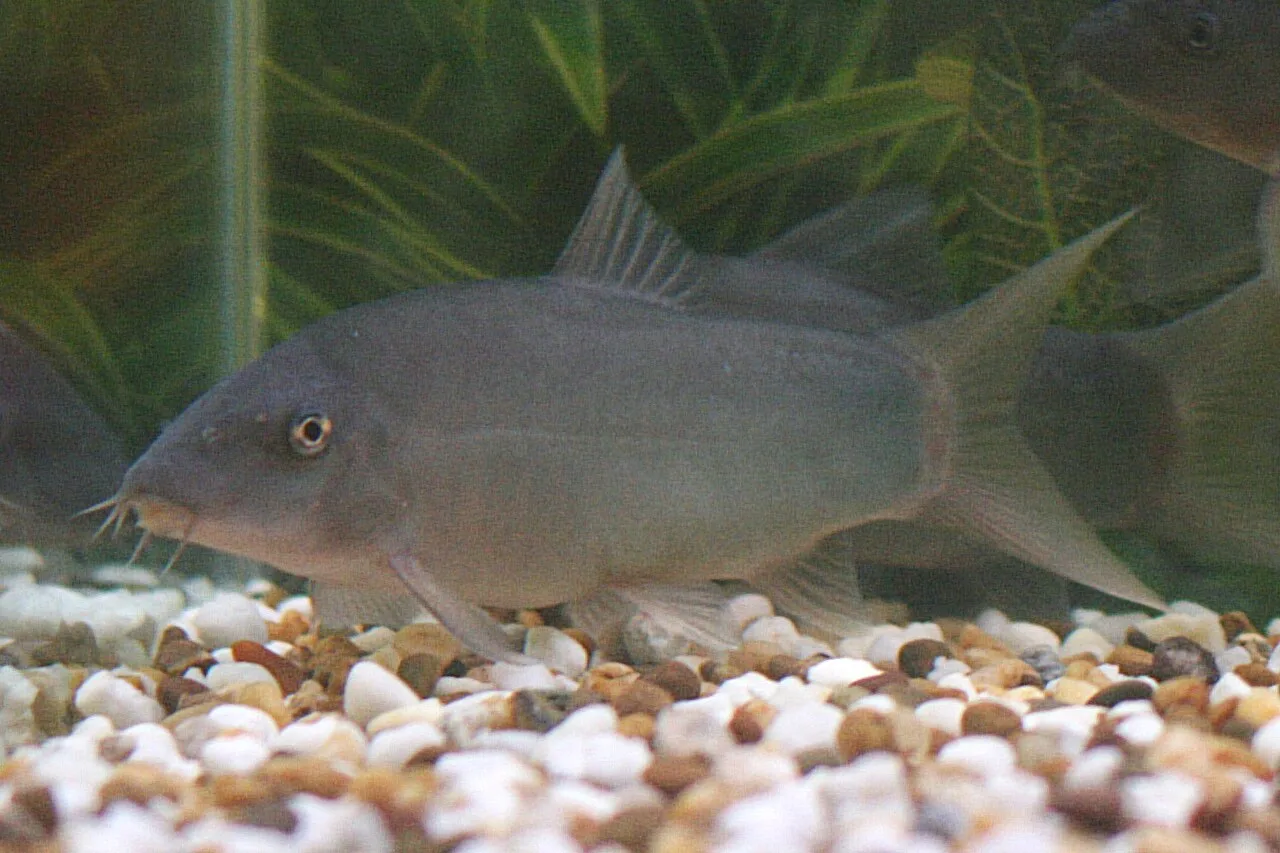
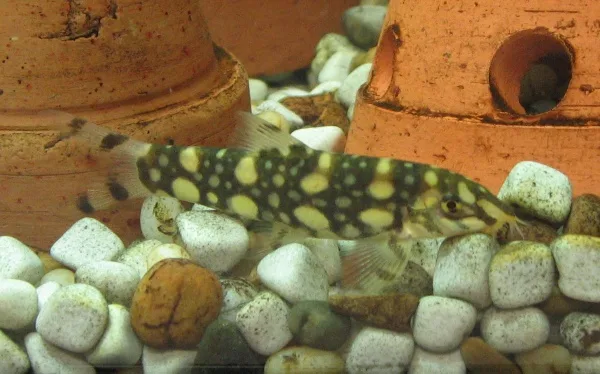
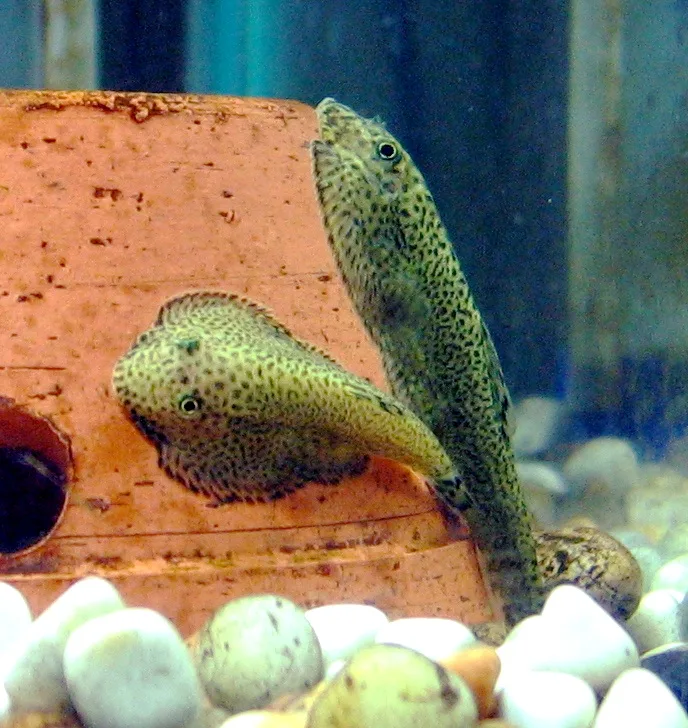
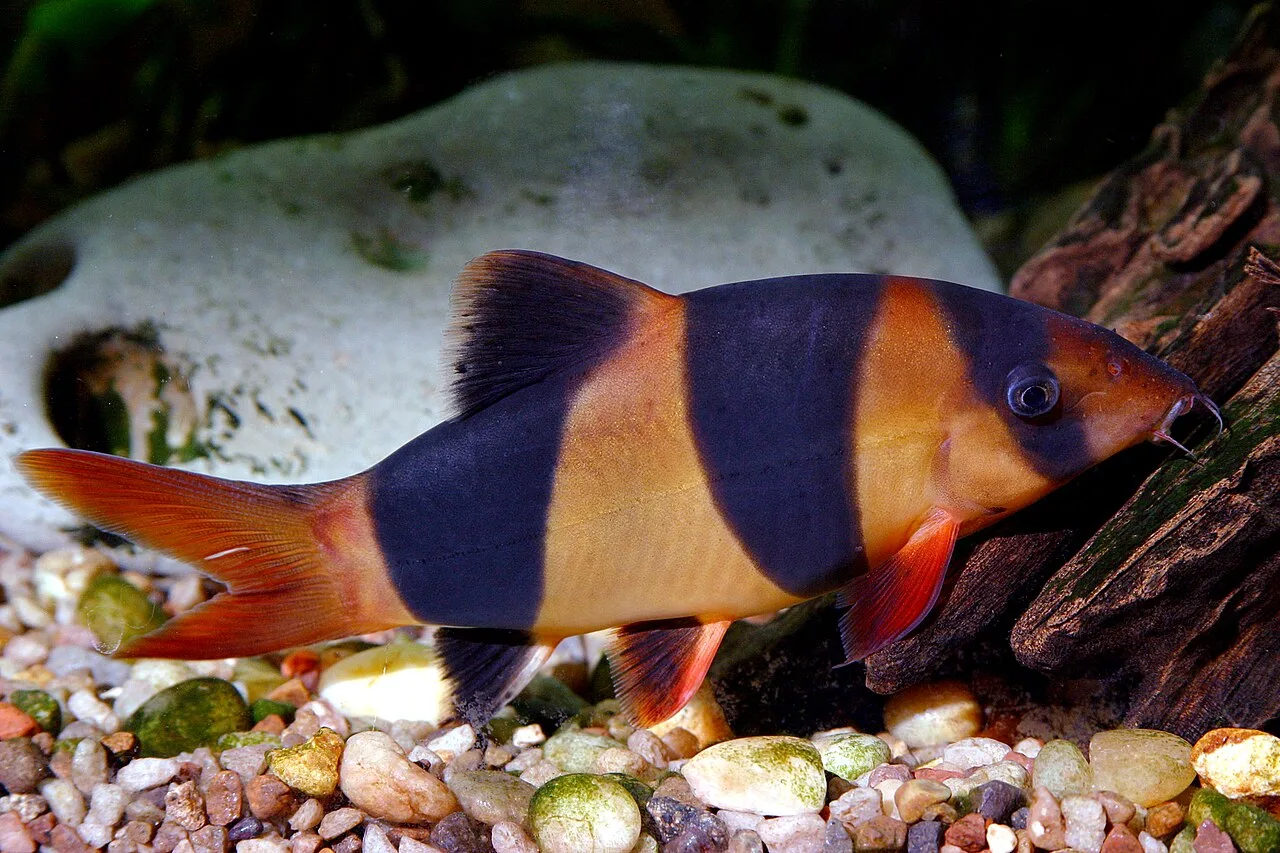
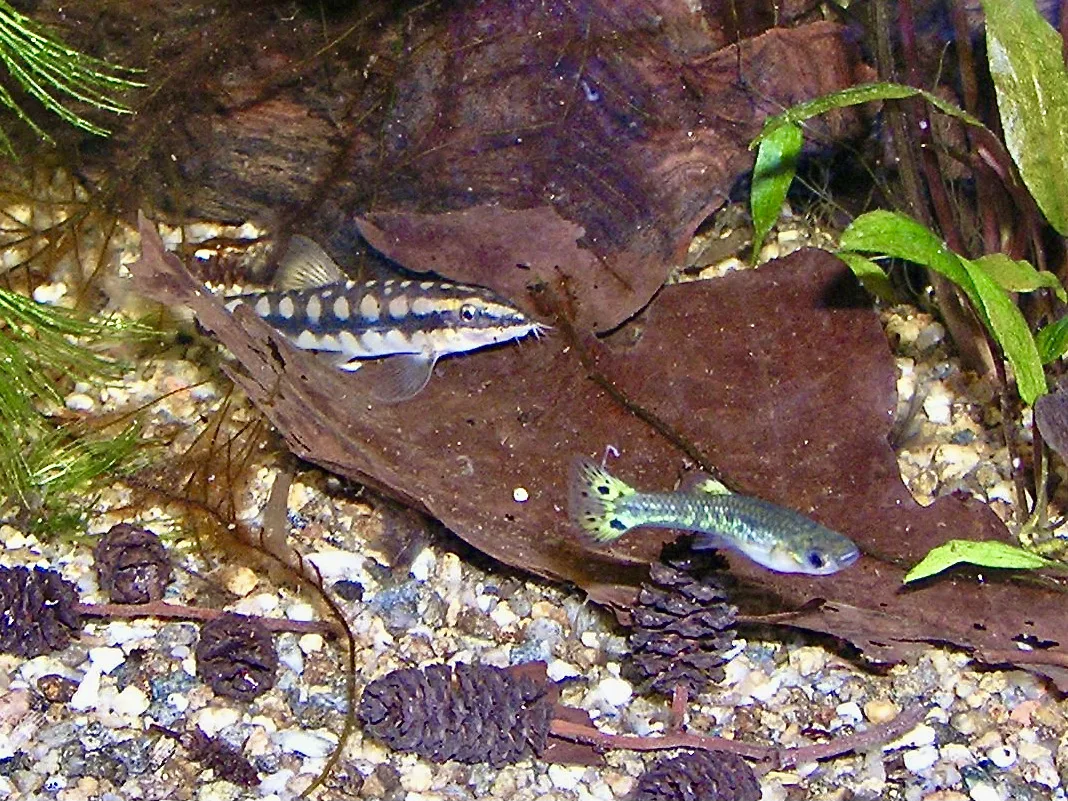
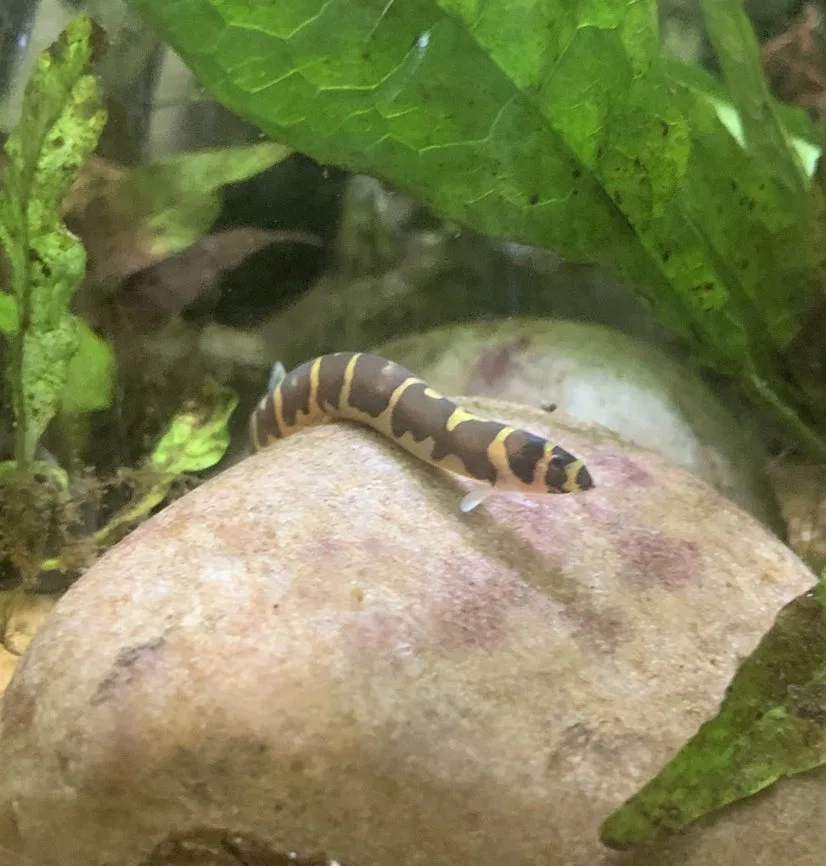
Similar water needs
Species with a similar temperature, a similar pH and a comparable adult size. Whether their behaviour fits as well is what the compatibility check is for.