Porcelain nerite
Septaria porcellana
3 views
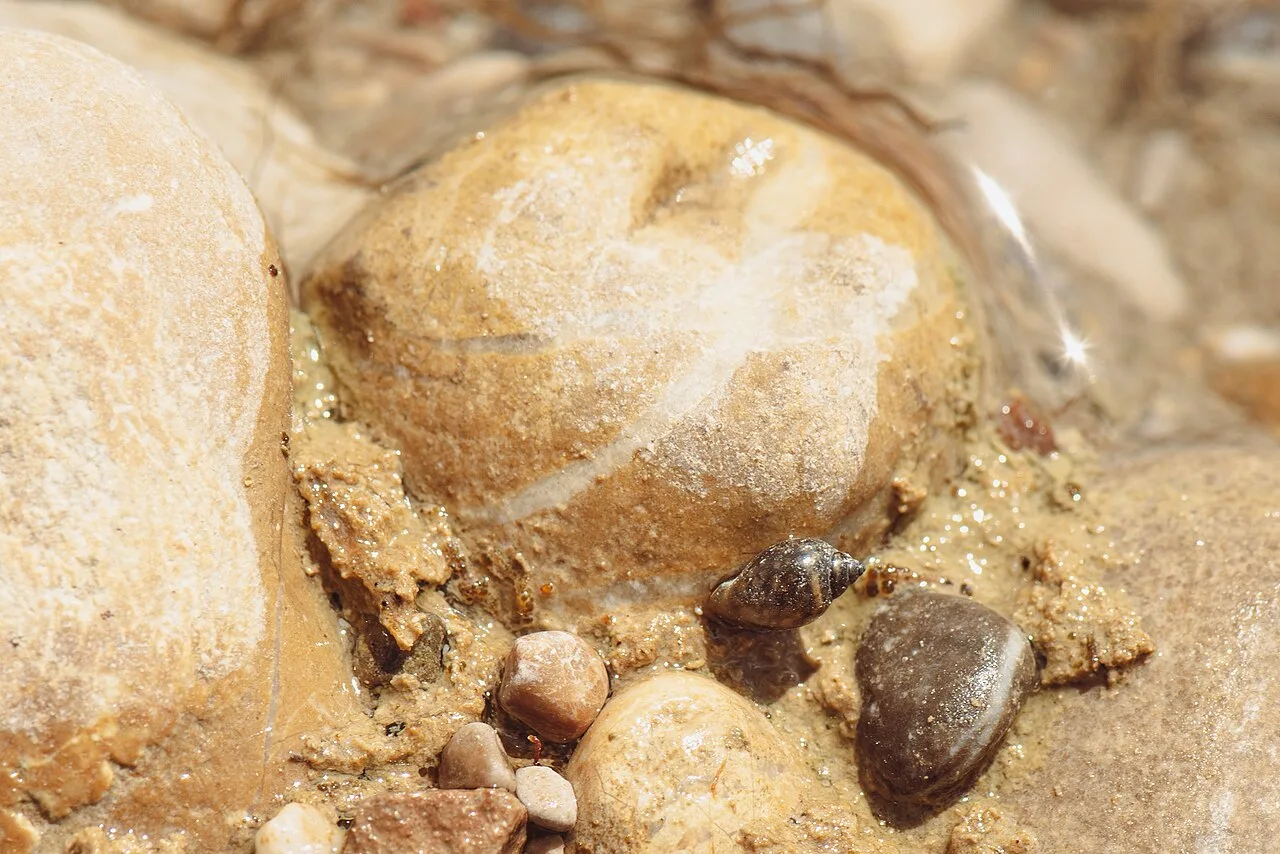
A flat nerite with a limpet-like shell that clings firmly to stones. It eats algae and does not breed in fresh water.
- Temperature
- 22 – 28 °C
- pH
- 7 – 8.5 pH
- General hardness
- 8 – 18 °dH
- Maximum size
- 1.3 cm
- Social behavior
- Peaceful
- Diet
- Herbivore
2 min read · 189 words
Fresh water, larvae in salt or brackish water
Quick facts
Further published values
- Minimum tank size
- 30 L
Place in the aquarium
Highlighted are the water layer and the spots where the species usually stays in the tank.
- Near the bottom Mostly stays just above the bottom. Food has to reach the substrate.
- Rocks and caves Needs caves, crevices or rockwork as hiding place, territory or spawning site.
Home & range
Hatched countries are where the species occurs. It lives in particular waters there, not across the whole country. The points name known waters for orientation, not collection sites.
- Country of origin
- Water for orientation
Native
Overview
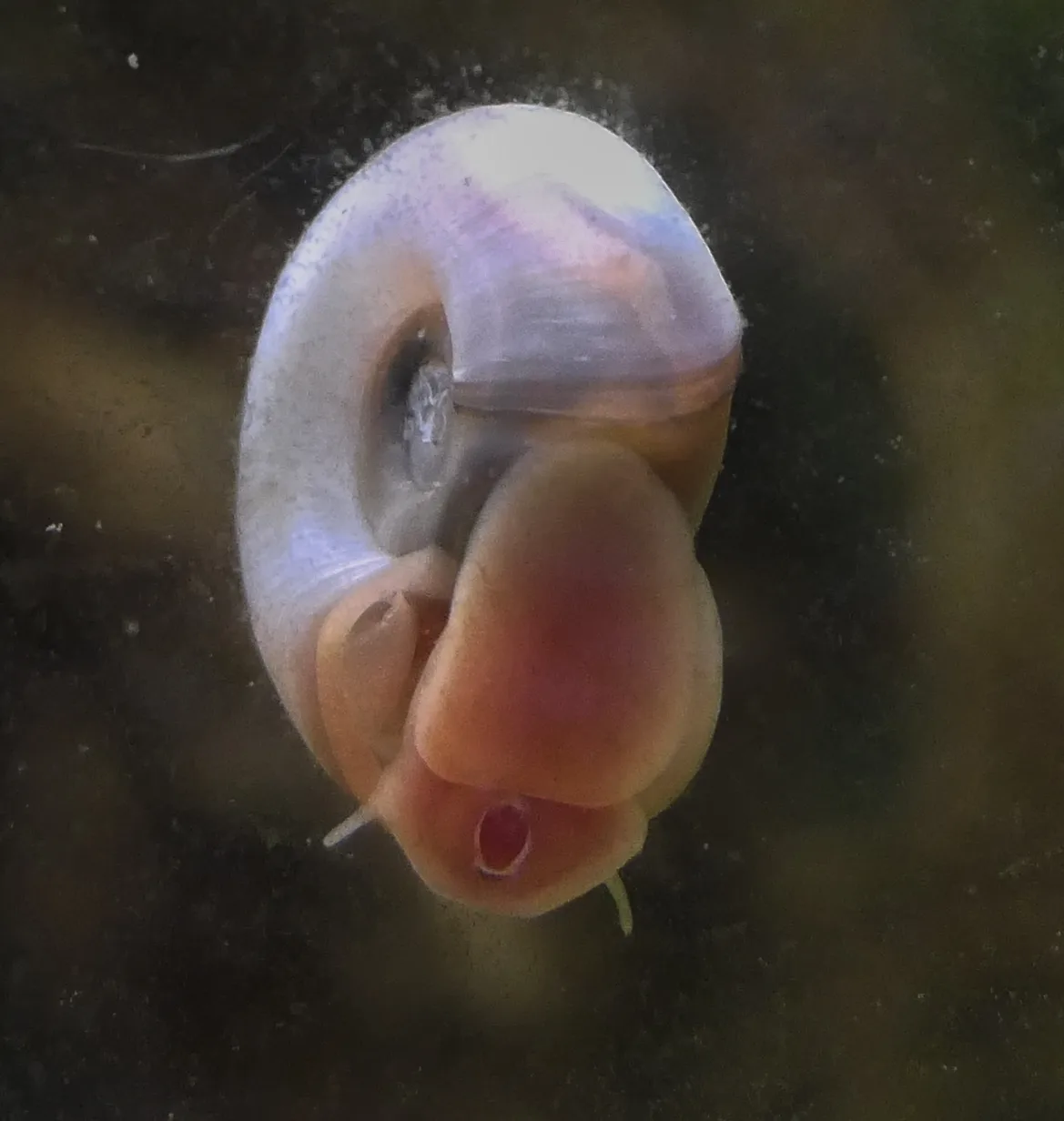
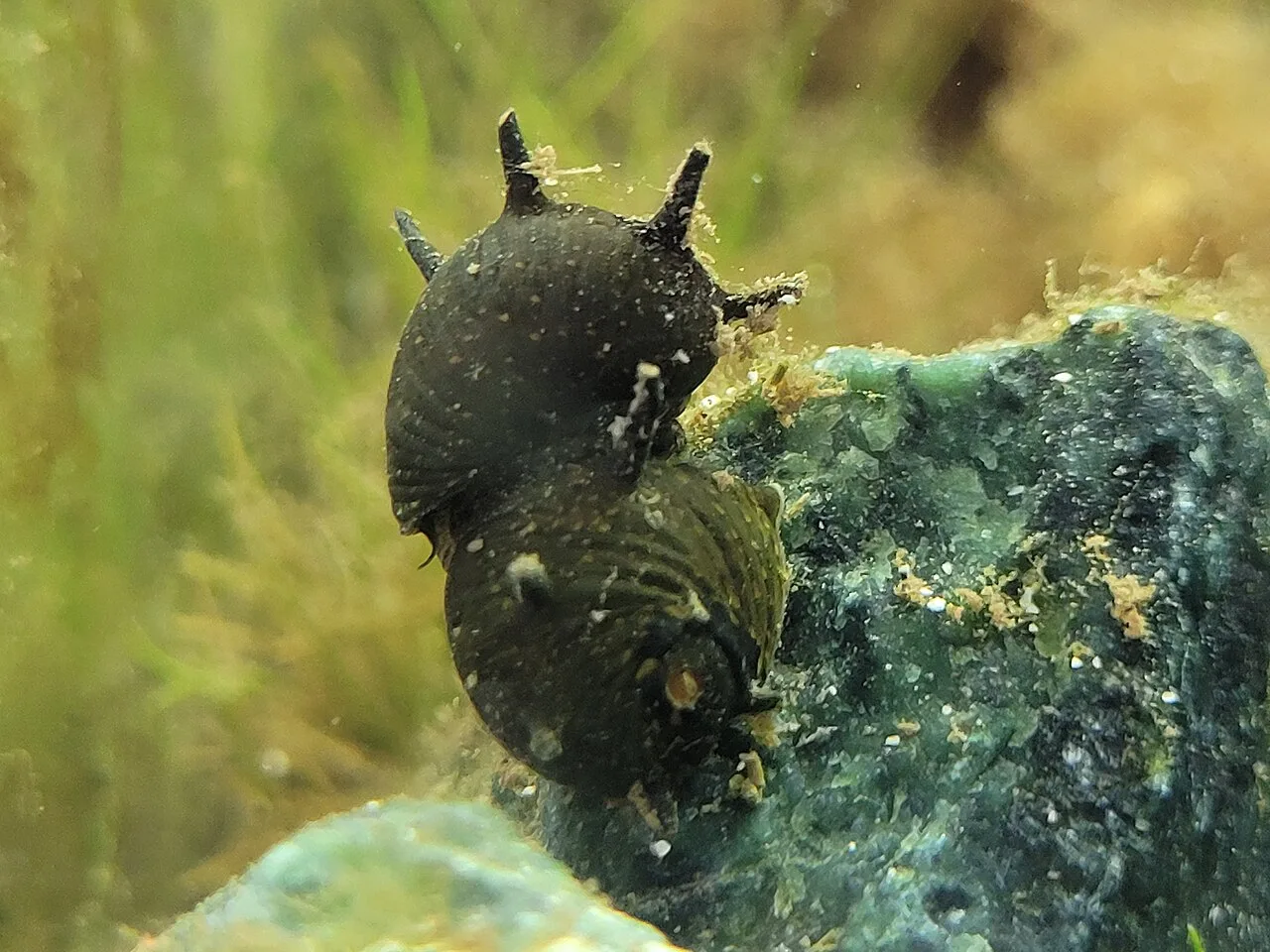
The shell reaches about 13 mm, is symmetrical, cap-shaped and relatively deep and wide. Outside it is yellowish brown with a black or purplish pink pattern of triangles and cross lines. Inside it is white to light grey. Males usually stay smaller than females. Two subspecies are described, porcellana and borbonica.
Range and habitat
This describes the origin, not how to furnish the aquarium.
India, the Philippines, Indonesia, New Guinea and New Caledonia. It lives on stones in calm and fast-flowing water, from a few metres to five or six kilometres from the sea.
Keeping
Tank
From about 30 litres with smooth stones and current. The stones should carry algae before the snails move in.
Water
22 to 28 °C, pH 7 to 8.5, GH from about 8 °dH.
Handling
It clamps on tightly. Prying it off by force injures it. To move it, take the whole stone.
Diet
Algae and biofilm on stones. It needs constantly regrowing algae; a freshly set-up tank offers too little.
Behaviour and moulting
Very calm, often at the same spot for a long time. Moves mainly at night.
Reproduction and larvae
Separate sexes. Females place egg capsules on stones. The larvae need sea water; there are no offspring in fresh water. Animals in the trade are wild-caught.
Gallery
More species in this group
Similar water needs
Species with a similar temperature, a similar pH and a comparable adult size. Whether their behaviour fits as well is what the compatibility check is for.