Zebra nerite snail
Neritina natalensis
6 views
A nerite snail from East African mangroves. It eats algae, does not breed in fresh water, and all animals in the trade are wild-caught.
- Temperature
- 22 – 26 °C
- pH
- 7 – 8.5 pH
- General hardness
- 8 – 18 °dH
- Maximum size
- 2.5 cm
- Social behavior
- Peaceful
- Diet
- Herbivore
3 min read · 445 words
Fresh water, larvae in salt or brackish water
Quick facts
Further published values
- Minimum tank size
- 30 L
Place in the aquarium
Highlighted are the water layer and the spots where the species usually stays in the tank.
- Near the bottom Mostly stays just above the bottom. Food has to reach the substrate.
- Wood and roots Uses roots as shelter or grazes biofilm from them.
- Rocks and caves Needs caves, crevices or rockwork as hiding place, territory or spawning site.
Home & range
Hatched countries are where the species occurs. It lives in particular waters there, not across the whole country. The points name known waters for orientation, not collection sites.
- Country of origin
- Water for orientation
Native
Overview
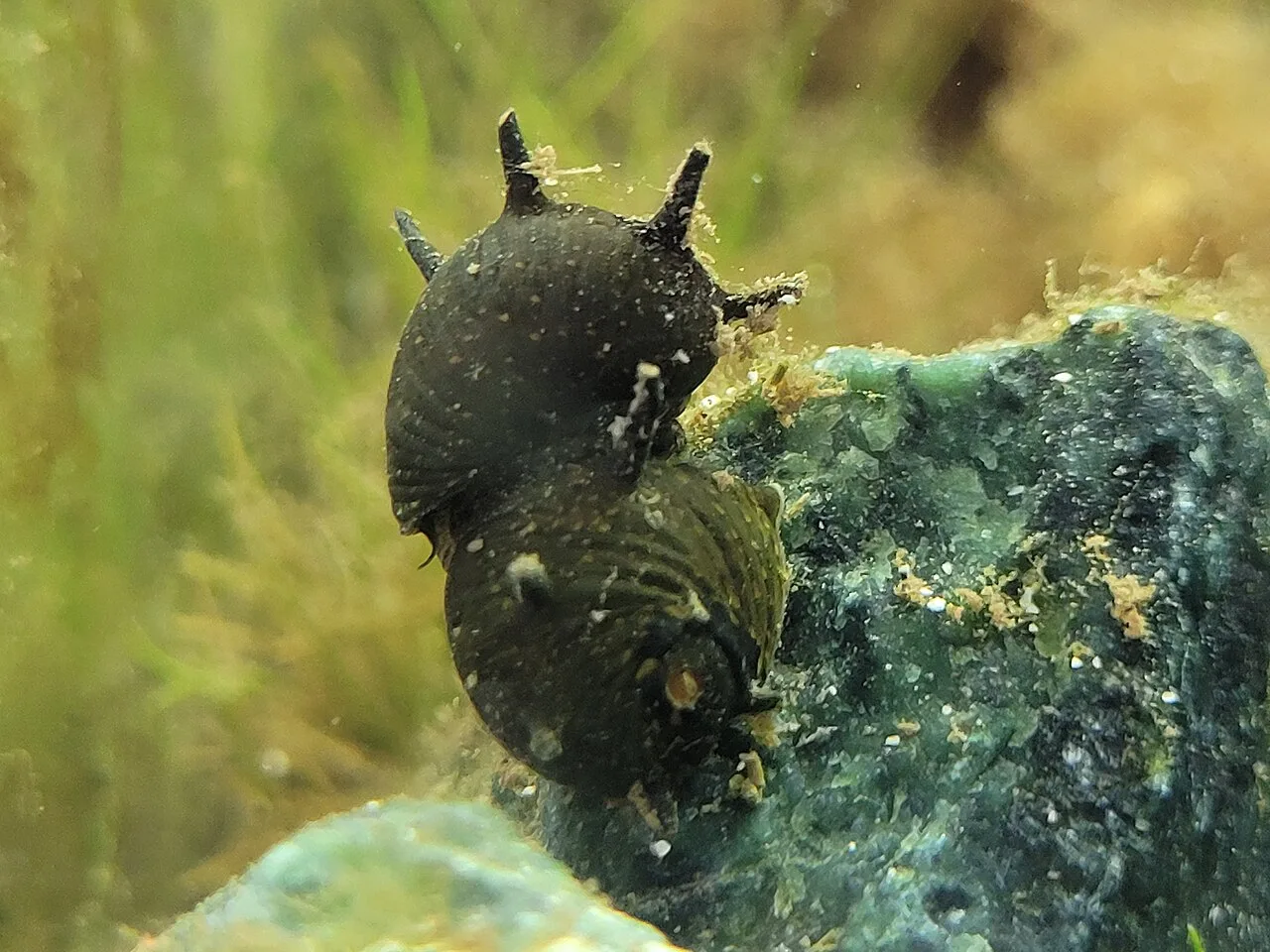
Neritina natalensis is a snail of fresh and brackish water in the nerite family Neritidae. Aquarists know it as the zebra nerite snail. According to MolluscaBase it now belongs, like most nerites, to the genus Vittina. Other nerites with similar markings are sold under the same trade name, so the name alone does not identify the species.
Shell
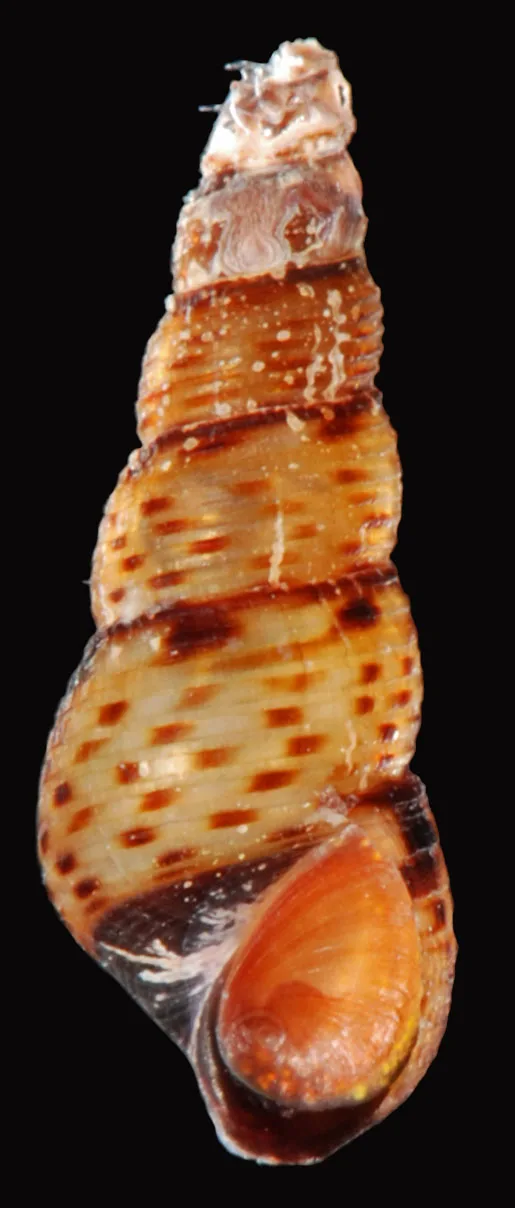
The rather globular shell of adults is 20 to 23 millimetres high and 19 to 23 millimetres wide; in the aquarium it reaches about 2.5 centimetres. The apex is usually eroded. The aperture takes up two thirds to three quarters of the length. The periostracum is greenish yellow to yellowish brown and marked with oblique, broad black stripes, partly zigzag, which form a net of large meshes mainly on the lower part. Towards the aperture larger areas often stay plain yellow. The operculum is blackish outside with a blood-red rim and flesh-pink inside.
Range and habitat
This describes the origin, not how to furnish the aquarium.
The species lives in East Africa: in Somalia, Kenya, Tanzania, Mozambique and South Africa, there in KwaZulu-Natal and south to Port St. Johns in the Eastern Cape. It inhabits mangrove swamps along the coast. Its development is tied to the coast because the larvae go to sea. The five countries are listed as a coarse origin, not as filled areas.
Keeping
In the aquarium it does best at 22 to 26 °C. The snails tend to leave the tank and survive some time in air. A tight-fitting cover is therefore essential. Keeping it only in fresh water rather than brackish water does not match its natural conditions.
Diet
It eats the algae growing on aquatic plants and rocks. In the aquarium it is used to keep glass and plants free of algae. In a very clean tank with little growth it accordingly finds little to eat.
Behaviour and moulting
It is popular for its colourful shell. It is harmless to plants, fish and shrimp; it only grazes algae. A striking trait is its urge to crawl above the waterline.
Reproduction and larvae
Like all nerites it has separate sexes. The male transfers sperm with a penis and fertilisation takes place inside the female. The female attaches egg capsules to stones and roots, each with up to 100 eggs of about 100 micrometres in diameter. Free-swimming veliger larvae hatch from them and live in the sea as zooplankton. Shortly before metamorphosis they seek brackish water; afterwards the young snails move up into fresh or slightly saline water.
Consequences for keeping
In fresh water hatching larvae die after a short time. The egg capsules on stones and wood are therefore no sign of offspring. Captive breeding has not succeeded so far, because feeding the larvae in salt water fails. All zebra nerites in aquariums are therefore wild-caught.
Gallery
More species in this group
Similar water needs
Species with a similar temperature, a similar pH and a comparable adult size. Whether their behaviour fits as well is what the compatibility check is for.