Hengel’s rasbora
Trigonostigma hengeli
22 views
A slender harlequin, smaller and plainer than Trigonostigma heteromorpha. It needs a group and rather soft water.
- Temperature
- 23 – 28 °C
- pH
- 5.5 – 7 pH
- General hardness
- 2 – 10 °dH
- Maximum size
- 3 cm
- Minimum group size
- 8
- Minimum tank size
- 50 L
2 min read · 259 words
Quick facts
Place in the aquarium
Highlighted are the water layer and the spots where the species usually stays in the tank.
- Middle water Usually stays in the middle of the tank, between bottom and surface.
- Dense plants Looks for dense planting as cover, retreat or grazing ground.
Shrimp in the tank
Shrimplets at risk
- Not shrimp safe
- Dwarf shrimp at risk
- Shrimplets at risk
- Shrimp safe
- Adult dwarf shrimp
- Safe
- Shrimplets
- Get eaten
- Safe from shrimp size
- about 1 cm
The glowlight rasbora is harmless to adult shrimp. It stays at about 3 cm and, like its relatives, has a small mouth. It cannot eat shrimp from about 1 cm. Newly hatched shrimp fit its prey range, however, as with almost all small schooling fish.
The school stays in midwater. Moss, fine plants and leaf litter on the bottom let enough young survive for a shrimp group to breed alongside the rasboras.
Home & range
Overview
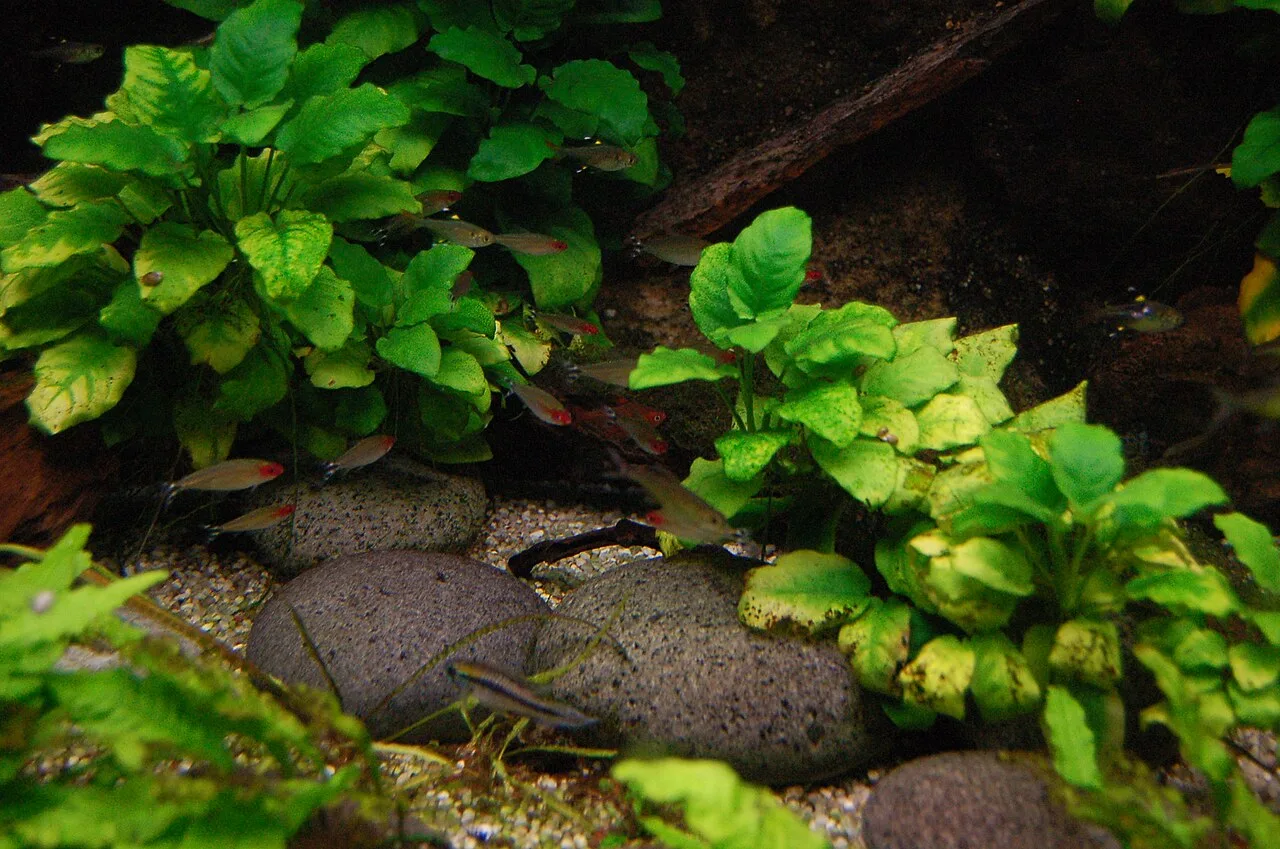
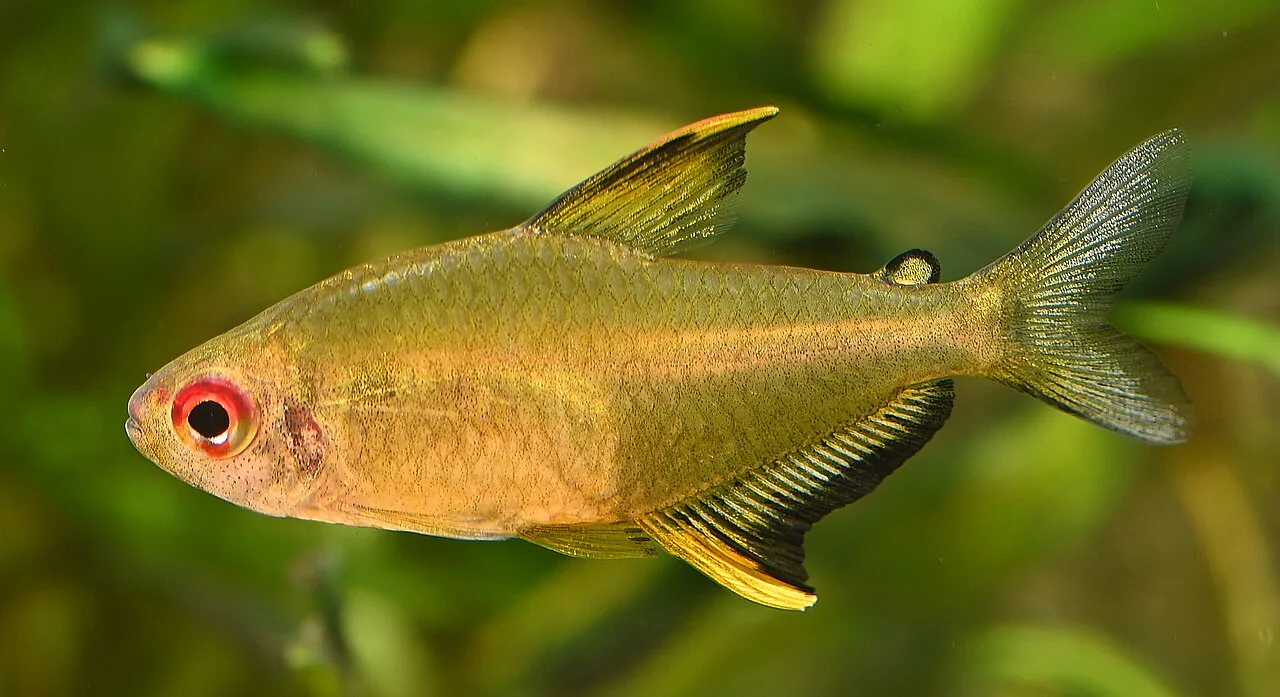
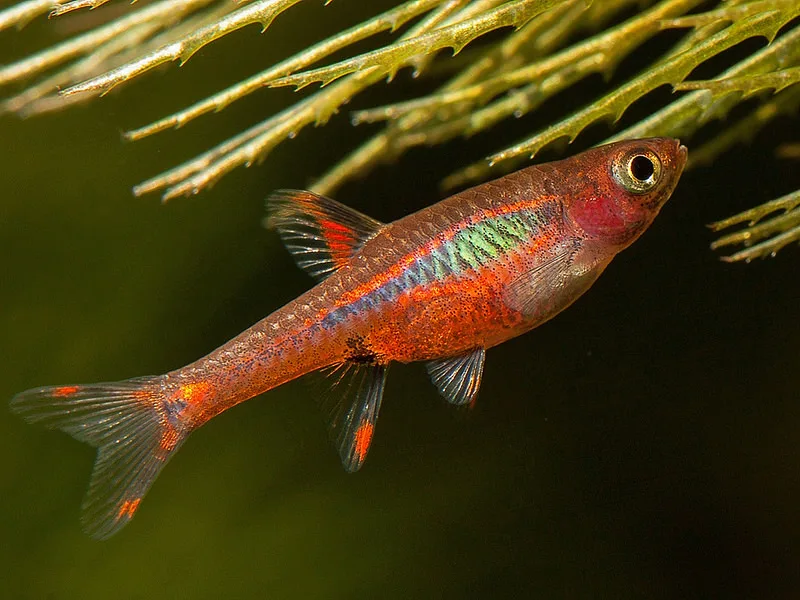
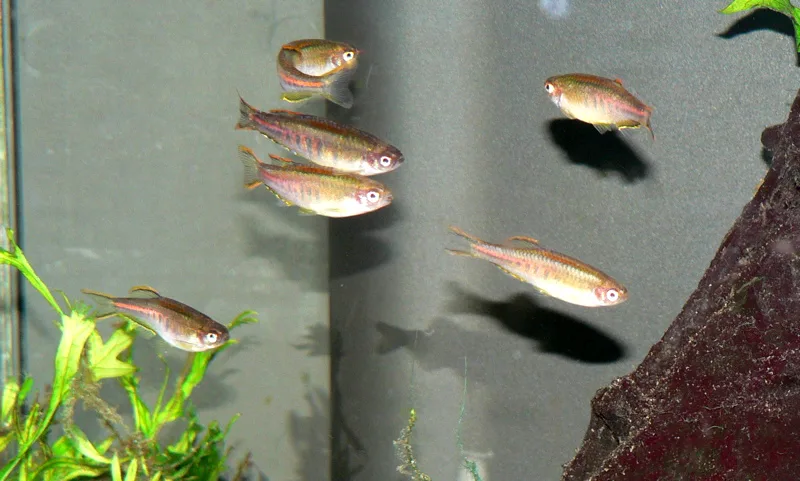
Trigonostigma hengeli stays at about 3 cm. The body is beige to slightly pink, the wedge narrow and dark, often with a copper sheen above it. It is less deep-bodied than the classic harlequin and less orange than Espe’s. The three species are mixed in the trade. Body depth and the shape of the wedge separate them.
Females are deeper, males slimmer. The difference is easier in the school than on a single fish.
Origin & habitat
This describes the origin, not how to furnish the aquarium.
Soft, often acidic, plant-rich waters on Sumatra and Borneo. Dim light, leaf litter, little current. The islands stay a coarse origin. Hard, bright tap water is not their optimum.
Care
Water
23 to 28 °C, pH 5.5 to 7, rather soft. A school from eight, tanks from about 50 litres, with floating plants, a fine bottom and moss. A cover. Large tankmates eat them or stress them out of their colour.
Company
Other very small, quiet fish, or the species alone. Boraras, pygmy corys and shrimp can fit. Tiger barbs and danios do not.
Diet
Fine food. The mouth is small. Cyclops, nauplii, dust-fine flakes. Flakes that are too coarse are spat out. The fish feed in midwater among the plants.
Behavior
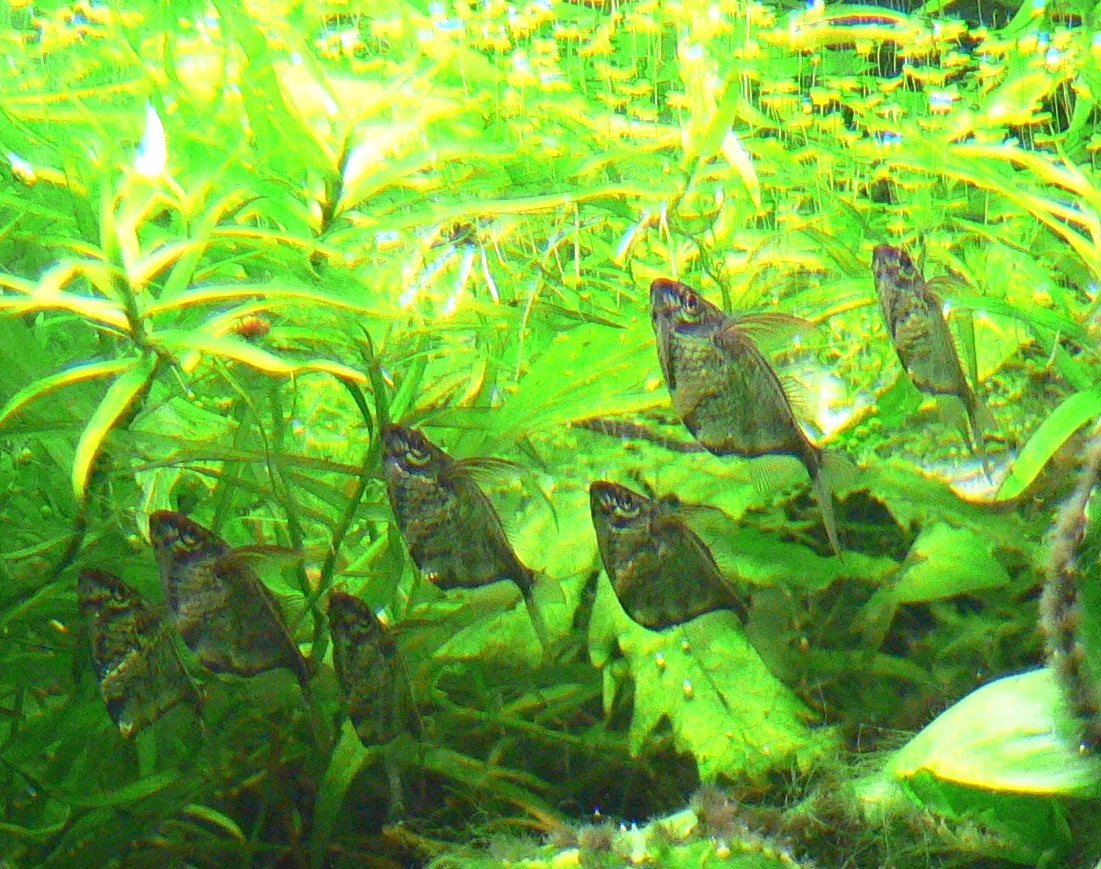
A quiet, loose school. They do not form a tight ball, but they keep visual contact. Too few fish stand singly. Courtship is a display at a leaf, not a fight across the tank.
Reproduction
The fish spawn on the underside of broad leaves, much like the other harlequins. The parents eat the spawn. Breeding needs a separate, soft tank and a suitable leaf. The larvae are very small.
Gallery
More species in this group
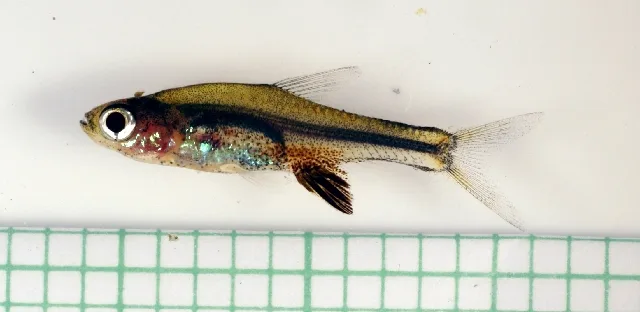
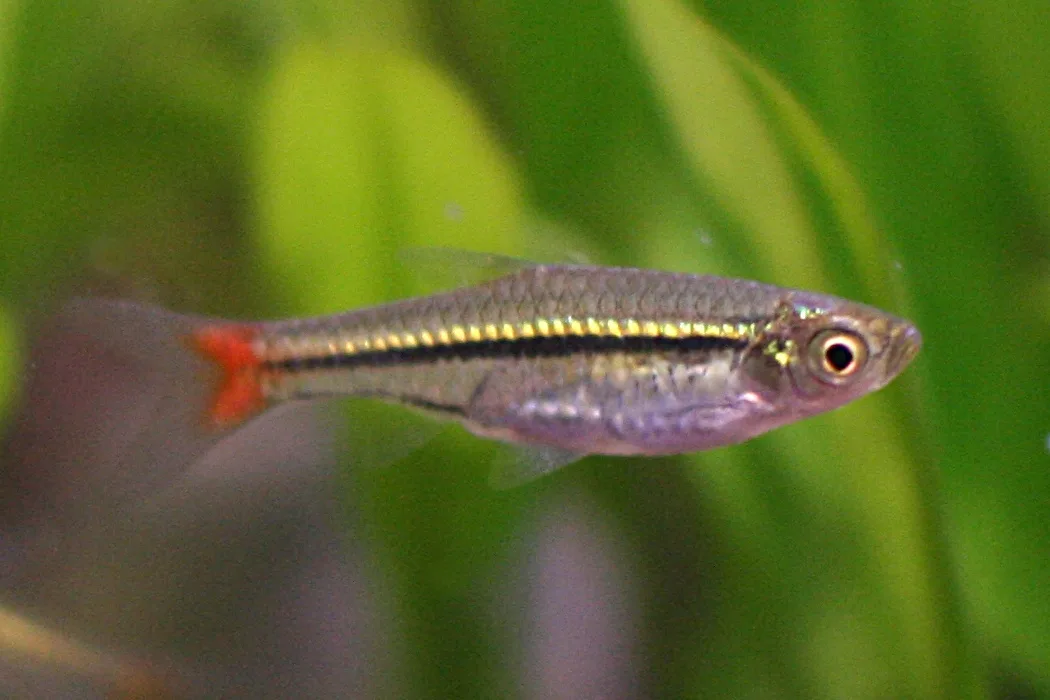
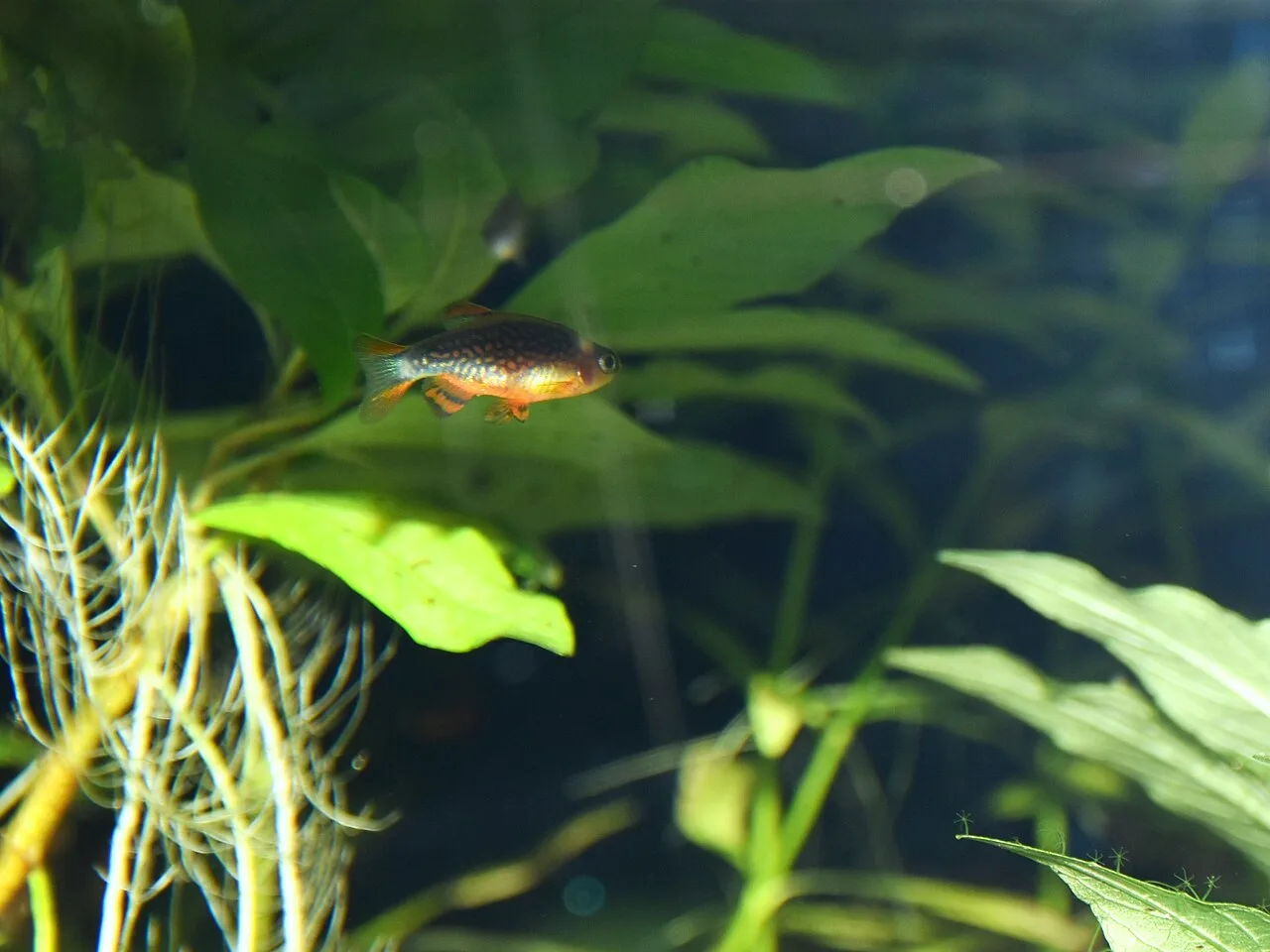
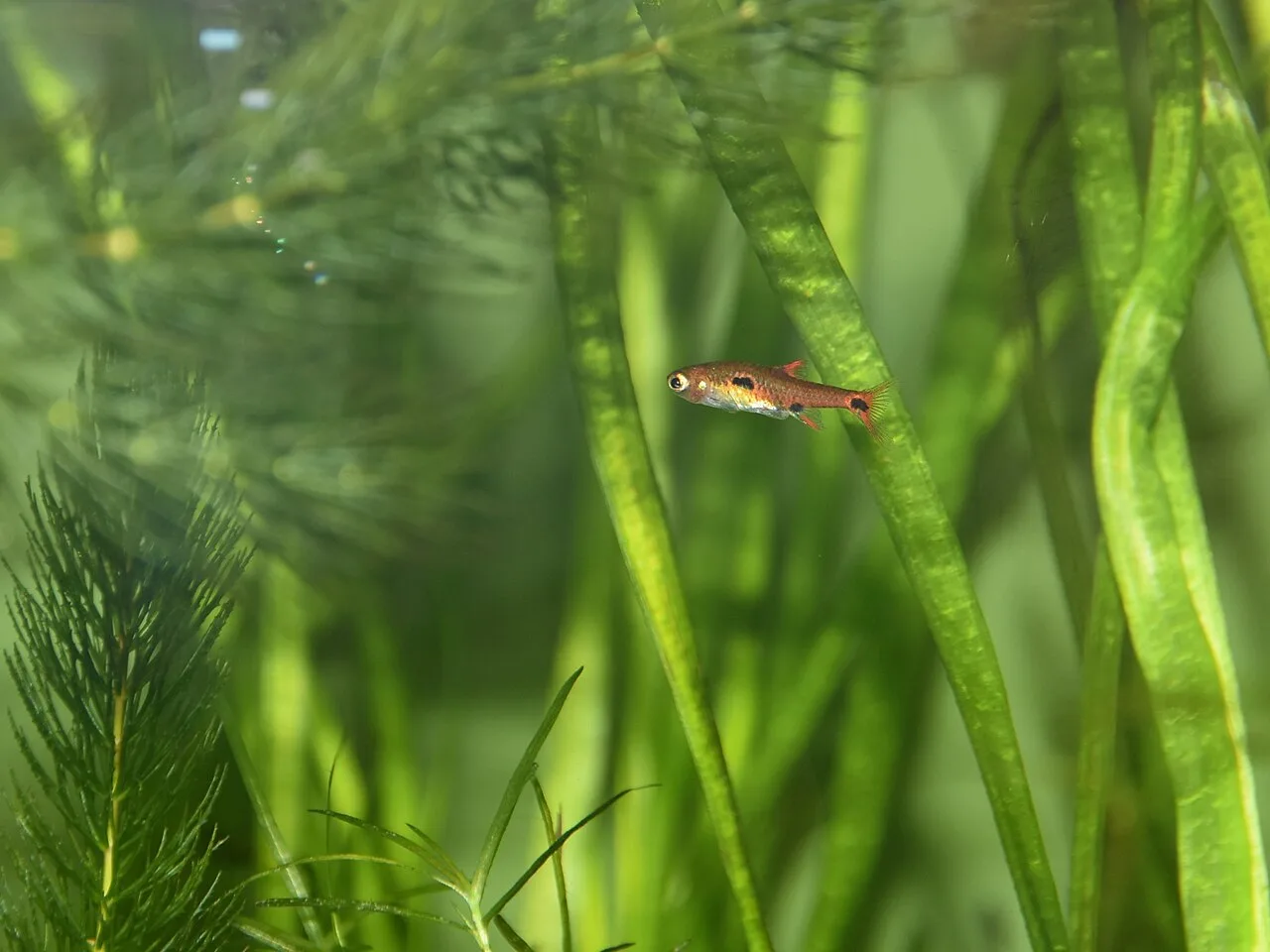
Similar water needs
Species with a similar temperature, a similar pH and a comparable adult size. Whether their behaviour fits as well is what the compatibility check is for.