Lambchop rasbora
Trigonostigma espei
22 views
A slender schooling fish from Southeast Asia with a narrow wedge spot. It stays smaller, and wants warmer and softer water, than many rasboras sold under the same shop name.
- Temperature
- 23 – 28 °C
- pH
- 5.5 – 7 pH
- General hardness
- 2 – 10 °dH
- Maximum size
- 3.5 cm
- Minimum group size
- 8
- Minimum tank size
- 60 L
4 min read · 584 words
Fresh water
Quick facts
Place in the aquarium
Highlighted are the water layer and the spots where the species usually stays in the tank.
- Middle water Usually stays in the middle of the tank, between bottom and surface.
- Dense plants Looks for dense planting as cover, retreat or grazing ground.
Shrimp in the tank
Shrimplets at risk
- Not shrimp safe
- Dwarf shrimp at risk
- Shrimplets at risk
- Shrimp safe
- Adult dwarf shrimp
- Safe
- Shrimplets
- Get eaten
- Safe from shrimp size
- about 1 cm
The lambchop rasbora is a good partner for dwarf shrimp. Males grow to only 2.5 cm and females to 4 cm, and their small mouth cannot handle adult shrimp. Shrimp from about 1 cm are safe. Freshly hatched young may be caught in open water, though.
In densely planted tanks like the ponds and swamps the species knows, many young survive. Moss on the bottom and leaf litter give extra protection. Neocaridina and Caridina suit equally well.
Home & range
Hatched countries are where the species occurs. It lives in particular waters there, not across the whole country. The points name known waters for orientation, not collection sites.
- Country of origin
- Water for orientation
Native
- Vietnam
- Range: a population on Phú Quốc island.
Overview
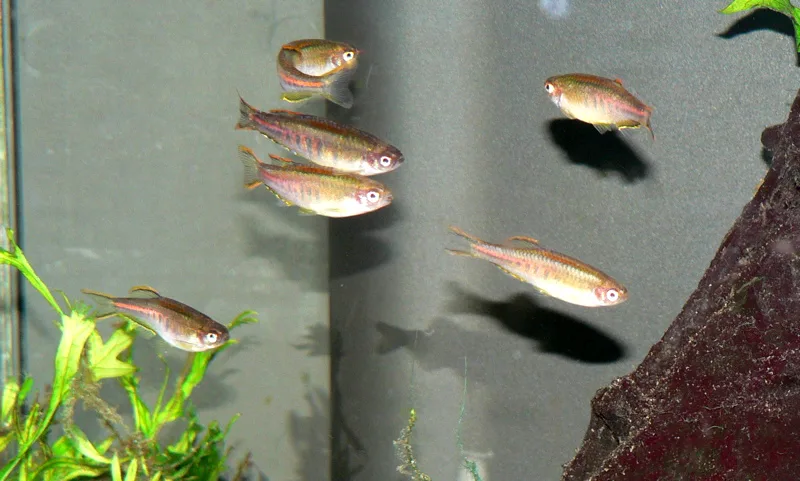
Trigonostigma espei reaches about 3 to 3.5 cm. The body is warm orange to copper, and the wedge is narrower than in the classic harlequin, T. heteromorpha. In a school the species looks like a small glow over a dark bottom. A single fish puts that effect out.
Females are deeper, males slimmer and often stronger in colour. The difference is easier in the school than on one fish in a net. Confusion with T. heteromorpha and T. hengeli is common in the trade. Body depth and the shape of the spot separate them, not the label at the till.
Features
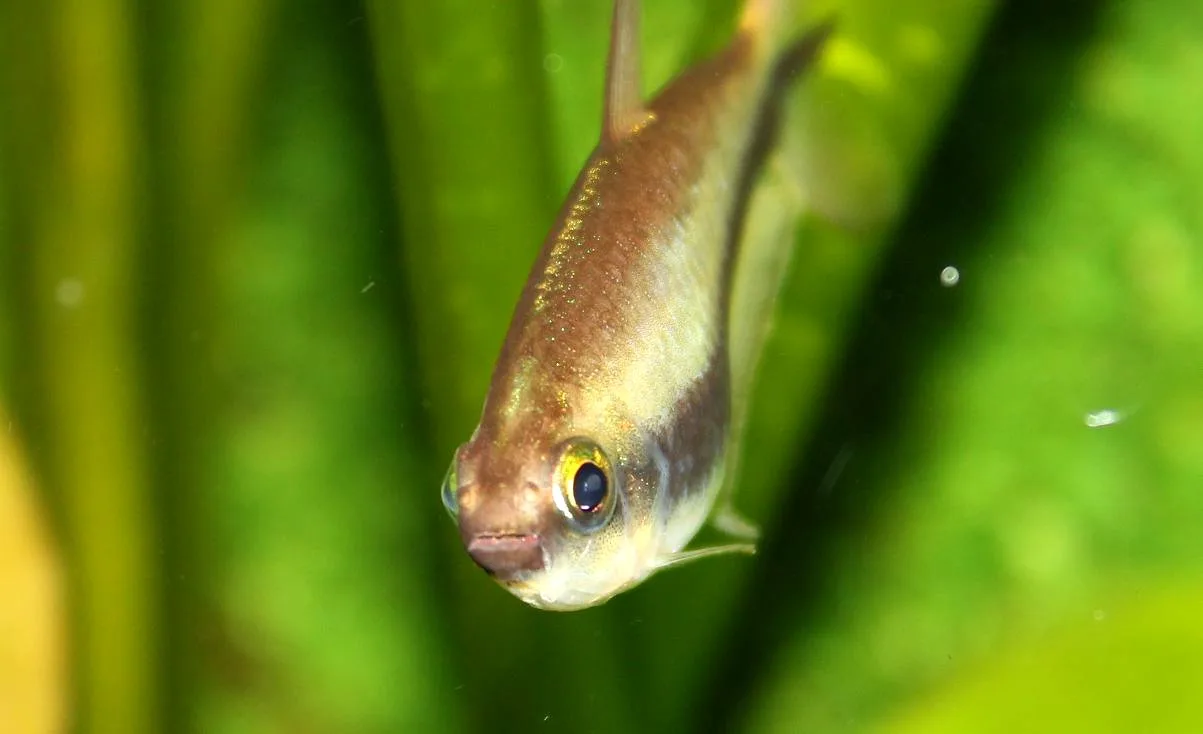
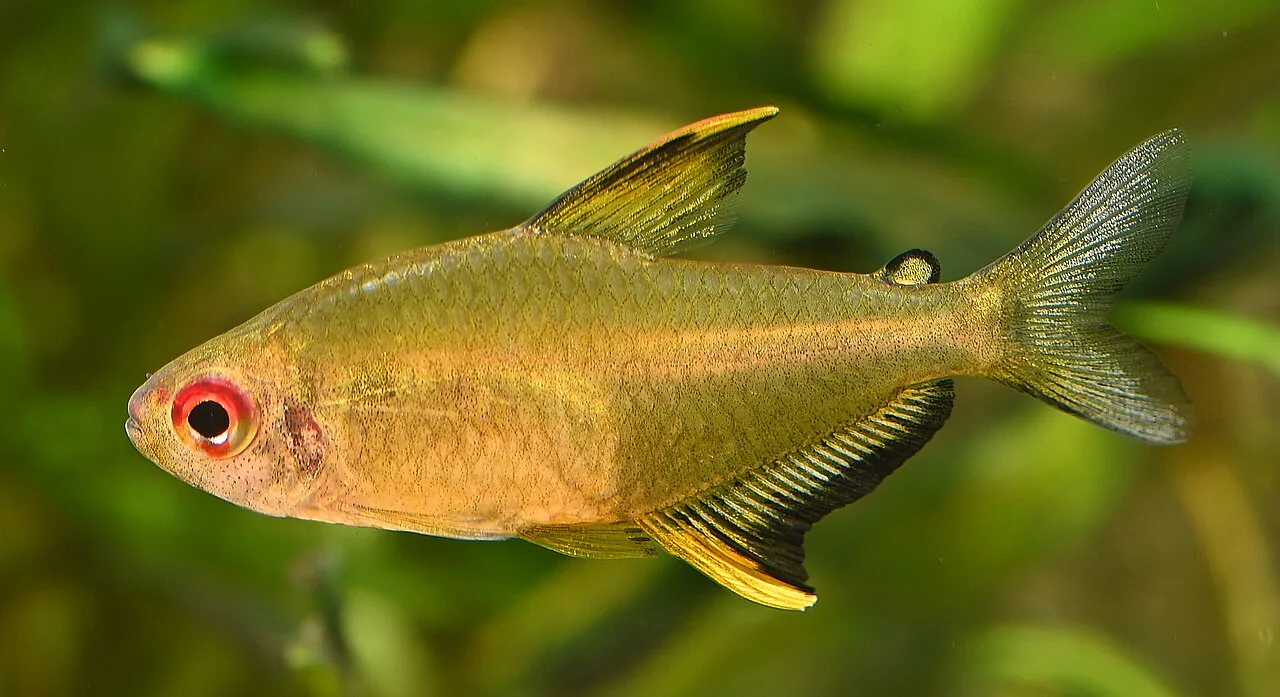
The lambchop rasbora is somewhat more elongated than the harlequin rasbora. The ground colour is deep orange-red. The dark wedge is narrower in front than in the harlequin rasbora and, especially in females, looks almost like a longitudinal and a vertical band meeting at a right angle in front. Its distance from the belly edge roughly equals its front width. Males reach 2.5 cm, females 4 cm. The English name comes from the dark patch, which looks like a lamb chop.
Name and taxonomy
Meinken described the form in 1967 in an aquarium magazine as the subspecies Rasbora heteromorpha espei. The name honours the German ornamental fish importer H. Espe, who probably imported it first. Because the original description lacks a usable diagnosis, it is uncertain whether it is identical with the species raised to species rank by Rainboth and Kottelat in 1987. The status of the species is repeatedly questioned.
Origin & habitat
This describes the origin, not how to furnish the aquarium.
The species lives in soft, often acidic, humic waters in Thailand and Cambodia, in flooded forest and quiet side channels. That is not hard tap water, even though some captive-bred fish are more tolerant than wild ones.
A country note without a water polygon stays coarse. For the tank the water type matters: dim light, leaf litter and wood, not a bright gravel desert.
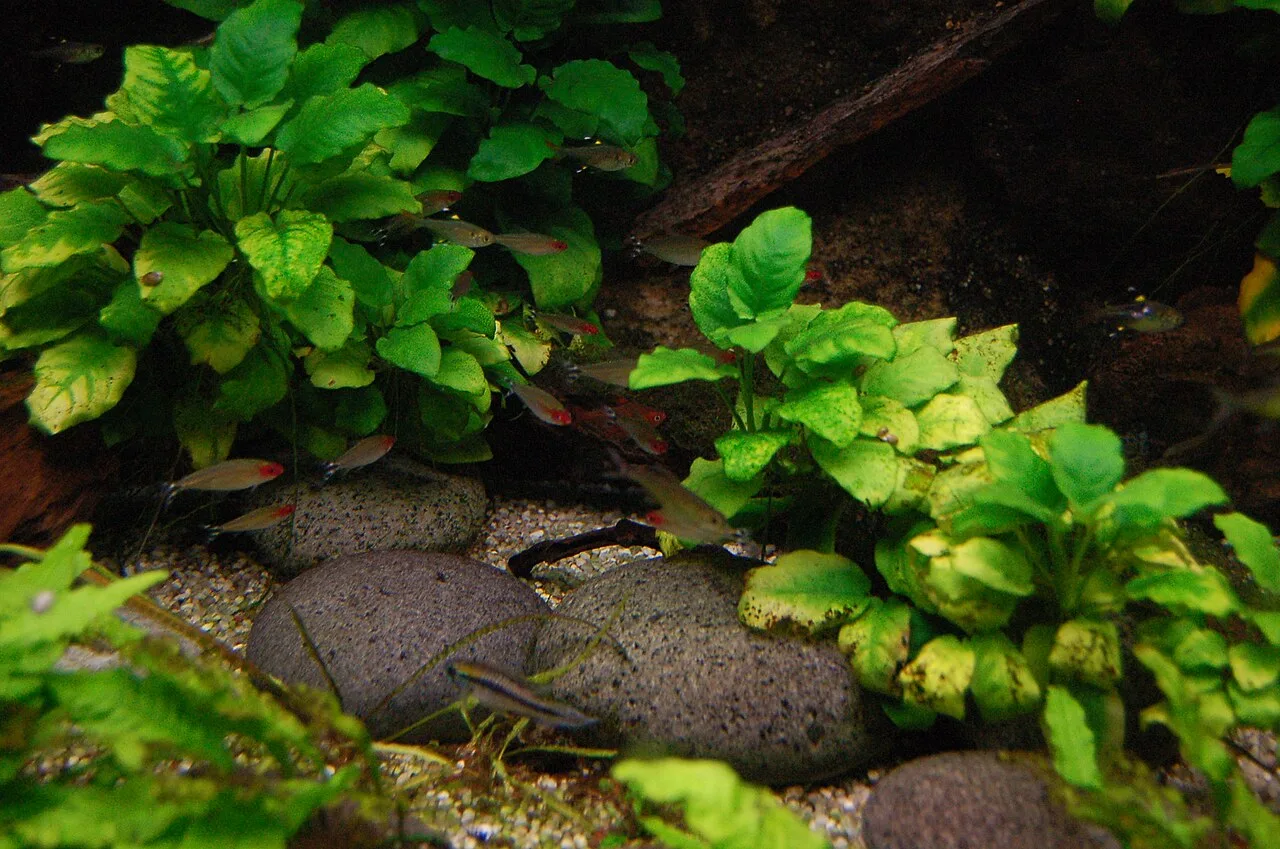
The species comes from south-eastern Thailand and Cambodia, and a further population lives on Phú Quốc island in Vietnam. It lives in densely vegetated ponds, pools and swamps. The IUCN lists it as least concern.
Care
Water
23 to 28 °C, pH 5.5 to 7, rather soft. Tanks from about 60 litres, a school from eight, better more. Floating plants dim the light. A fine, dark bottom and wood give the copper a background against which the fish can be seen at all.
Company
Other small, calm fish: celestial pearl danios, small tetras, pygmy corydoras, shrimp in a mature tank. Large barbs and cichlids eat or stress them. The species jumps. Cover the tank.
Diet
Fine prepared foods. The mouth is small. Flakes that are too large are spat out or ignored. Cyclops, brine-shrimp nauplii, dust-fine dry food and crushed frozen food fit.
The fish feed in midwater. A feeding of bottom tablets alone misses them.
Behavior
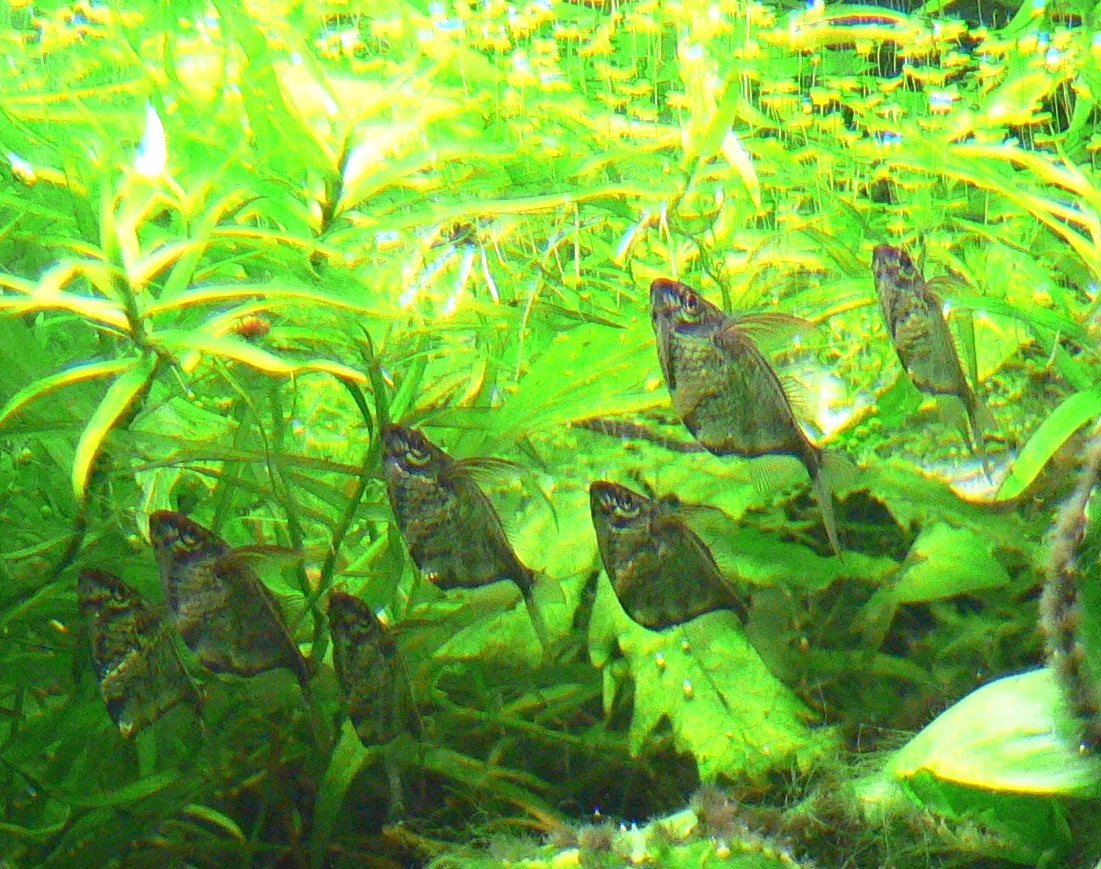
A close, quiet school. The fish do not form a ball, but they keep each other in sight. When startled they move together under the floating plants. Too few fish lose the band and stand singly at the glass.
Within the species they are peaceful. Male courtship is a display, not a fight across the whole tank.
Reproduction
The fish spawn on the underside of broad leaves, much like the harlequin. The male courts the female and turns her against the leaf. The parents do not guard the eggs and eat them if they can still reach them.
Breeding works in soft water with a separate setup and a suitable leaf, not beside a hungry school. The larvae are very small.
Gallery
More species in this group
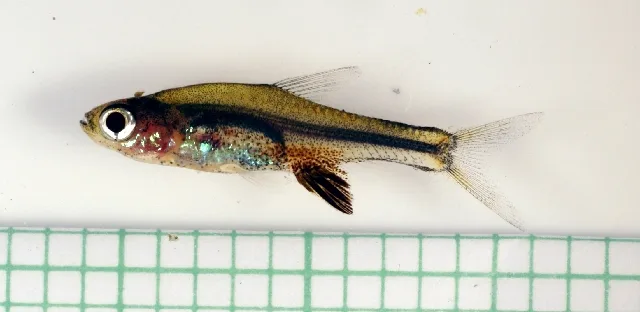
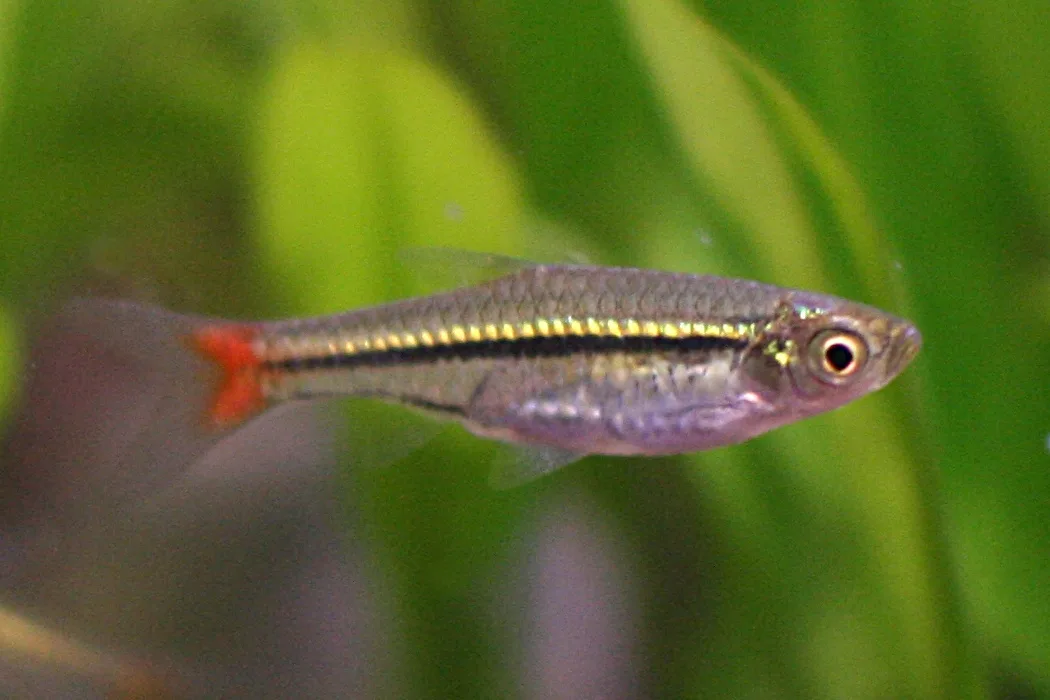
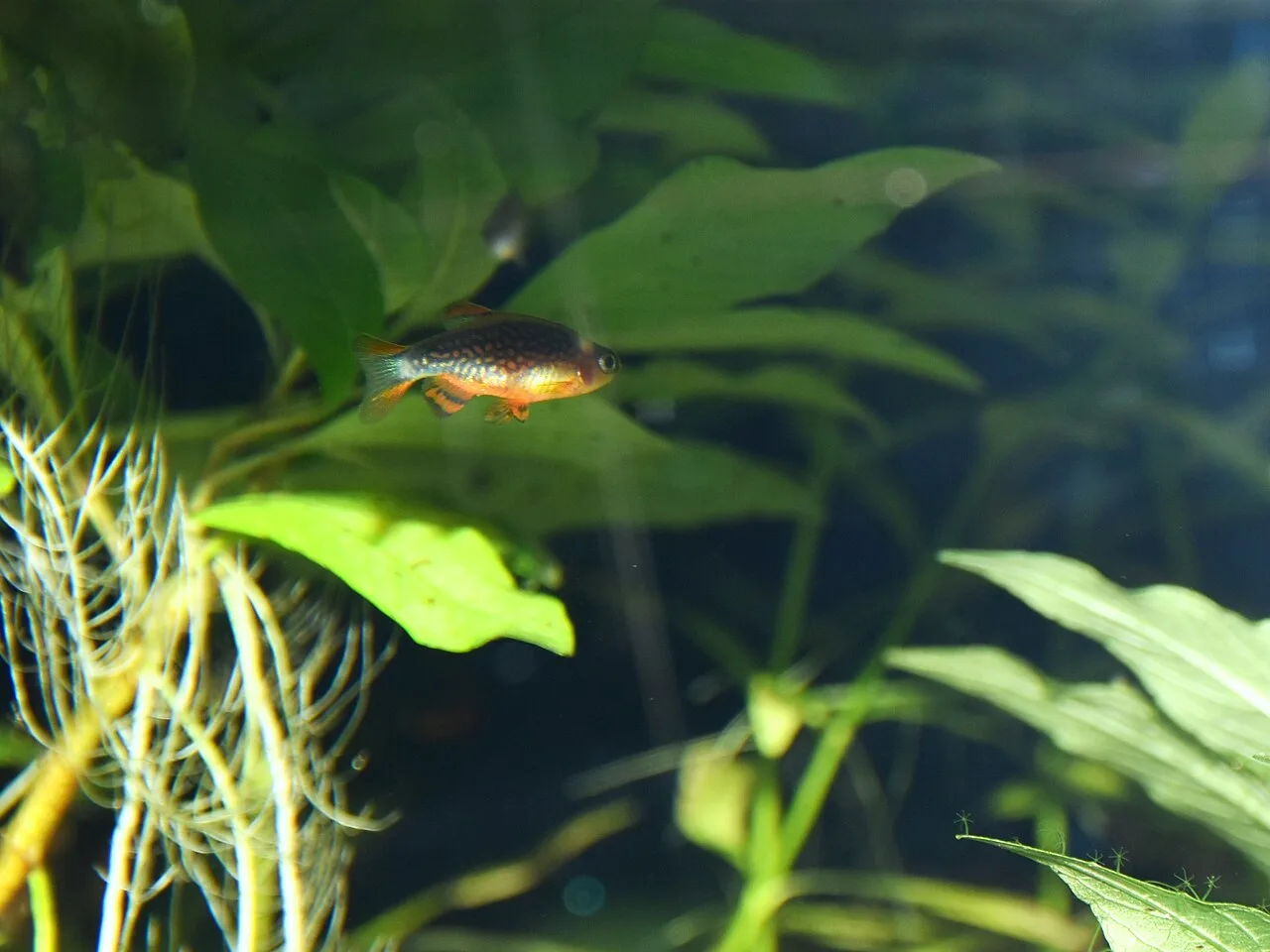
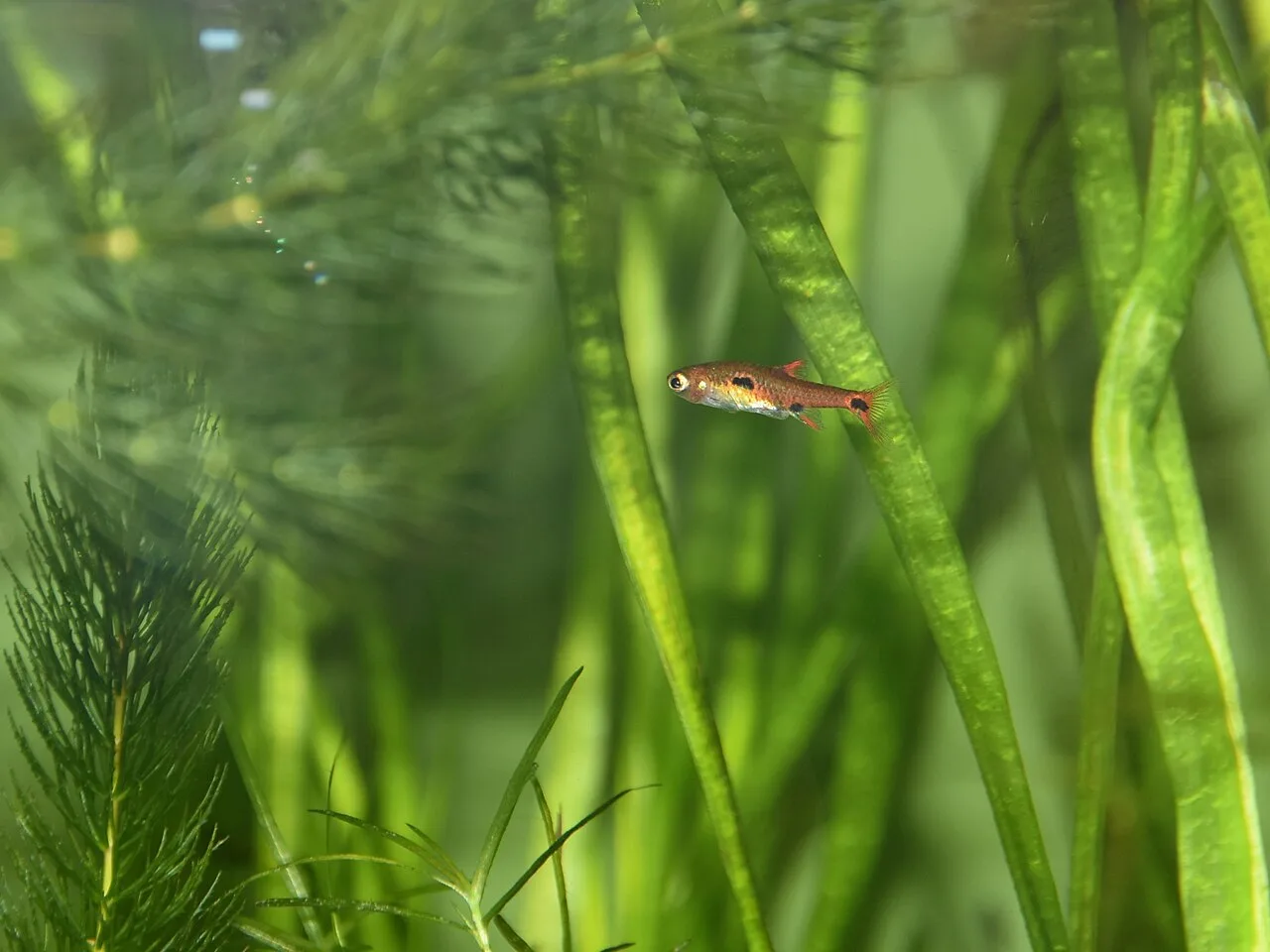

Similar water needs
Species with a similar temperature, a similar pH and a comparable adult size. Whether their behaviour fits as well is what the compatibility check is for.