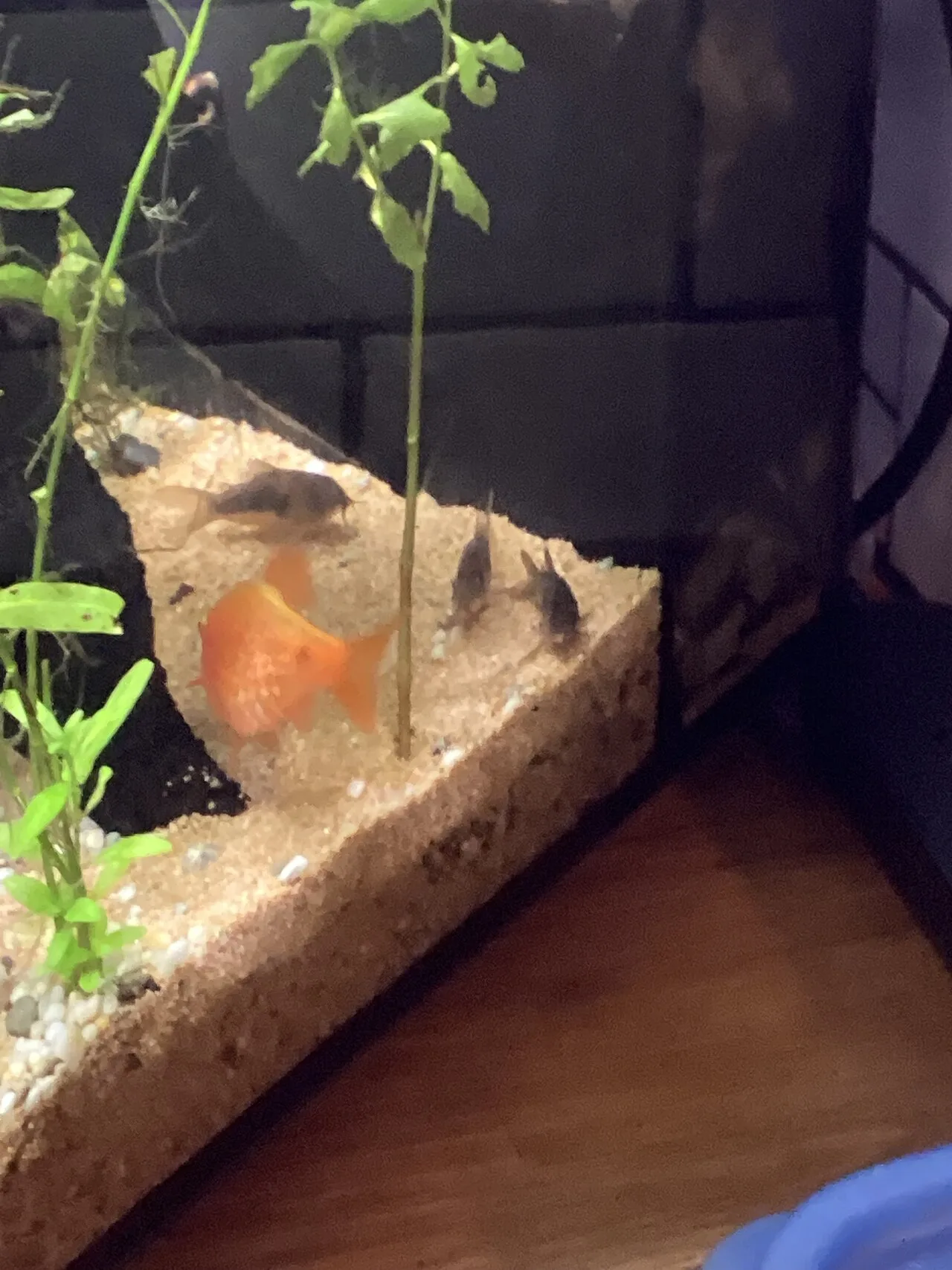
One-spot livebearer
Phalloceros caudimaculatus
2 views
A small, hardy livebearer from southern South America with a dark spot on the side. It also tolerates cooler water.
- Temperature
- 18 – 26 °C
- pH
- 6.5 – 8 pH
- General hardness
- 8 – 20 °dH
- Maximum size
- 5 cm
- Minimum tank size
- 60 L
1 min read · 150 words
Quick facts
Place in the aquarium
Highlighted are the water layer and the spots where the species usually stays in the tank.
- Upper water Usually stays in the top third of the tank.
- Middle water Usually stays in the middle of the tank, between bottom and surface.
- Dense plants Looks for dense planting as cover, retreat or grazing ground.
Shrimp in the tank
Shrimplets at risk
- Not shrimp safe
- Dwarf shrimp at risk
- Shrimplets at risk
- Shrimp safe
- Adult dwarf shrimp
- Safe
- Shrimplets
- Get eaten
- Safe from shrimp size
- about 1.5 cm
Adult dwarf shrimp are safe with the one-spot livebearer. At about 5 cm it stays small and eats small invertebrates and plant food. Shrimp from about 1.5 cm are too large. Juvenile shrimp are eaten when they come within reach.
Since both tolerate cooler water, the one-spot livebearer suits Neocaridina well. Moss and fine plants give the young cover.
Home & range
Hatched countries are where the species occurs. It lives in particular waters there, not across the whole country. The points name known waters for orientation, not collection sites.
- Country of origin
- Water for orientation
Native
Overview
Phalloceros caudimaculatus reaches about 5 cm as a female, while males stay at about 3 cm. The body is pale olive with a dark spot in the middle of the flank. The trade also offers a black-mottled form. It belongs to the same species.
It is not a guppy. It is more plainly coloured and far less sensitive to cooler water.
Origin & habitat
This describes the origin, not how to furnish the aquarium.
Coastal waters in southern Brazil, Uruguay, Paraguay and Argentina. The countries stay a coarse origin. Cooler, plant-rich water matches that.
Care
Group
18 to 26 °C, pH 6.5 to 8. A group with more females than males, tanks from about 60 litres. Plants, floating plants.
Company
Small, calm fish that tolerate cooler water. Hot tropical tanks above 28 °C are not needed.
Diet
Omnivore. Flakes, brine shrimp, mosquito larvae, plant food.
Behavior
A peaceful group. Males court constantly, and more females spread that.
Reproduction
Livebearer. The young are small and find cover in plants. Without intervention the numbers grow.
Gallery
More species in this group
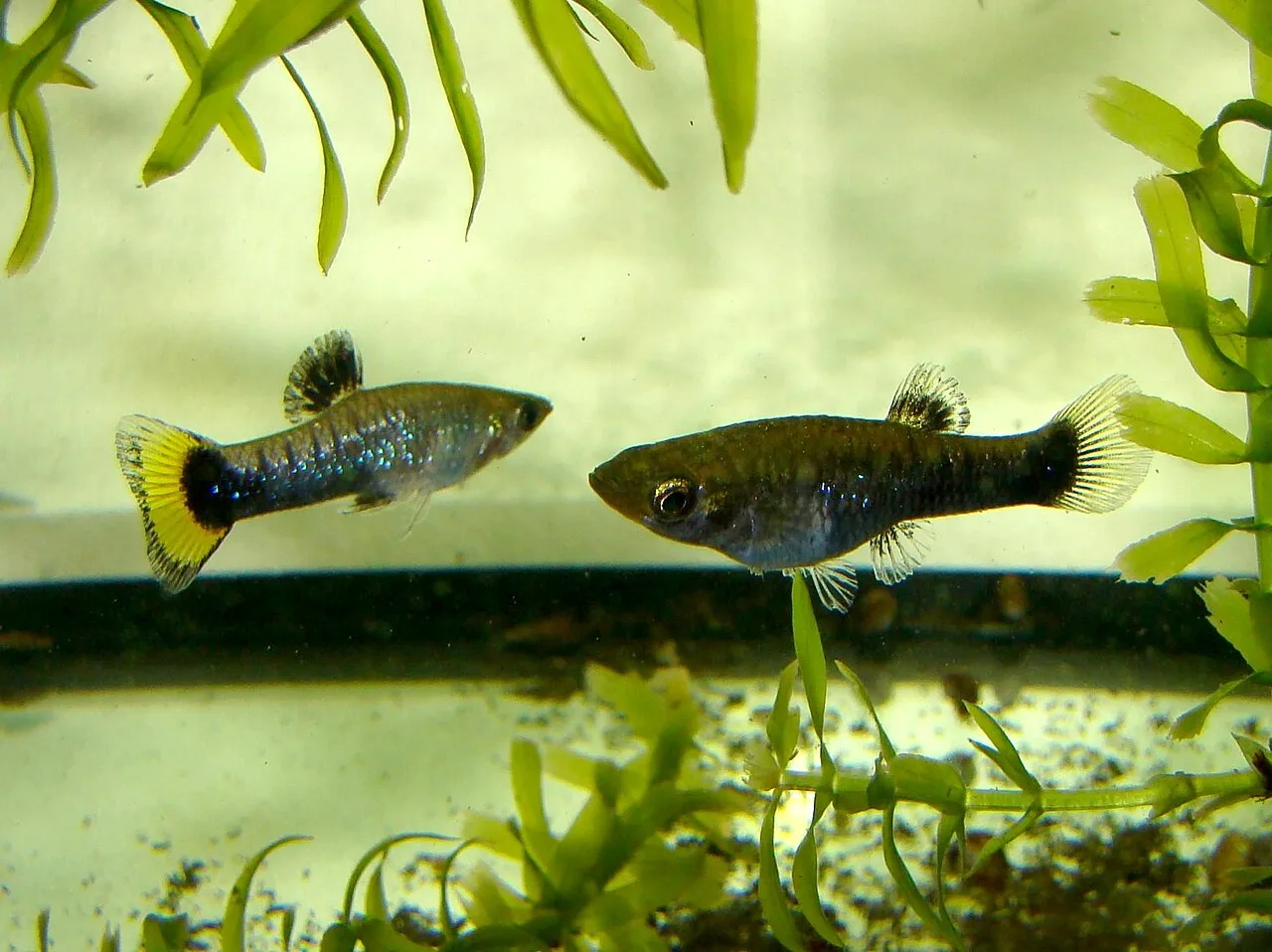
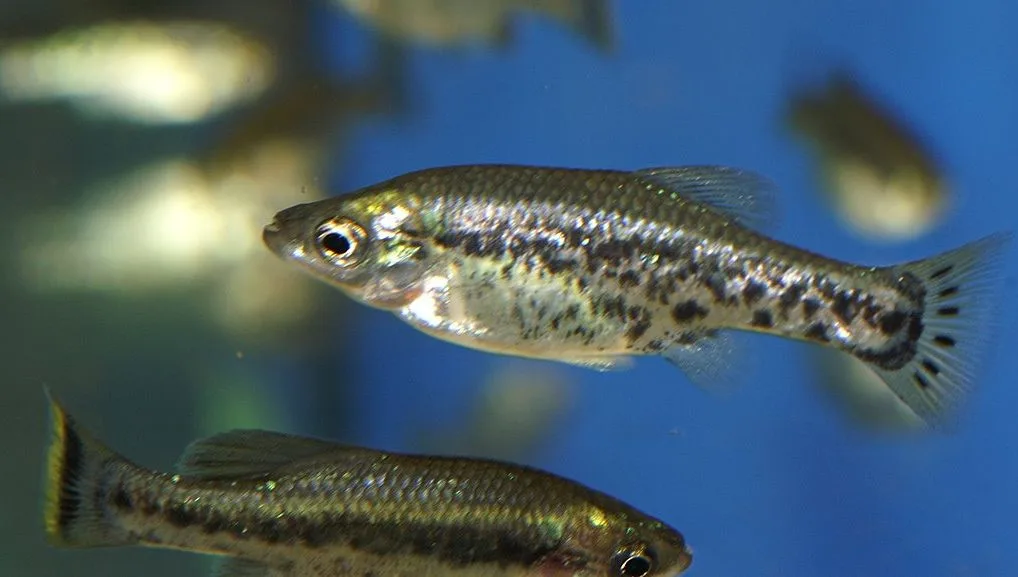
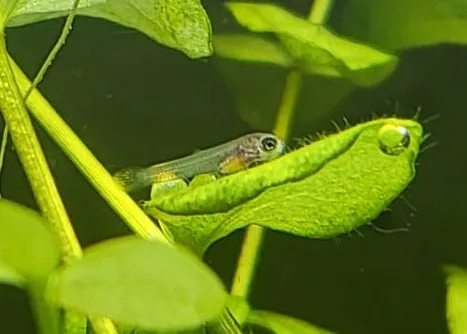

Similar water needs
Species with a similar temperature, a similar pH and a comparable adult size. Whether their behaviour fits as well is what the compatibility check is for.