Ornate ctenopoma
Microctenopoma ansorgii
1 view
A small African labyrinth fish with orange-green bars. It is shy and feels at home in subdued light.
- Temperature
- 24 – 28 °C
- pH
- 6 – 7 pH
- General hardness
- 2 – 10 °dH
- Maximum size
- 7 cm
- Minimum tank size
- 100 L
1 min read · 170 words
Quick facts
Place in the aquarium
Highlighted are the water layer and the spots where the species usually stays in the tank.
- Middle water Usually stays in the middle of the tank, between bottom and surface.
- Dense plants Looks for dense planting as cover, retreat or grazing ground.
Shrimp in the tank
Dwarf shrimp at risk
- Not shrimp safe
- Dwarf shrimp at risk
- Shrimplets at risk
- Shrimp safe
- Adult dwarf shrimp
- At risk
- Shrimplets
- Get eaten
- Safe from shrimp size
- about 3 cm
For dwarf shrimp the ornate ctenopoma is a risk. It reaches about 7 cm and lies in wait for small animals in the shade. Juvenile shrimp and small Neocaridina are eaten. Larger shrimp from about 3 cm are usually safe.
Because it hunts precisely in densely planted zones, plants protect shrimp less than with other fish. Dwarf shrimp belong in a tank of their own.
Home & range
Hatched countries are where the species occurs. It lives in particular waters there, not across the whole country. The points name known waters for orientation, not collection sites.
- Country of origin
- Water for orientation
Native
Overview
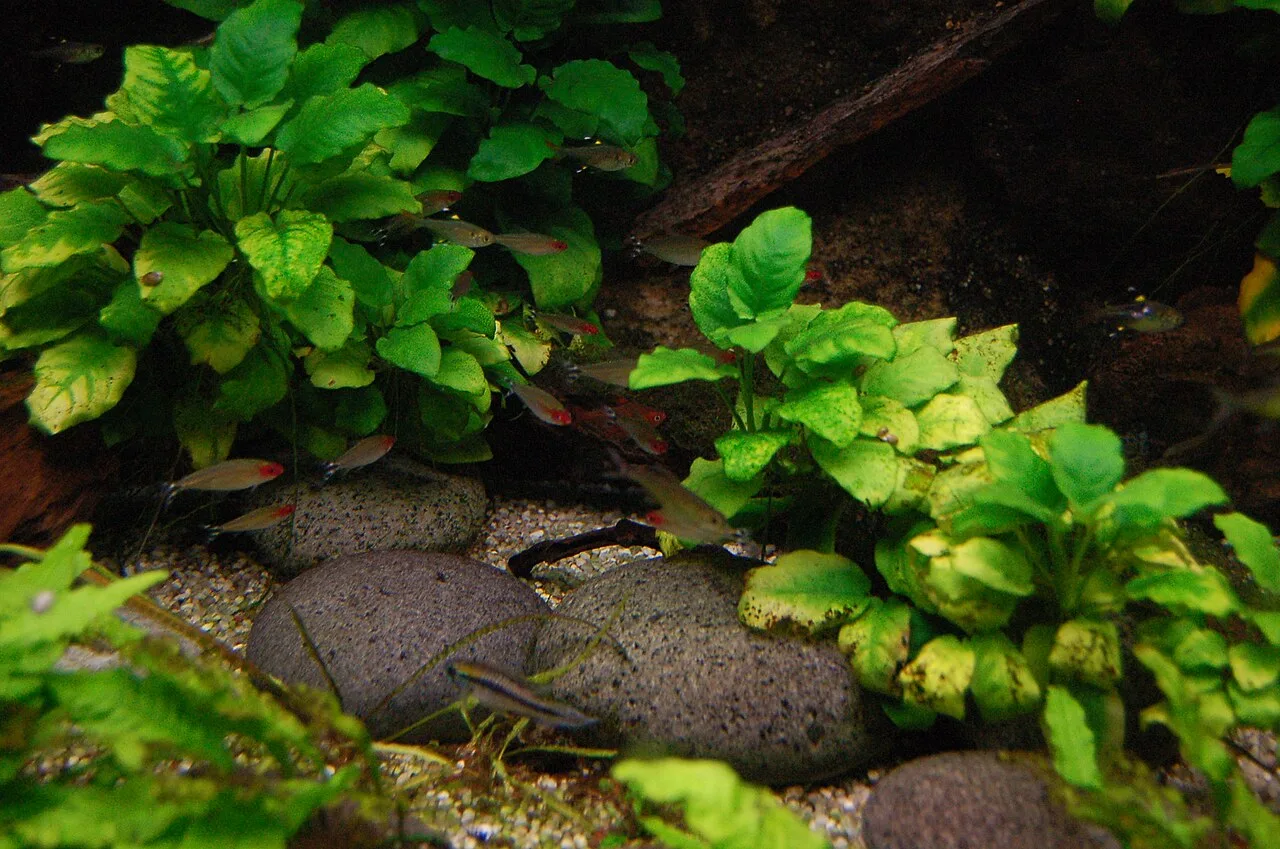
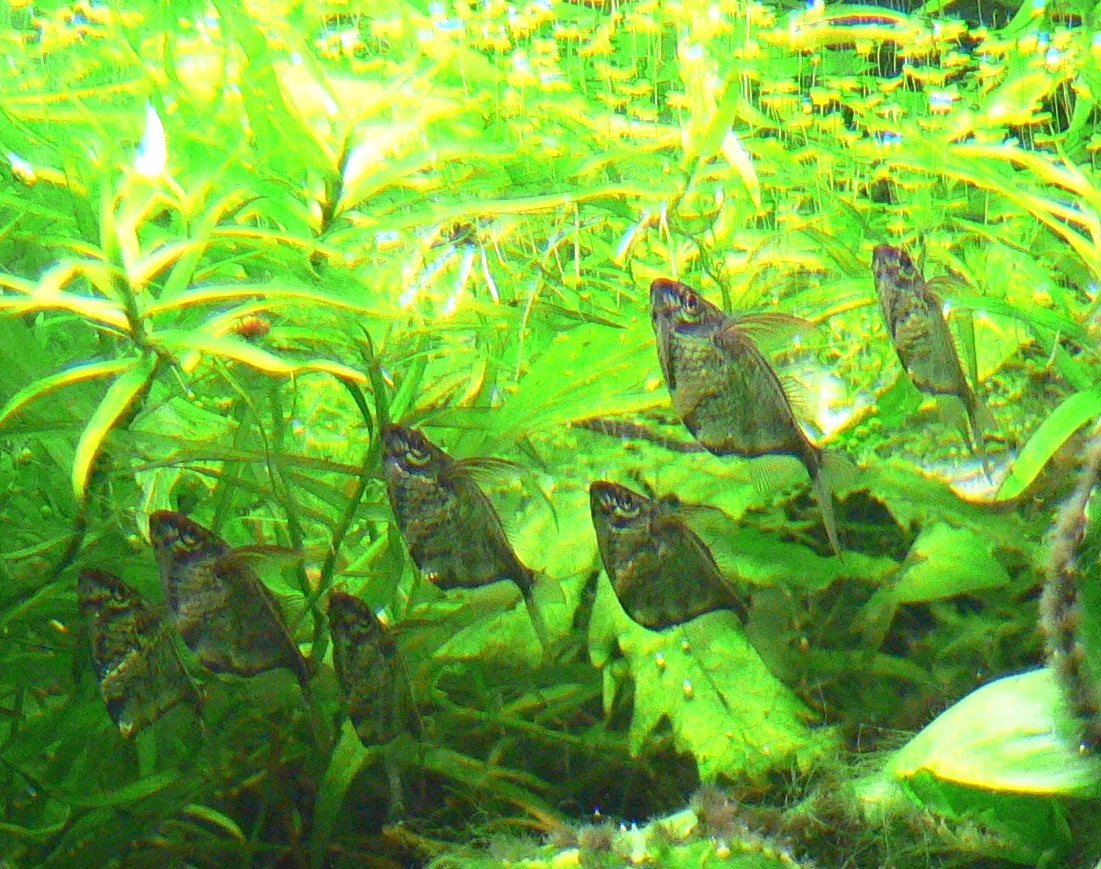
Microctenopoma ansorgii reaches about 7 cm. The body carries orange to reddish and greenish bars, and the fins are edged in white. Males are more strongly coloured when courting. The fish like to stand in the shade among plants and wood.
It is not a betta and not a gourami. It belongs to the African climbing perches and needs calm rather than bright light.
Origin & habitat
This describes the origin, not how to furnish the aquarium.
Slow, shaded waters in the Congo basin. The countries stay a coarse origin. Soft, slightly acidic water with leaf litter and wood matches that.
Care
Calm
24 to 28 °C, pH 6 to 7. A pair or a small group from about 100 litres. Dense plants, wood, leaf litter, floating plants, subdued light.
Company
Calm fish that do not fit in its mouth. Very small fish and shrimp are eaten.
Diet
Meaty food. Mosquito larvae, brine shrimp, daphnia, mysis. Dry food is often taken hesitantly.
Behavior
Shy, but not aggressive toward other species. Males defend a zone when breeding.
Reproduction
Bubble-nest builder. The male builds a nest under floating plants and guards eggs and larvae.
Gallery
More species in this group

Similar water needs
Species with a similar temperature, a similar pH and a comparable adult size. Whether their behaviour fits as well is what the compatibility check is for.