
Peaceful betta
Betta imbellis
20 views
A small labyrinth fish close to the Siamese fighting fish. Peaceful does not mean that two males share a nano tank.
- Temperature
- 24 – 28 °C
- pH
- 6 – 7.5 pH
- General hardness
- 5 – 10 °dH
- Maximum size
- 5 cm
- Minimum tank size
- 40 L
5 min read · 806 words
Fresh water
Quick facts
Further published values
- Lifespan
- 5 a
Place in the aquarium
Highlighted are the water layer and the spots where the species usually stays in the tank.
- Water surface Stays just below the surface. The top needs a calm current and a cover.
- Upper water Usually stays in the top third of the tank.
- Dense plants Looks for dense planting as cover, retreat or grazing ground.
Shrimp in the tank
Dwarf shrimp at risk
- Not shrimp safe
- Dwarf shrimp at risk
- Shrimplets at risk
- Shrimp safe
- Adult dwarf shrimp
- At risk
- Shrimplets
- Get eaten
- Safe from shrimp size
- about 4 cm
The peaceful betta endangers even adult dwarf shrimp. It grows to only 5 to 6 cm but eats terrestrial and aquatic invertebrates and is an attentive hunter among plants and at the surface. Young shrimp are reliably eaten, and adult Neocaridina or Caridina as well, depending on the individual. Larger shrimp such as Amano shrimp from about 4 cm are usually safe.
Anyone who wants to try offers very dense planting and moss. For a stable dwarf shrimp colony a separate tank is the better choice.
Home & range
Hatched countries are where the species occurs. It lives in particular waters there, not across the whole country. The points name known waters for orientation, not collection sites.
- Country of origin
- Water for orientation
Native
- Vietnam
- Range: Phú Quốc island.
Overview
Betta imbellis stays at about 5 cm. Males show a dark blue to black with red in the fins and turquoise spots, shorter and less veiled than the long cultivated fins of Betta splendens. Females are plainer and have a smaller fin. The species looks wilder and stockier than the veil betta in the trade.
The German name promises a tolerance that holds only toward other species and toward a suitable female. Males remain rivals. Crosses with B. splendens occur and should not be passed on as this species.
Features
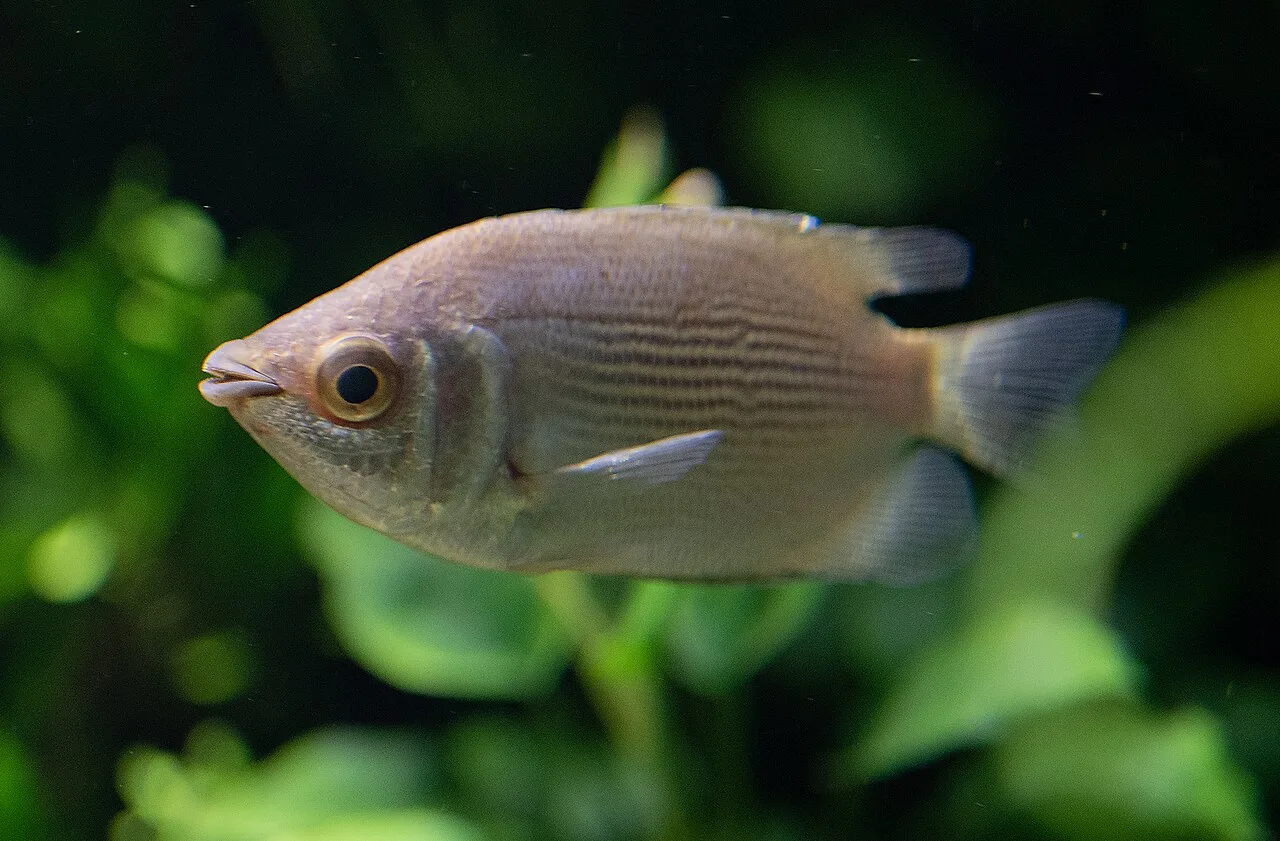
The peaceful betta reaches about 4.5 to 5 cm, with females slightly smaller. Other reports give up to 6 cm standard length. The gill cover spots are usually blue or green but can be red or absent. In normal colouring the species is plain, and both sexes show two dark longitudinal stripes and a clear spot on the caudal peduncle. In breeding colour the male is intense metallic blue, with red on the tail margin, parts of the anal fin and the pelvic fins. Females show only a little red and blue and dark bars. The species resembles the Siamese fighting fish but is much less aggressive. Like all labyrinth fish it breathes air and survives warm, oxygen-poor water.
Taxonomy
Werner Ladiges described the species in 1975, with Kuala Lumpur as the type locality. It is placed in the splendens group.
Origin & habitat
This describes the origin, not how to furnish the aquarium.
Shallow, plant-rich waters in Thailand and the Malay Peninsula, often near waters where B. splendens also occurs. Warm, still water, floating plants, little current. The countries stay a coarse origin.
The habitat is tight and structured, not empty. Tightness alone is not an argument for an unheated glass without cover.
The species lives on Sumatra, in Singapore, on the Malay Peninsula, on Borneo, in Laos, on Phú Quốc in Vietnam and in parts of northern and southern Thailand. Whether the fish in Singapore are native or introduced is disputed. It lives in streams, rivers, floodplains and rainforest areas, mostly shallow, calm places with dense submerged plants, also rice paddies and swamps over leaf litter and mud. The temperature varies seasonally between 15 and over 30 °C, and pH 4.5 to 7.2 was measured in white-, clear- and blackwater. The IUCN lists the species as least concern; it is threatened by pollution and by mixing with released domesticated bettas.
Care
Keeping
24 to 28 °C, pH 6 to 7.5. From about 40 litres for a pair, with dense planting, floating plants and two separate zones. The surface stays open enough to breathe and quiet enough for a bubble nest. Avoid cold draught above the water. One male alone is the simplest keeping. A pair only if the female can get away.
Company
Very calm, small fish, or a species tank. Long fins of other bettas, and hectic barbs, no. Shrimp are eaten depending on the individual. The species is not a beginner fish for an unsupervised nano tank without a run-in filter.
Diet
Mostly small animal food. Brine shrimp, mosquito larvae, cyclops, fine frozen food. Dry food only as a supplement, and in a small grain. The fish feed from the surface and from the upper midwater.
A firm food that sinks at once is the poorer choice for a labyrinth fish.
In the wild the species eats terrestrial and aquatic invertebrates, in the aquarium live or frozen food such as daphnia, brine shrimp or bloodworms.
Behavior
Calm toward other species, clearly focused on its own sex. Males spread the gill covers and the fins as soon as they see a second male or their reflection. A mirror as a permanent decoration is therefore a bad idea.
Females show vertical bars when they are ready to spawn. If the bars are missing and the fish flees all the time, it is not a pair. It is a chase.
Males may fight each other, especially in breeding condition. Outside the breeding season males and females can live together. The species jumps. It is kept relatively rarely. Enthusiasts in the International Labyrinth Fish Society keep pure strains of known localities.
Reproduction
Bubble-nest builder. The male builds under floating plants, courts the female and then takes over the clutch. The egg count is below that of large betta farms. The larvae are just as tiny. Rearing needs a separate tank, warm water and the finest food.
In a community tank the nest is usually destroyed before the larvae swim.
The male builds a bubble nest at the surface and shows strong colours, and females ready to spawn show vertical dark stripes. After several false pairings the male wraps around the female beneath the nest. He collects the sinking eggs in his mouth and spits them into the nest. The larvae hatch after one to two days. The male defends the nest and cares for the brood until the young swim freely after four to five days. The lifespan is up to five years.
Gallery
More species in this group
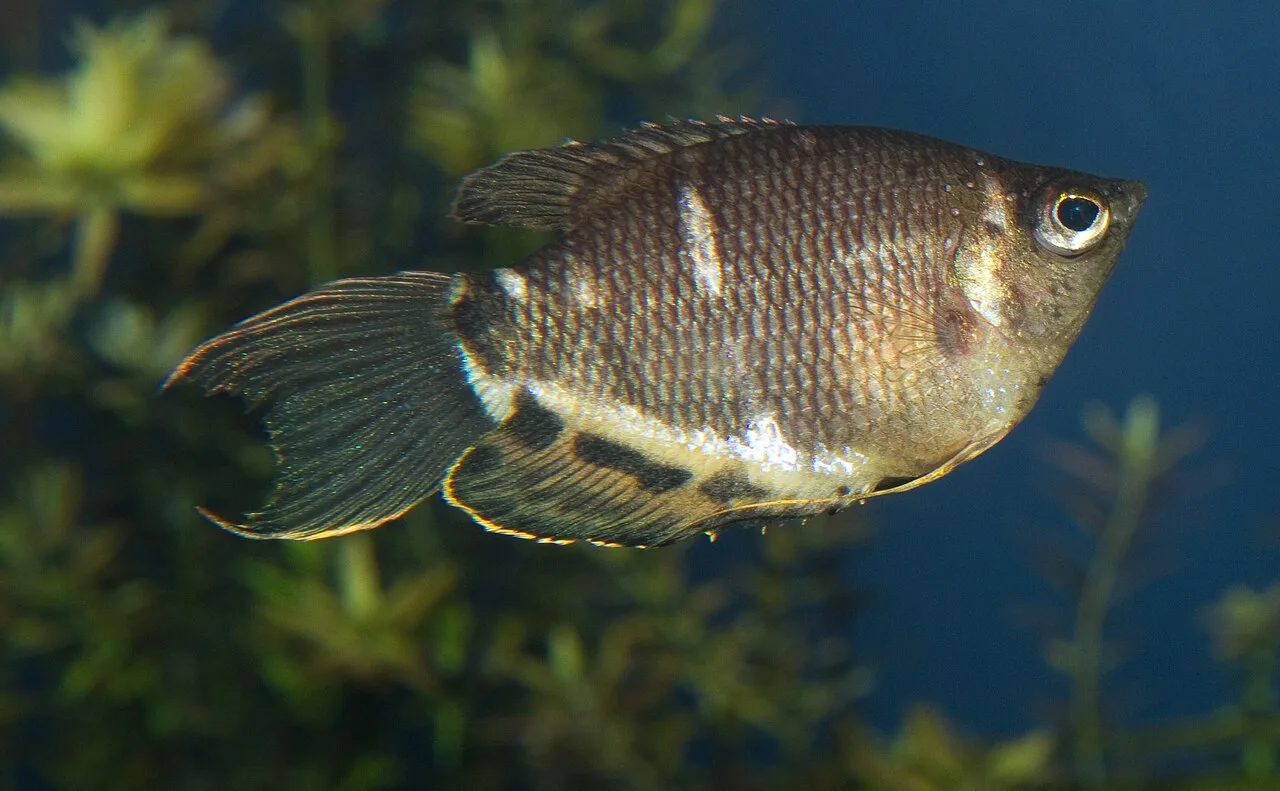
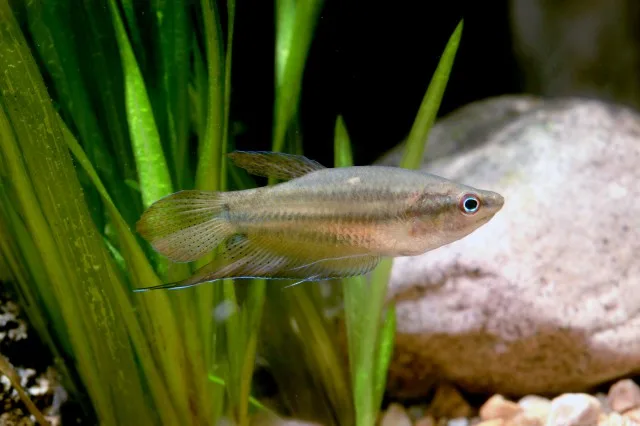
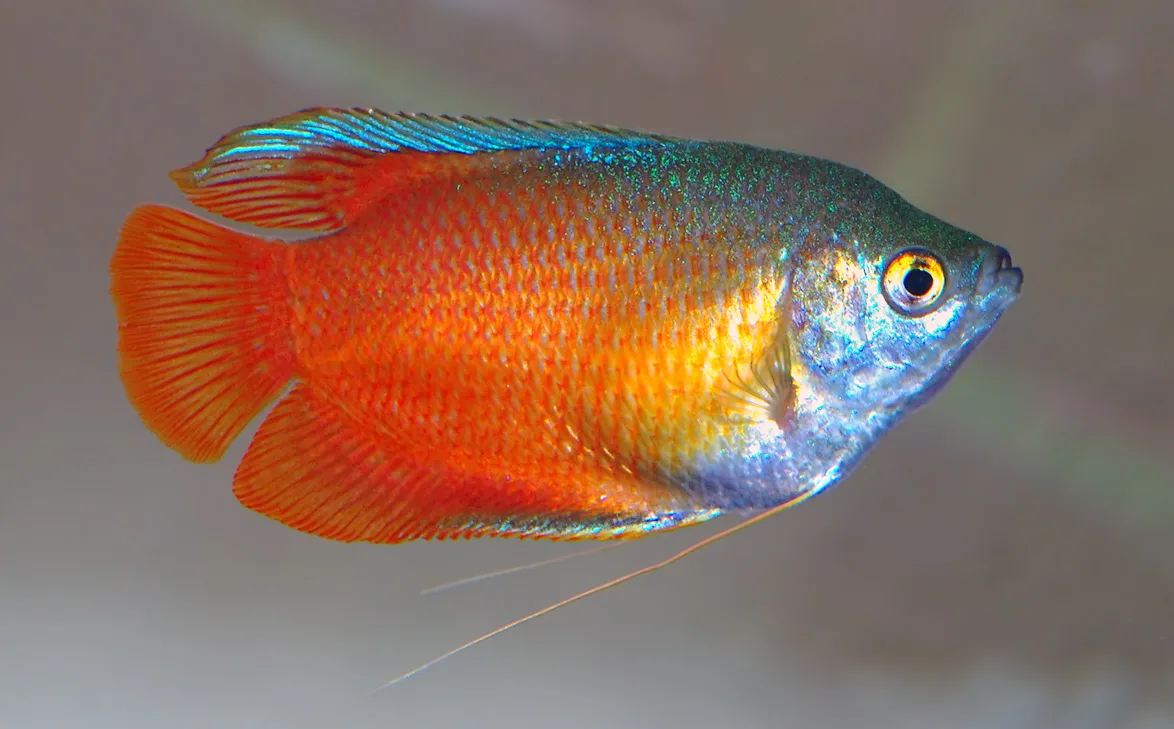
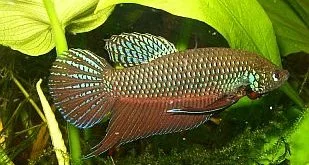

Similar water needs
Species with a similar temperature, a similar pH and a comparable adult size. Whether their behaviour fits as well is what the compatibility check is for.



