Pearl danio
Danio albolineatus
2 views
A fast danio whose body shimmers like mother-of-pearl in pink, blue and violet. It needs length and a school.
- Temperature
- 20 – 25 °C
- pH
- 6.5 – 7.5 pH
- General hardness
- 5 – 15 °dH
- Maximum size
- 6 cm
- Minimum group size
- 8
- Minimum tank size
- 100 L
2 min read · 180 words
Quick facts
Place in the aquarium
Highlighted are the water layer and the spots where the species usually stays in the tank.
- Upper water Usually stays in the top third of the tank.
- Open swimming space Needs an open area without plants or decor to swim at length. Tank length matters more than height.
Shrimp in the tank
Shrimplets at risk
- Not shrimp safe
- Dwarf shrimp at risk
- Shrimplets at risk
- Shrimp safe
- Adult dwarf shrimp
- Safe
- Shrimplets
- Get eaten
- Safe from shrimp size
- about 1.5 cm
Adult dwarf shrimp are safe with the pearl danio. It reaches about 6 cm and feeds at the surface and in midwater. Shrimp from about 1.5 cm are too large for it. Juvenile shrimp are eaten when they get into open water.
Moss and fine plants on the bottom give the young cover, so a shrimp group can hold its own next to the school.
Home & range
Hatched countries are where the species occurs. It lives in particular waters there, not across the whole country. The points name known waters for orientation, not collection sites.
- Country of origin
- Water for orientation
Native
Overview
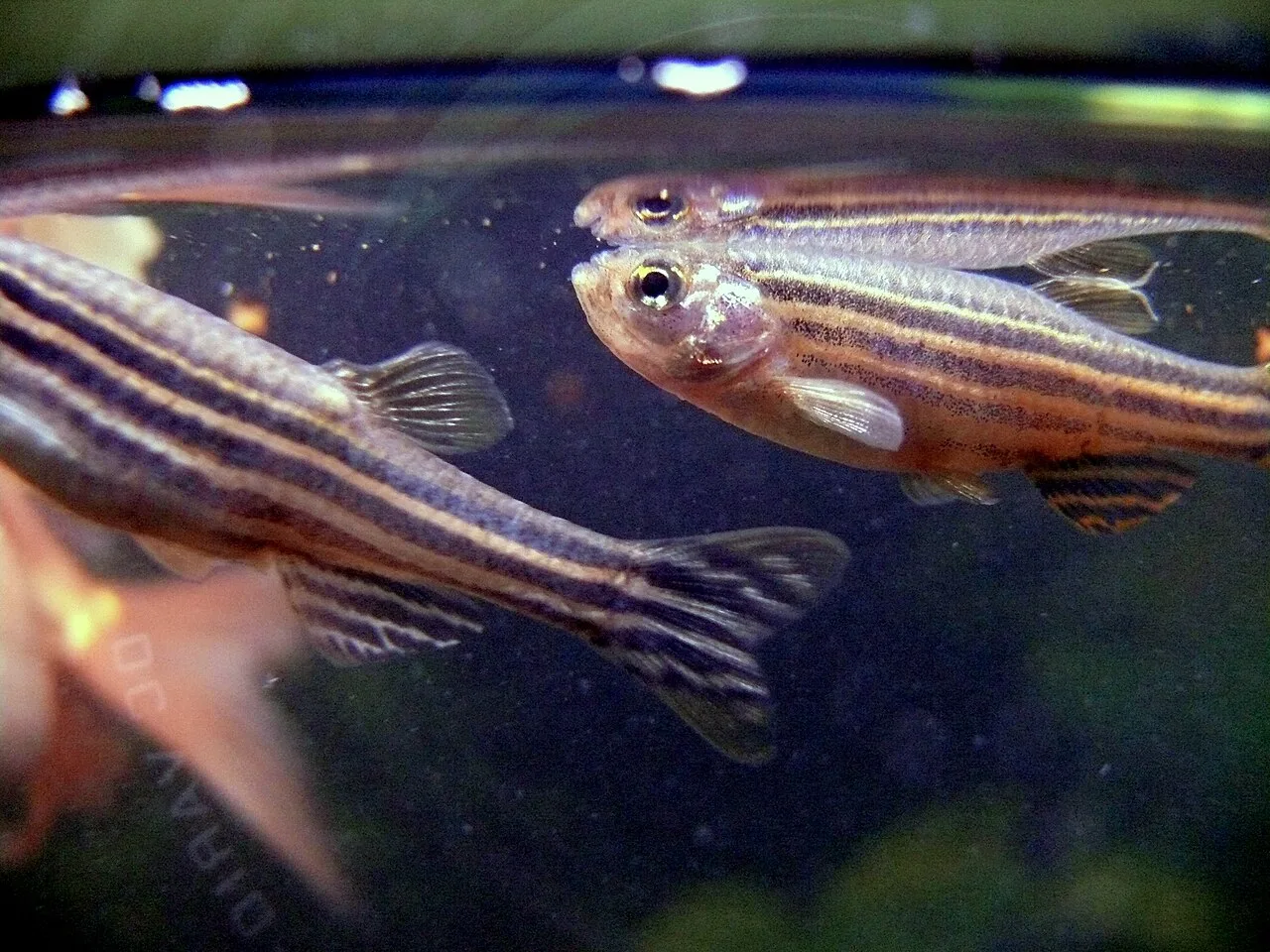
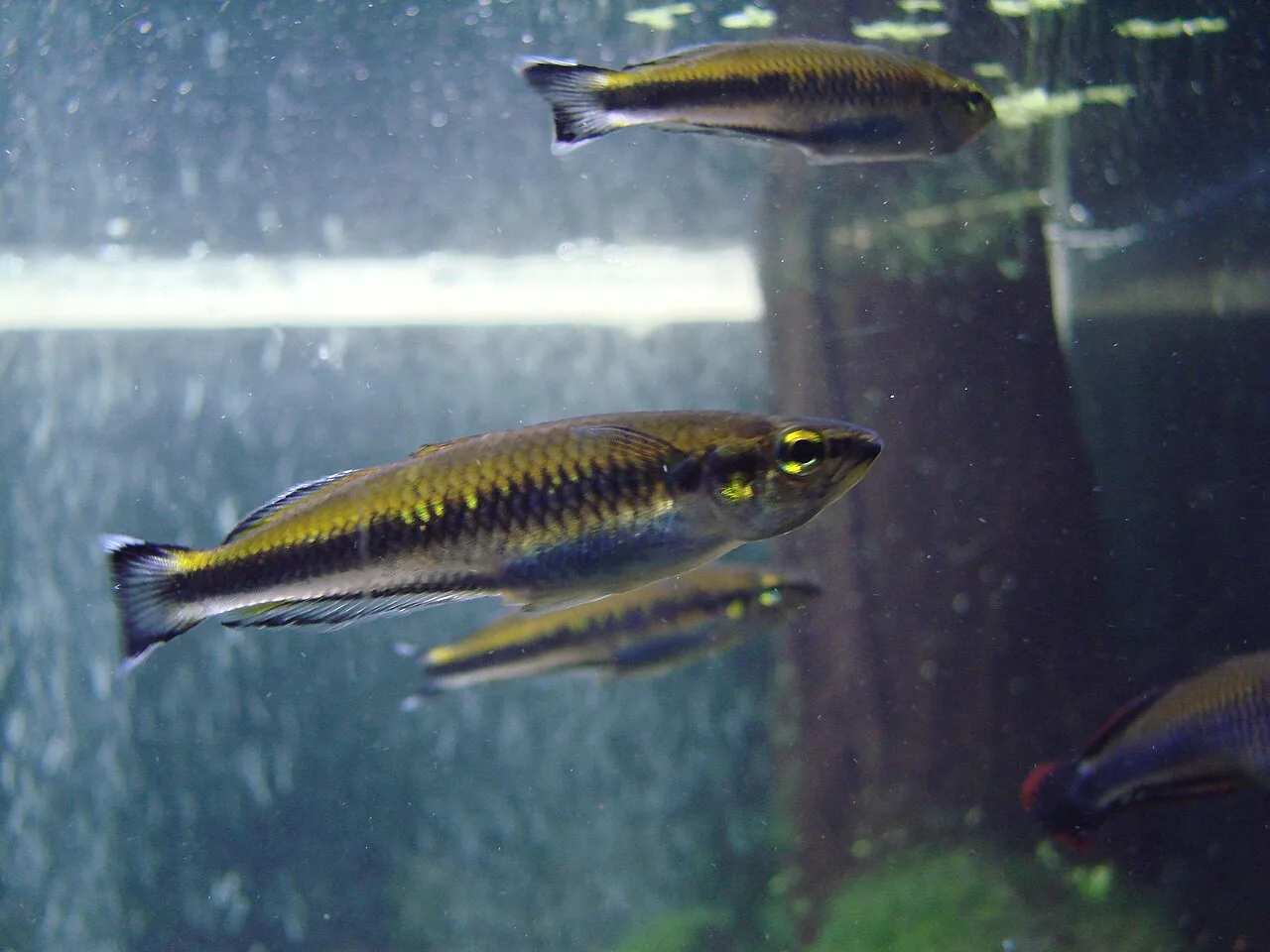
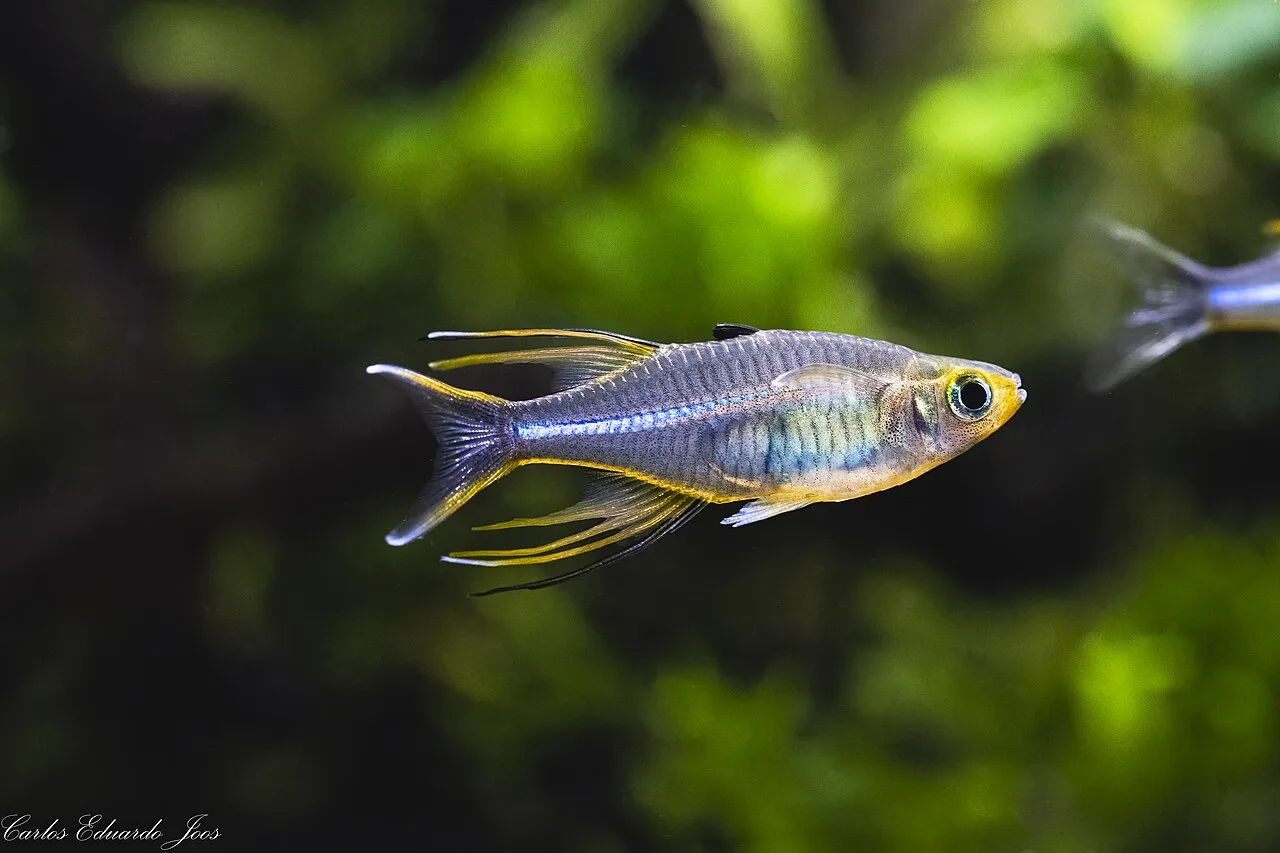
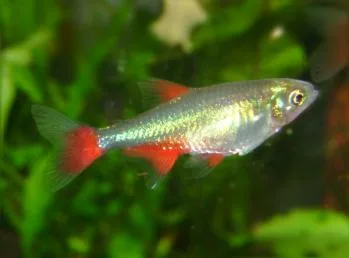
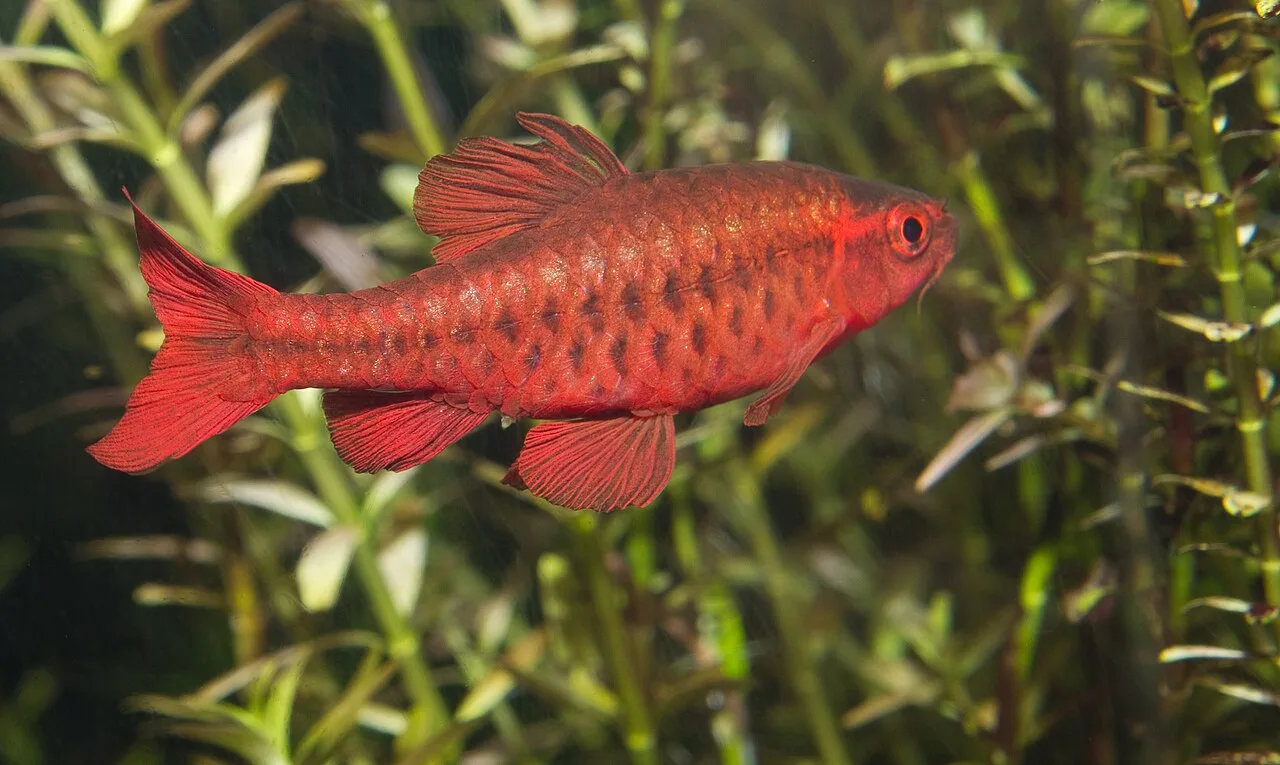
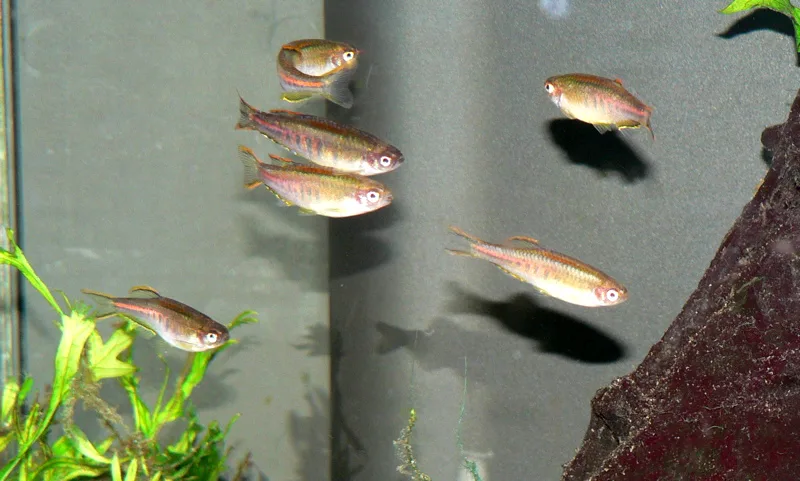
Danio albolineatus reaches about 6 cm. The body is slim and shimmers pearly, pink or violet depending on the light. An orange to reddish band runs over the rear of the body. Males are slimmer and more strongly coloured.
It is not the zebra danio, which wears clear blue longitudinal stripes. The pearl danio shows only a soft shimmer and a subtle band.
Origin & habitat
This describes the origin, not how to furnish the aquarium.
Flowing waters in Southeast Asia, from Myanmar to Thailand and further south. The countries stay a coarse origin. Clear, moving water matches that.
Care
School
20 to 25 °C, pH 6.5 to 7.5. A group from eight, tanks from about 100 litres and 80 cm. Open swimming space, current, a firm cover.
Company
Lively, peaceful fish. Very calm or long-finned species are disturbed by the pace.
Diet
Omnivore. Flakes, granules, mosquito larvae, brine shrimp. Food is taken at the surface and in midwater.
Behavior
A lively school with many small chases. Too few fish turn shy or quarrelsome. The fish jump.
Reproduction
Egg scatterer without brood care. The eggs fall among plants and onto the bottom. A spawning grid or dense plants protect them from the parents.
Gallery
More species in this group
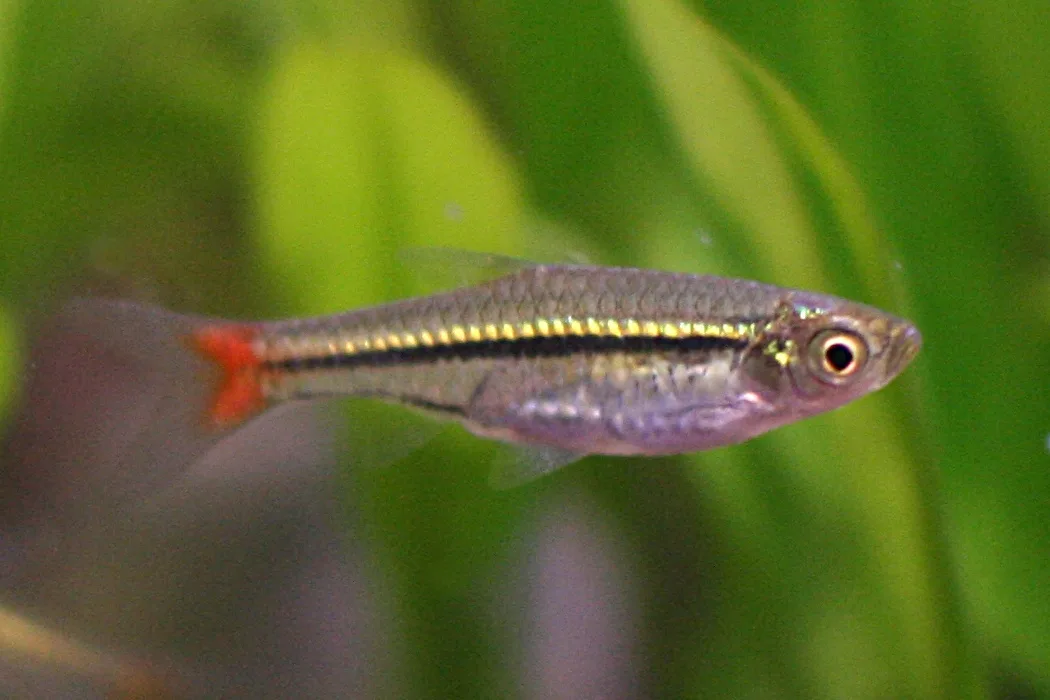
Similar water needs
Species with a similar temperature, a similar pH and a comparable adult size. Whether their behaviour fits as well is what the compatibility check is for.