
Siamese algae eater
Crossocheilus oblongus
20 views
A slender aufwuchs feeder with a dark longitudinal band. It is not the Chinese algae eater and not the flying fox.
- Temperature
- 24 – 28 °C
- pH
- 6.5 – 7.5 pH
- General hardness
- 5 – 20 °dH
- Maximum size
- 14 cm
- Minimum group size
- 5
- Minimum tank size
- 150 L
4 min read · 598 words
Fresh water
Quick facts
Further published values
- Lifespan
- 9 a
Place in the aquarium
Highlighted are the water layer and the spots where the species usually stays in the tank.
- Middle water Usually stays in the middle of the tank, between bottom and surface.
- Near the bottom Mostly stays just above the bottom. Food has to reach the substrate.
- Wood and roots Uses roots as shelter or grazes biofilm from them.
Shrimp in the tank
Shrimplets at risk
- Not shrimp safe
- Dwarf shrimp at risk
- Shrimplets at risk
- Shrimp safe
- Adult dwarf shrimp
- Safe
- Shrimplets
- Get eaten
- Safe from shrimp size
- about 2 cm
Adult dwarf shrimp are usually safe with the Siamese algae eater. It grows 10 to 16 cm long, but when young it eats mainly brush and filamentous algae and grazes surfaces with its underslung mouth. With age it also takes live and dry food. It rarely chases shrimp from about 2 cm. Juvenile shrimp on the surfaces it grazes are eaten along with the algae.
In a large, densely planted tank with moss, shrimp groups hold their own. A separate tank is safer for breeding.
Home & range
Overview
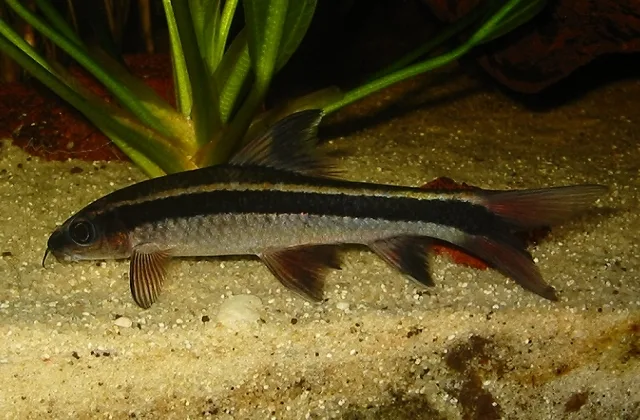
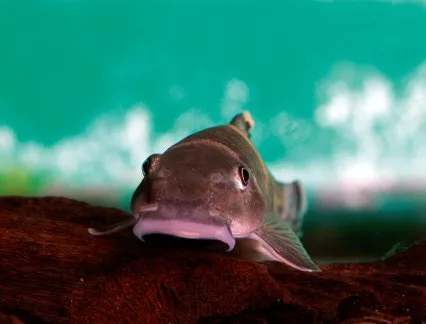
Crossocheilus oblongus reaches about 14 cm. A dark band runs from the mouth to the tail base and does not end in a pale ring. The mouth is underslung. Juveniles eat aufwuchs and often stand in a group. Adults need length, and the fish become more territorial toward each other.
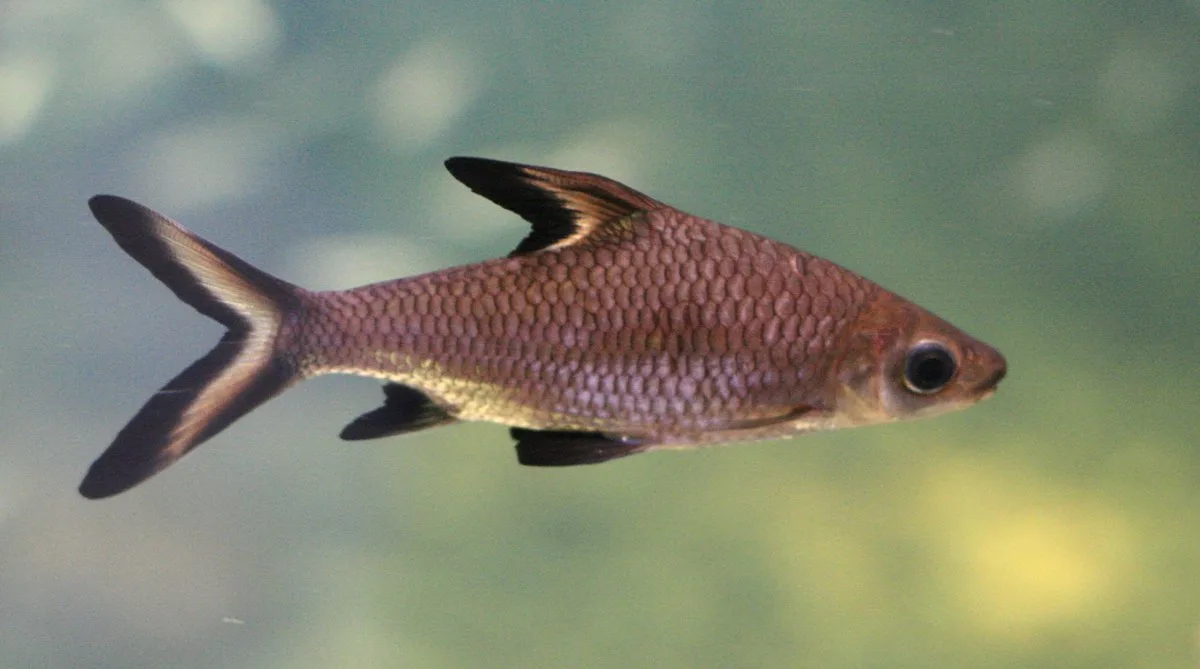
The Chinese algae eater is Gyrinocheilus aymonieri and turns quarrelsome. The flying fox is Epalzeorhynchos kalopterus and wears different fin markings. The reticulated flying fox is Crossocheilus reticulatus. Several of these fish are sold as algae eaters. This profile means oblongus.
Names and identification
The species is also called Siamesische Rüsselbarbe, Grünflossenbarbe or simply Siamensis. Kuhl and van Hasselt described it in 1823. It belongs to the Labeoninae in the carp family. Several species are sold under the trade name Siamese algae eater, among them C. langei, C. atrilimes and C. citripinnis.
Diagnostic features are the black longitudinal stripe that runs without a break into the tail tip, the transparent fins and two barbels at the snout tip without maxillary barbels. In the false flying fox Garra taeniata the stripe ends at the base of the caudal fin. The species is also confused with Epalzeorhynchos kalopterus and the algae-eating characin Parodon pongoensis. In the aquarium the fish grow 10 to 16 cm, and they are sold at about 2.5 cm. The sexes cannot be told apart with the naked eye. Life expectancy in the aquarium is about nine years, sometimes longer.
Origin & habitat
This describes the origin, not how to furnish the aquarium.
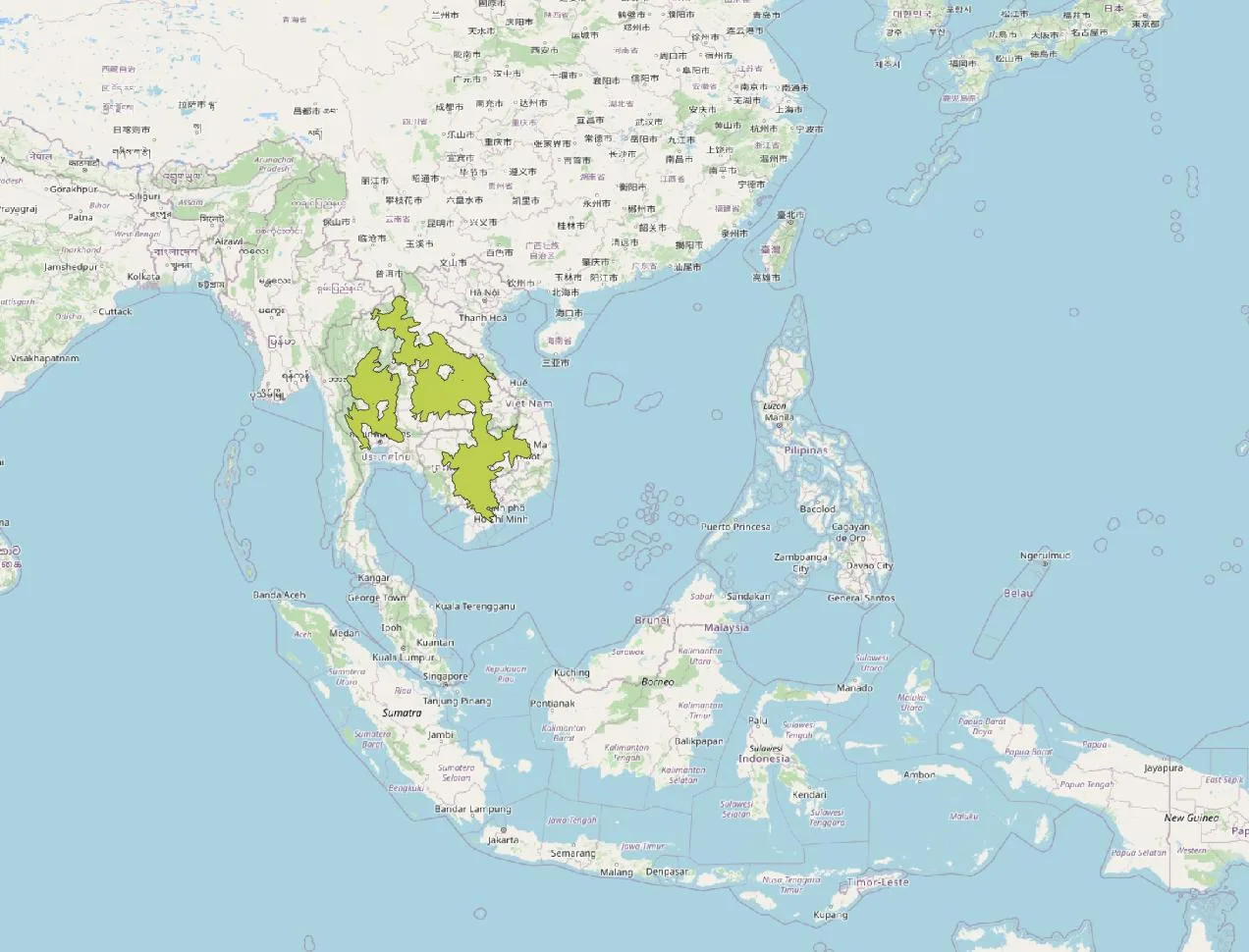
Flowing waters of Southeast Asia, on stone and wood. The origin stays coarse. Current and length match that better than a short, still tank.
Care
Size
24 to 28 °C, pH 6.5 to 7.5. One fish from about 150 litres and 100 cm, several only in clearly longer tanks. Current, wood, stones, a firm cover.
Algae
Young fish rasp aufwuchs. That does not replace feeding, and an adult does not clear a tank of thread algae. Food still has to arrive.
Keeping
The species is kept at 24 to 26 °C in soft water around 5 °dGH, tolerated up to 20 °dGH, and slightly acidic. It needs plenty of oxygen. For its well-being groups of at least five to eight fish are needed, so only large tanks, ideally with 150 cm length. Despite its size it is considered suitable for beginners. The tank must be covered, because the fish jump well. It is very tolerant of barbs, tetras and catfishes. Among themselves things can get rough, especially at feeding. Planting should be dense and leave swimming room.
Diet
Aufwuchs, vegetables and sinking granules. Blanched courgette, food tablets, occasional frozen food. Anyone who only waits for algae sees hollow bellies.
When young, the fish eat mainly brush and filamentous algae, not brown algae or diatoms. Without algae they nibble waterweed and fresh shoots without harming a planted tank. Washed lettuce leaves are taken readily, especially once they begin to decay in the water. With age, live and dry food are added.
Behavior
Quiet when young, later territorial against its own species. A second fish on 100 cm is a fight. Other fish are usually tolerated, as long as they do not stand in the same feeding spot.
Under stress or in rank disputes the black stripe turns matt silver. The fish rest on plants or roots, propped on their pelvic and caudal fins, stay mostly in the middle and lower zones and often swim as a group against the filter outflow. This fits their origin in fast-flowing waters.
Reproduction
Practically no young in the aquarium. Keeping counts the fish that was bought, not a breeding project.
Only chance spawnings are known. Reproduction probably needs clear, fast-flowing streams that are hard to recreate in the aquarium.
Gallery
More species in this group
Similar water needs
Species with a similar temperature, a similar pH and a comparable adult size. Whether their behaviour fits as well is what the compatibility check is for.



