
Thick-lipped gourami
Trichogaster labiosa
2 views
A calm gourami with thick lips and an orange-blue body. It builds bubble nests and stays more peaceful than many relatives.
- Temperature
- 22 – 28 °C
- pH
- 6 – 7.5 pH
- General hardness
- 4 – 15 °dH
- Maximum size
- 9 cm
- Minimum tank size
- 100 L
1 min read · 166 words
Quick facts
Place in the aquarium
Highlighted are the water layer and the spots where the species usually stays in the tank.
- Upper water Usually stays in the top third of the tank.
- Middle water Usually stays in the middle of the tank, between bottom and surface.
- Dense plants Looks for dense planting as cover, retreat or grazing ground.
Shrimp in the tank
Dwarf shrimp at risk
- Not shrimp safe
- Dwarf shrimp at risk
- Shrimplets at risk
- Shrimp safe
- Adult dwarf shrimp
- At risk
- Shrimplets
- Get eaten
- Safe from shrimp size
- about 3 cm
For dwarf shrimp the thick-lipped gourami is a risk. It reaches about 9 cm and eats insects, larvae and small crustaceans. Juvenile shrimp and small Neocaridina are eaten. Larger shrimp from about 3 cm, such as Amano shrimp, are usually safe.
In a large tank with very dense planting a small shrimp group sometimes holds on. For breeding a separate tank is the better choice.
Home & range
Hatched countries are where the species occurs. It lives in particular waters there, not across the whole country. The points name known waters for orientation, not collection sites.
- Country of origin
- Water for orientation
Native
Overview
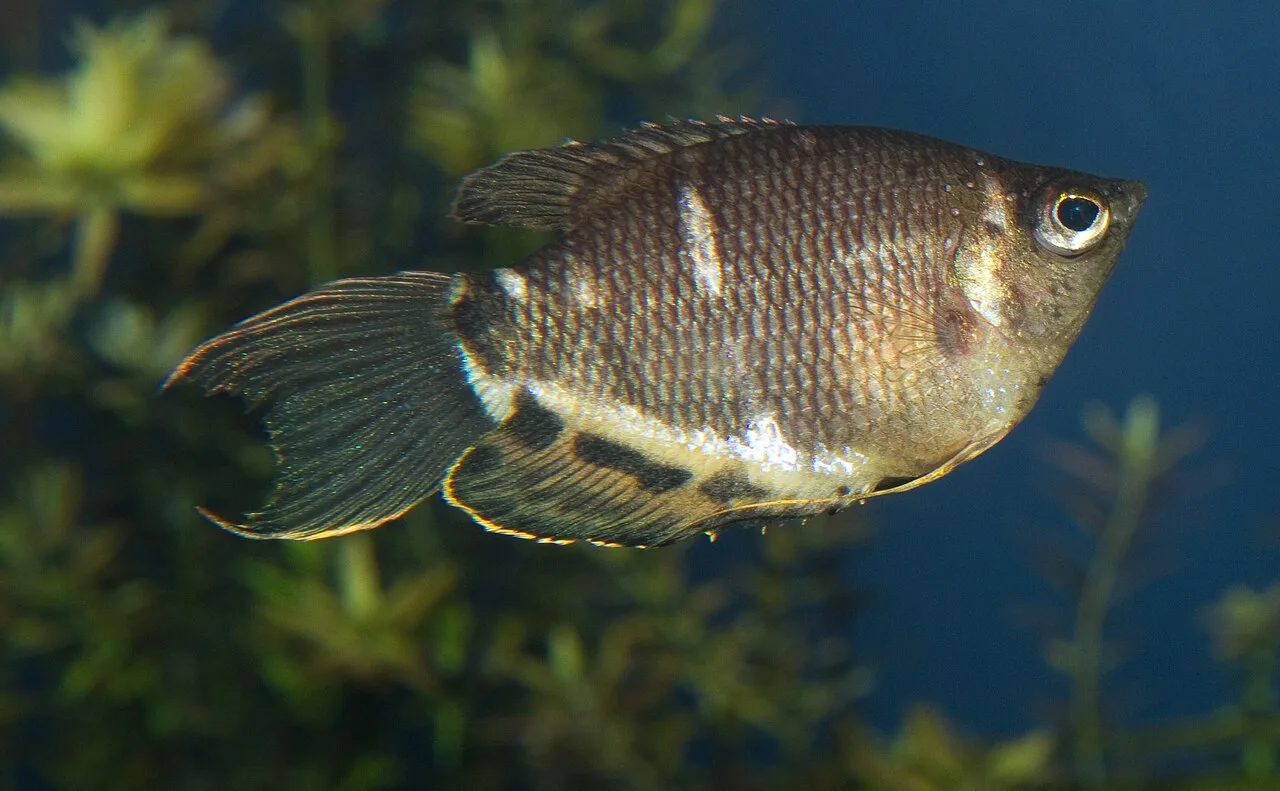
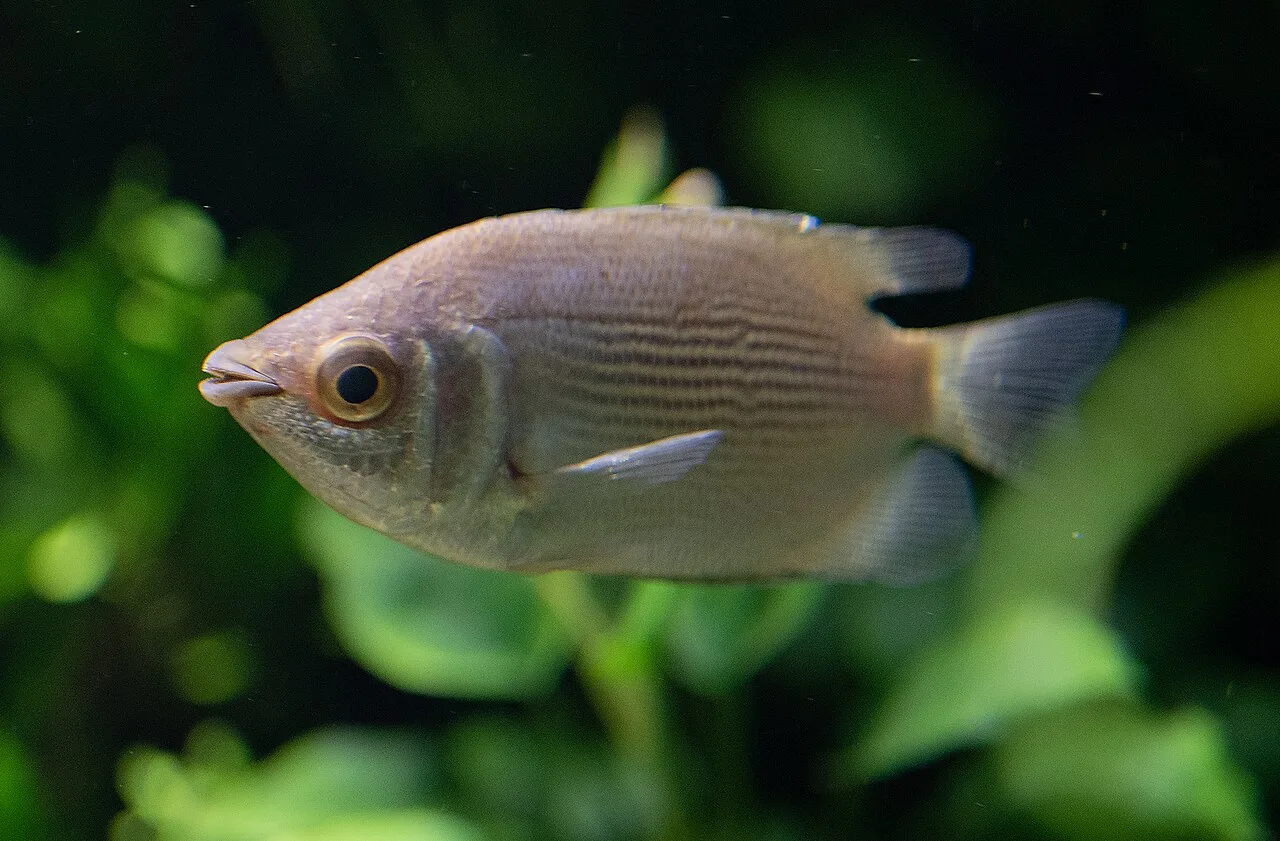
Trichogaster labiosa reaches about 9 cm. The body is brownish orange with fine bluish bars, and the lips are strikingly thick. Males carry a red-edged dorsal fin and turn darker when courting. Females stay paler.
It is not the dwarf gourami and not the banded gourami. The dwarf gourami stays smaller, and the banded gourami wears stronger bars and thinner lips.
Origin & habitat
This describes the origin, not how to furnish the aquarium.
Slow, plant-rich waters in Myanmar. The country stays the coarse origin. Calm water with floating plants matches that.
Care
Surface
22 to 28 °C, pH 6 to 7.5. One male with one or two females from about 100 litres. Floating plants, a calm surface, dense planting, a cover against cold air.
Company
Calm tetras, rasboras, corydoras. Other gouramis on the same surface cause fights.
Diet
Omnivore. Flakes, granules, mosquito larvae, brine shrimp, some plant food.
Behavior
Peaceful and calm. At spawning time the male defends the nest. Several males need more area.
Reproduction
Bubble-nest builder. The male builds the nest and guards eggs and larvae. The female is chased off after spawning.
More species in this group

Similar water needs
Species with a similar temperature, a similar pH and a comparable adult size. Whether their behaviour fits as well is what the compatibility check is for.




