Three-striped dwarf cichlid
Apistogramma trifasciata
1 view
A small dwarf cichlid with a blue sheen and dark longitudinal bands. Males carry a tall, pointed dorsal fin.
- Temperature
- 24 – 29 °C
- pH
- 6 – 7 pH
- General hardness
- 2 – 10 °dH
- Maximum size
- 6 cm
- Minimum tank size
- 60 L
1 min read · 142 words
Quick facts
Place in the aquarium
Highlighted are the water layer and the spots where the species usually stays in the tank.
- Near the bottom Mostly stays just above the bottom. Food has to reach the substrate.
- Dense plants Looks for dense planting as cover, retreat or grazing ground.
- Rocks and caves Needs caves, crevices or rockwork as hiding place, territory or spawning site.
Shrimp in the tank
Shrimplets at risk
- Not shrimp safe
- Dwarf shrimp at risk
- Shrimplets at risk
- Shrimp safe
- Adult dwarf shrimp
- Safe
- Shrimplets
- Get eaten
- Safe from shrimp size
- about 2 cm
Adult dwarf shrimp are usually safe with the three-striped dwarf cichlid. It reaches about 6 cm and searches the bottom for small invertebrates. Juvenile shrimp are eaten deliberately along the way. Shrimp from about 2 cm hardly fit in its mouth any more.
With moss, leaf litter and fine plants a shrimp group can survive, but the colony grows slowly.
Home & range
Hatched countries are where the species occurs. It lives in particular waters there, not across the whole country. The points name known waters for orientation, not collection sites.
- Country of origin
- Water for orientation
Native
Overview
Apistogramma trifasciata reaches about 6 cm as a male, while females stay at about 4 cm. Males show a blue sheen, a dark longitudinal band and tall front dorsal rays. Females turn yellow with black markings when breeding.
It is not the cockatoo dwarf cichlid, which wears a comb-like, frayed dorsal fin and grows slightly larger.
Origin & habitat
This describes the origin, not how to furnish the aquarium.
Shallow, plant-rich waters in the Paraguay and Guaporé drainages. The countries stay a coarse origin. Warm, soft water matches that.
Care
Pair
24 to 29 °C, pH 6 to 7. A pair or one male with two females from about 60 litres. Plants, leaf litter, caves, fine sand.
Company
Calm, small tetras. Other dwarf cichlids not on the same floor area.
Diet
Meaty food. Brine shrimp, mosquito larvae, cyclops, fine granules.
Behavior
Males are lively and defend a territory. Females turn forceful when breeding.
Reproduction
Cave spawner. The female guards the clutch and the young.
Gallery
More species in this group
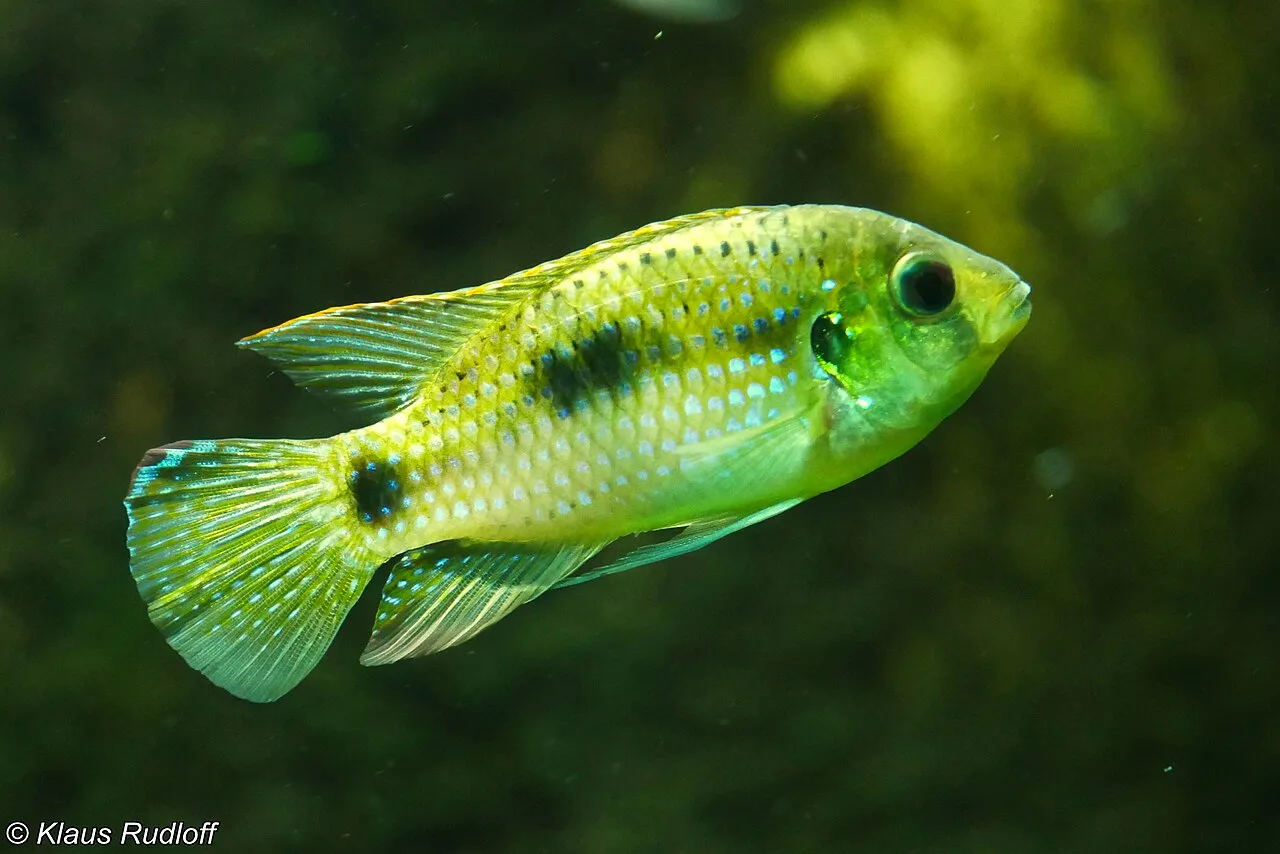
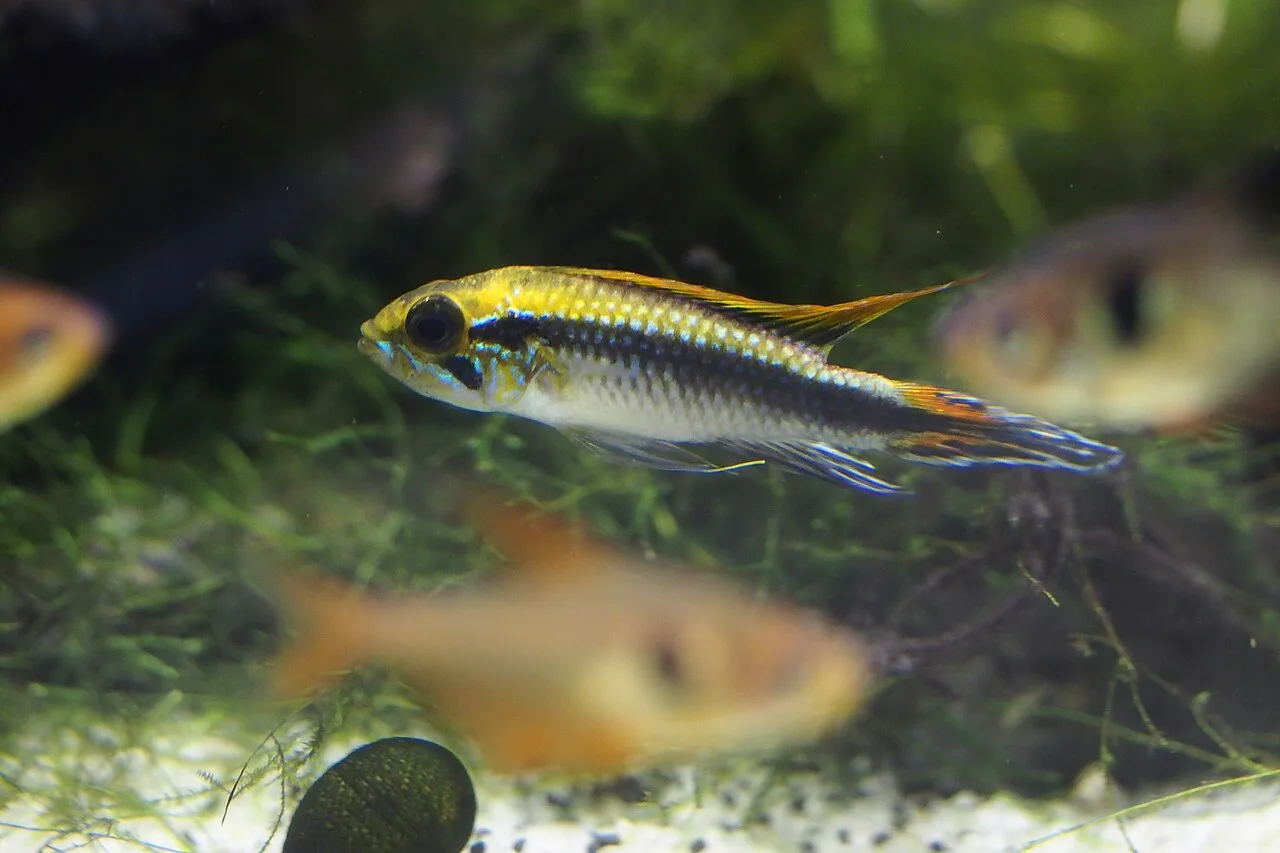

Similar water needs
Species with a similar temperature, a similar pH and a comparable adult size. Whether their behaviour fits as well is what the compatibility check is for.