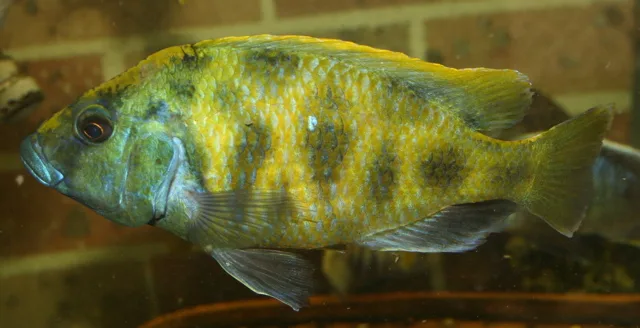
Zebra mbuna
Maylandia zebra
20 views
An mbuna from Lake Malawi with vertical bars. It is not the convict cichlid from Central America. It needs rock, hard water and a large group.
- Temperature
- 24 – 28 °C
- pH
- 7.5 – 8.5 pH
- General hardness
- 10 – 20 °dH
- Maximum size
- 12 cm
- Minimum tank size
- 250 L
4 min read · 563 words
Fresh water
Quick facts
Place in the aquarium
Highlighted are the water layer and the spots where the species usually stays in the tank.
- Middle water Usually stays in the middle of the tank, between bottom and surface.
- Rocks and caves Needs caves, crevices or rockwork as hiding place, territory or spawning site.
Shrimp in the tank
Dwarf shrimp at risk
- Not shrimp safe
- Dwarf shrimp at risk
- Shrimplets at risk
- Shrimp safe
- Adult dwarf shrimp
- At risk
- Shrimplets
- Get eaten
- Safe from shrimp size
- about 4 cm
The zebra mbuna is not suitable for dwarf shrimp. It grows 10 to 13.5 cm long, grazes algae off the rock and searches open water for plankton. Small animals are thus part of its diet. Juvenile and adult dwarf shrimp are eaten. Larger shrimp from about 4 cm are safer.
Mature males defend territories at caves, and the Malawi tank is densely stocked. Shrimp hardly find peace there. Keeping them together is not recommended.
Home & range
Overview
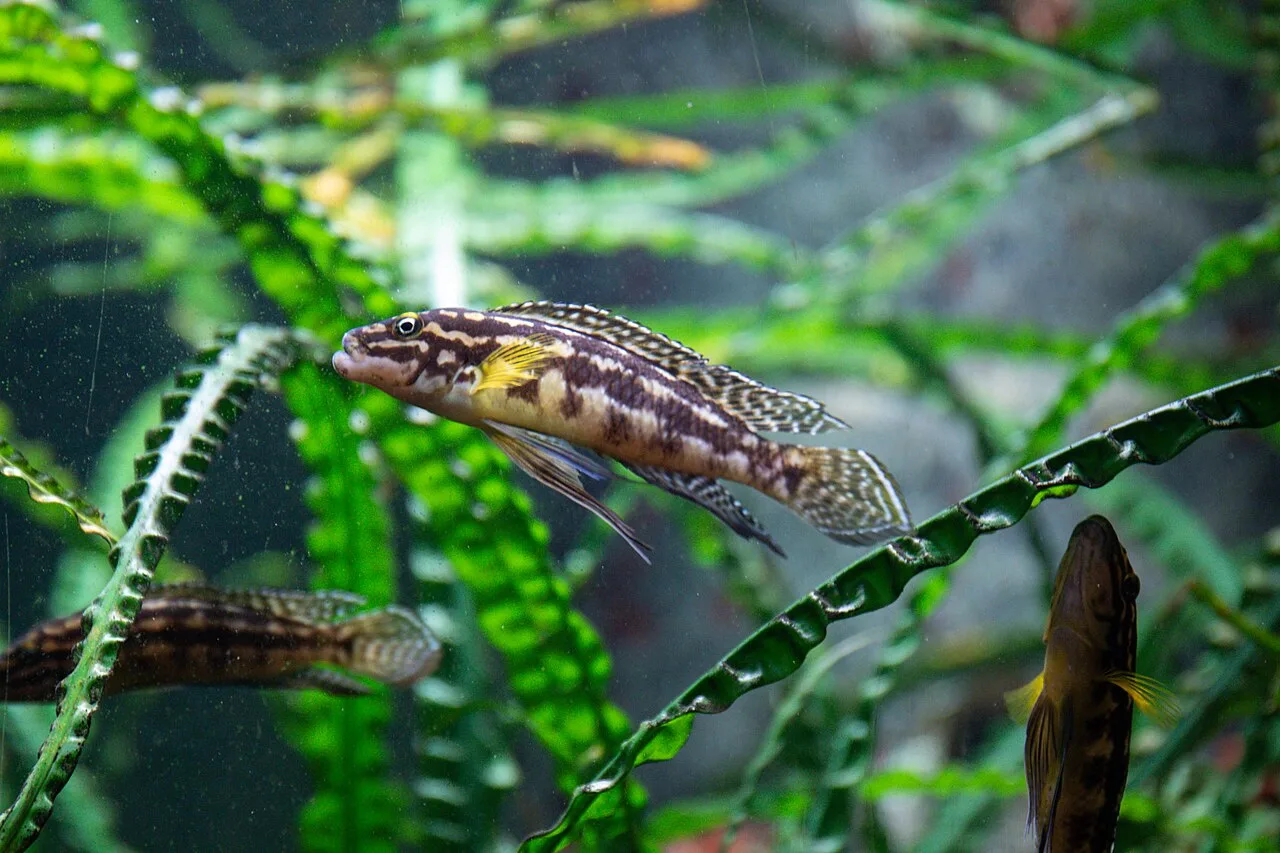
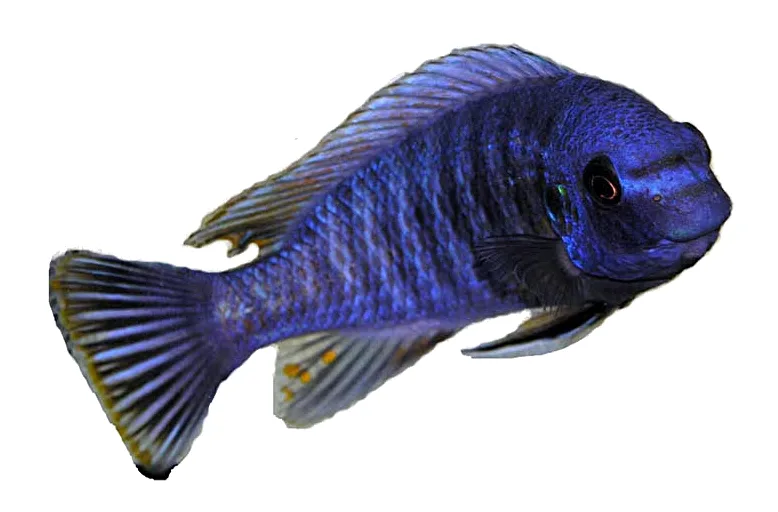
Maylandia zebra reaches about 10 to 12 cm. Males carry strong vertical bars on a blue ground. Females are paler and browner. There are several populations with different bars and blues. They should not be mixed and should not be crossed with similarly barred mbuna.
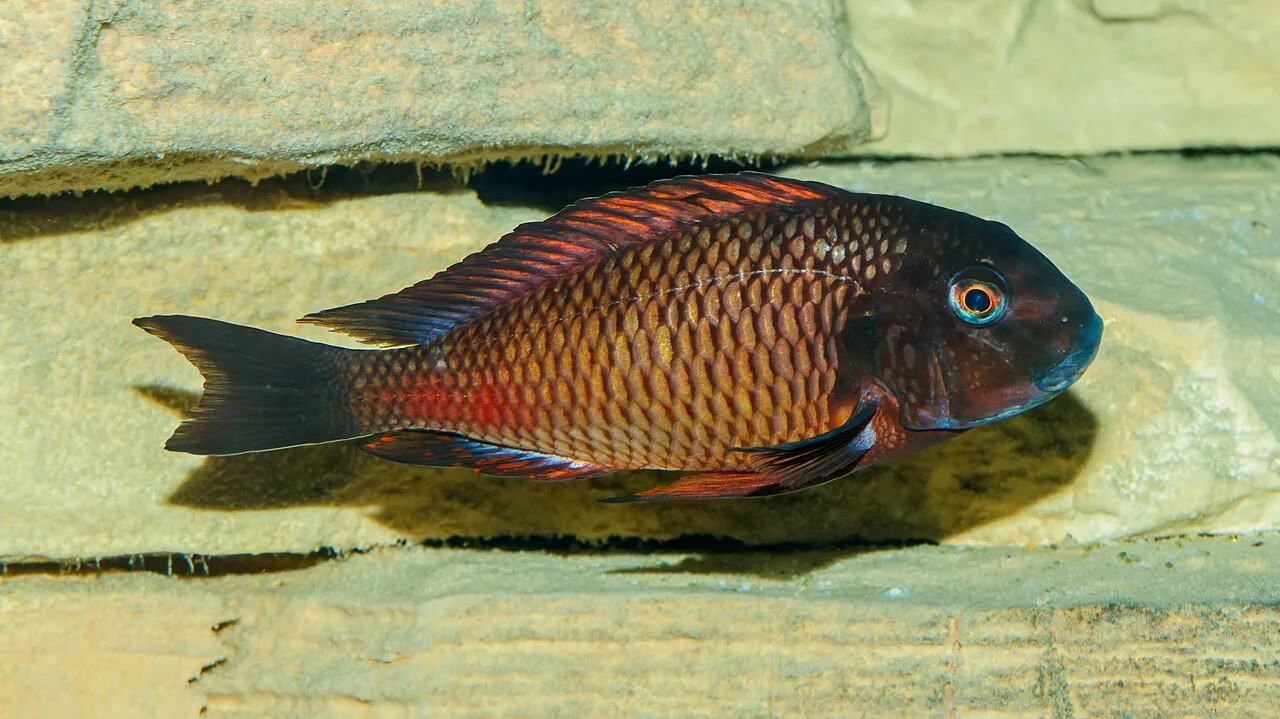
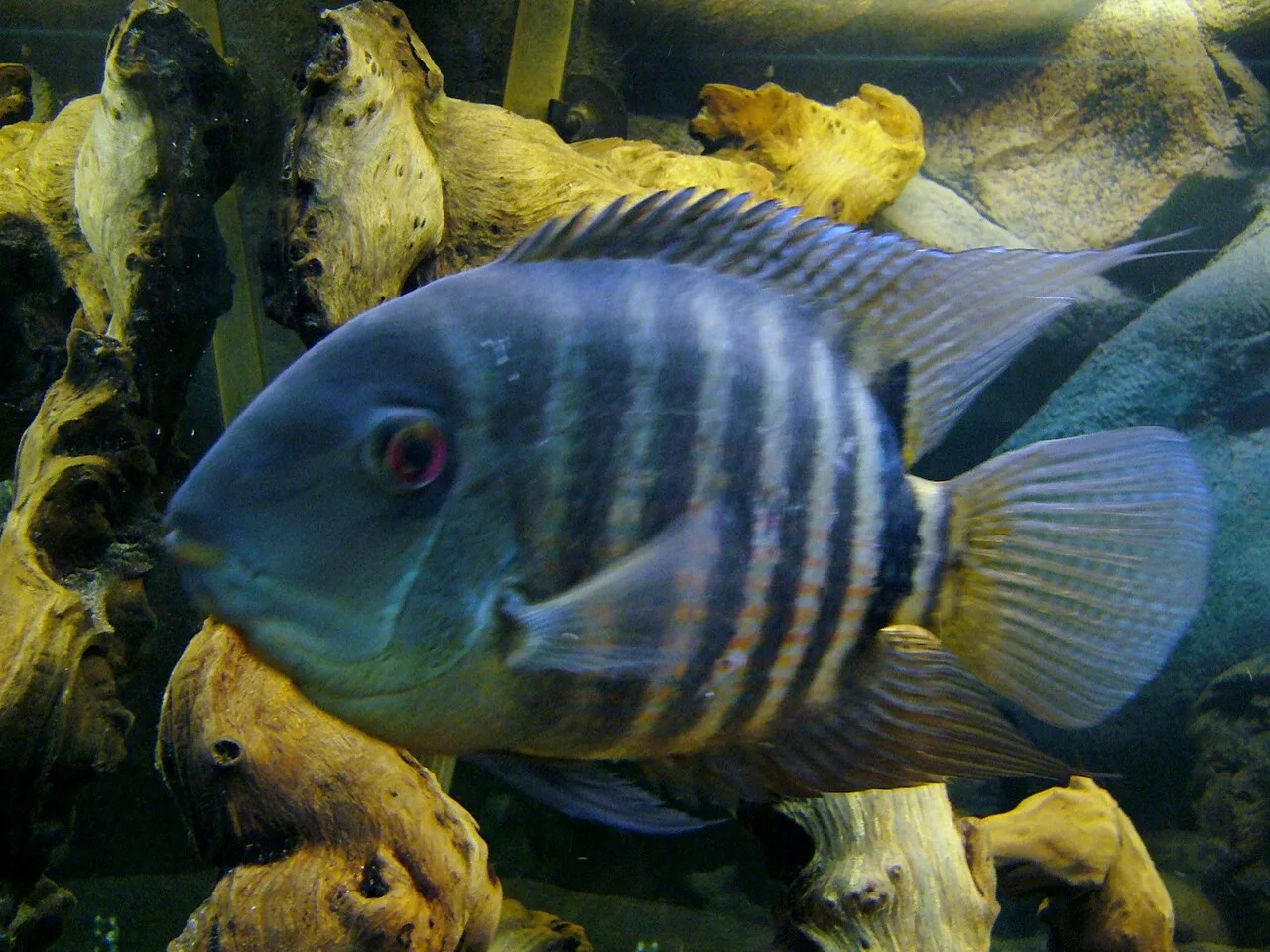
The name Zebrabuntbarsch in this catalogue belongs to Amatitlania nigrofasciata, the Central American convict. Maylandia zebra is a different fish, an aufwuchs feeder from Lake Malawi, and it does not tolerate the convict’s water.
Features
The species is also called Blauer Malawibuntbarsch. Boulenger described it in 1899. Synonyms are Pseudotropheus zebra and Metriaclima zebra. In 1997 ten species from the zebra complex were described and placed in the new genus Metriaclima. Both genus names are in use. Size figures range from 10 to 13.5 cm. Females are brownish with dark cross stripes but also occur orange-spotted to fully orange. Males carry clearly more egg spots on the anal fin, which guide the female to the male's genital opening during spawning.
Origin & habitat
This describes the origin, not how to furnish the aquarium.
Rocky coasts of Lake Malawi. Clear, alkaline, oxygen-rich water, aufwuchs on the rock, a high density on a small area. Malawi is the coarse origin. The individual populations have tighter stretches of shore that are not drawn here as find-spots.
In the lake every fight leads into the next rock. In the aquarium it ends at the glass. The group therefore needs more hiding places than fish, and enough length.
The species lives mainly on the north-west coast of the lake between Cape Manulo and Kande Island, with slightly differently coloured stocks on the east coast. Many researchers regard the northern populations as a separate species, Maylandia emmiltos. It grazes algae with its terminal mouth while swimming at right angles to the rock face. Females often move in groups into open water to search for plankton.
Care
Layout
24 to 28 °C, pH 7.5 to 8.5, hard. From about 250 litres and 120 cm, rock ridges with gaps, sand in front. Plants survive only rarely. A group from ten, more females than males, so the aggression is spread. A pair in a small tank is the worst form.
Tankmates
Other mbuna that can hold their own, clearly different in colour. Tetras, shrimp and dwarf cichlids are prey or get worn down. The filter has to match the stocking. The water change stays weekly and generous.
Diet
Aufwuchs and plant food. Spirulina, plant flakes, blanched courgette, little animal food. Too much protein makes the fish still more irritable and loads a tank that is already heavily stocked.
Several small feeds through the day. One large feeding is held by the dominant male.
Behavior
Always focused on the rock. The bars darken when a male threatens. Subordinate fish turn pale, stand at the top and thin out. Then catch them out. Do not wait until the fins are gone.
The species is not a beginner fish for a community tank. It is a Malawi group with a plan for the losers.
Mature males defend territories at caves, where spawning also takes place. Females choose partners by visual cues. In tanks up to 1.20 m one male is kept with several females.
Reproduction
Mouthbrooder. The female carries for about three weeks. In a dense group the young are often eaten. Anyone who wants young moves the carrying female calmly. The young soon show the bars and need plant food and rock at once.
Uncontrolled breeding on too little territory sharpens the fighting.
Gallery
More species in this group
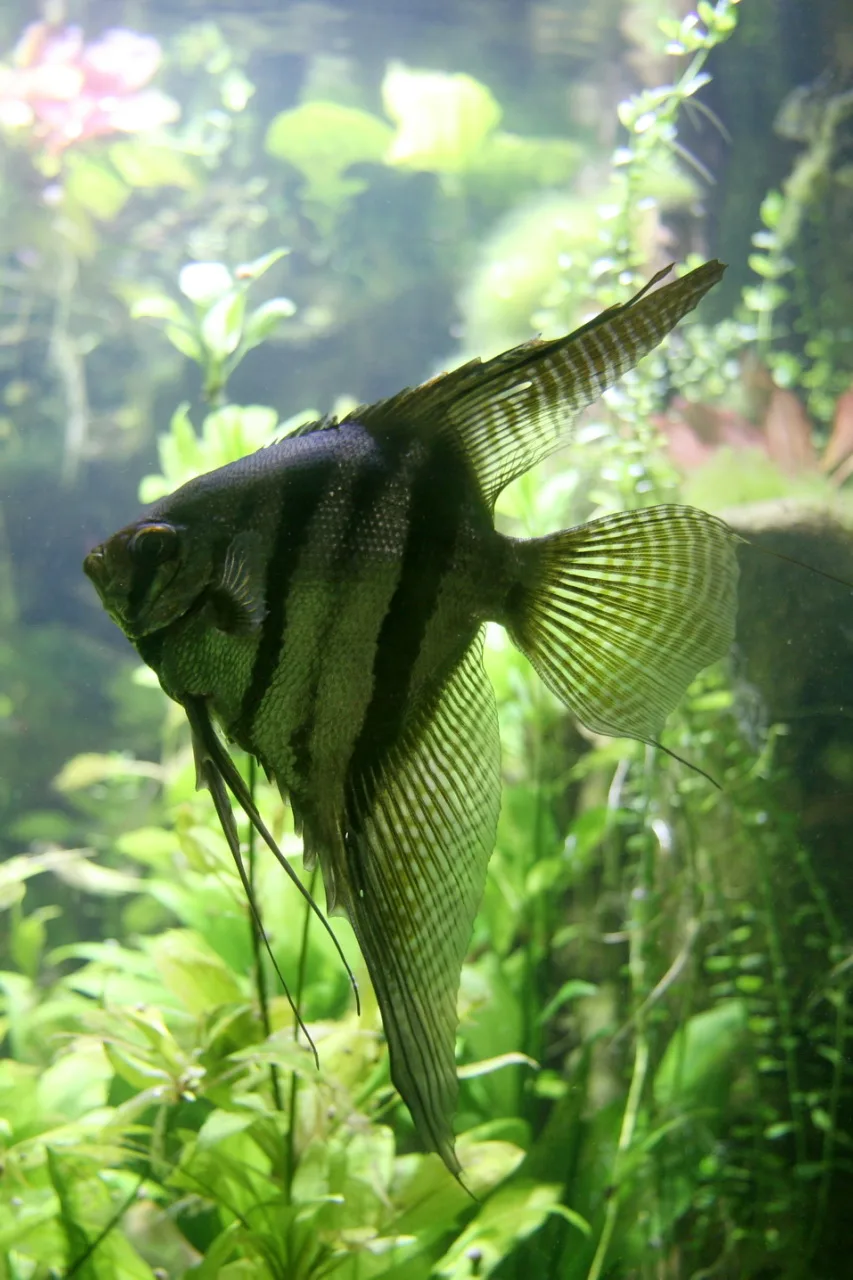
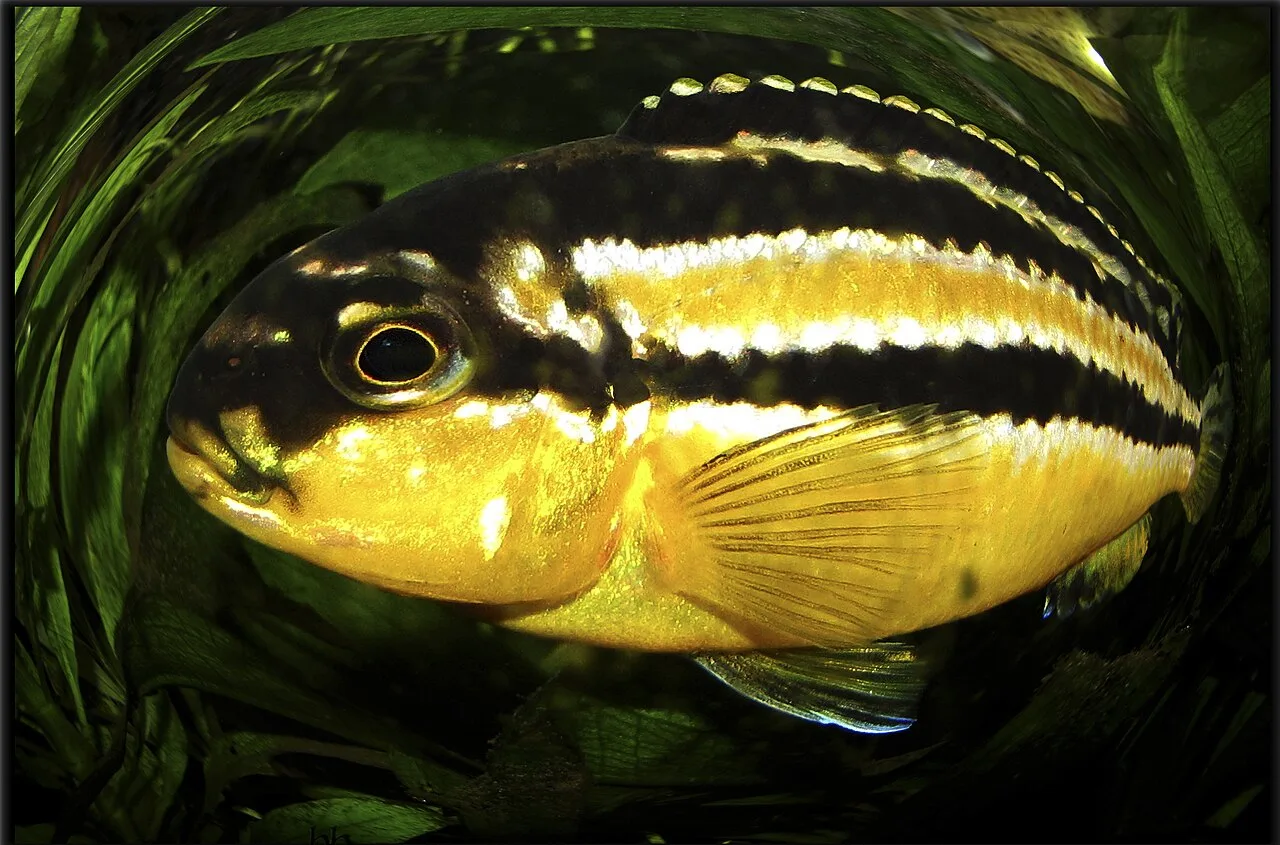

Similar water needs
Species with a similar temperature, a similar pH and a comparable adult size. Whether their behaviour fits as well is what the compatibility check is for.