Redclaw crayfish
Cherax quadricarinatus
3 views
A large tropical crayfish from northern Australia and New Guinea, also called redclaw. It needs a large tank to itself.
- Temperature
- 24 – 30 °C
- pH
- 7 – 8.5 pH
- General hardness
- 8 – 20 °dH
- Maximum size
- 30 cm
- Social behavior
- Solitary
- Diet
- Omnivore
2 min read · 229 words
Fresh water
Quick facts
Further published values
- Minimum tank size
- 200 L
Place in the aquarium
Highlighted are the water layer and the spots where the species usually stays in the tank.
- Near the bottom Mostly stays just above the bottom. Food has to reach the substrate.
- Rocks and caves Needs caves, crevices or rockwork as hiding place, territory or spawning site.
Home & range
Hatched countries are where the species occurs. It lives in particular waters there, not across the whole country. The points name known waters for orientation, not collection sites.
- Country of origin
- Water for orientation
Native
Overview
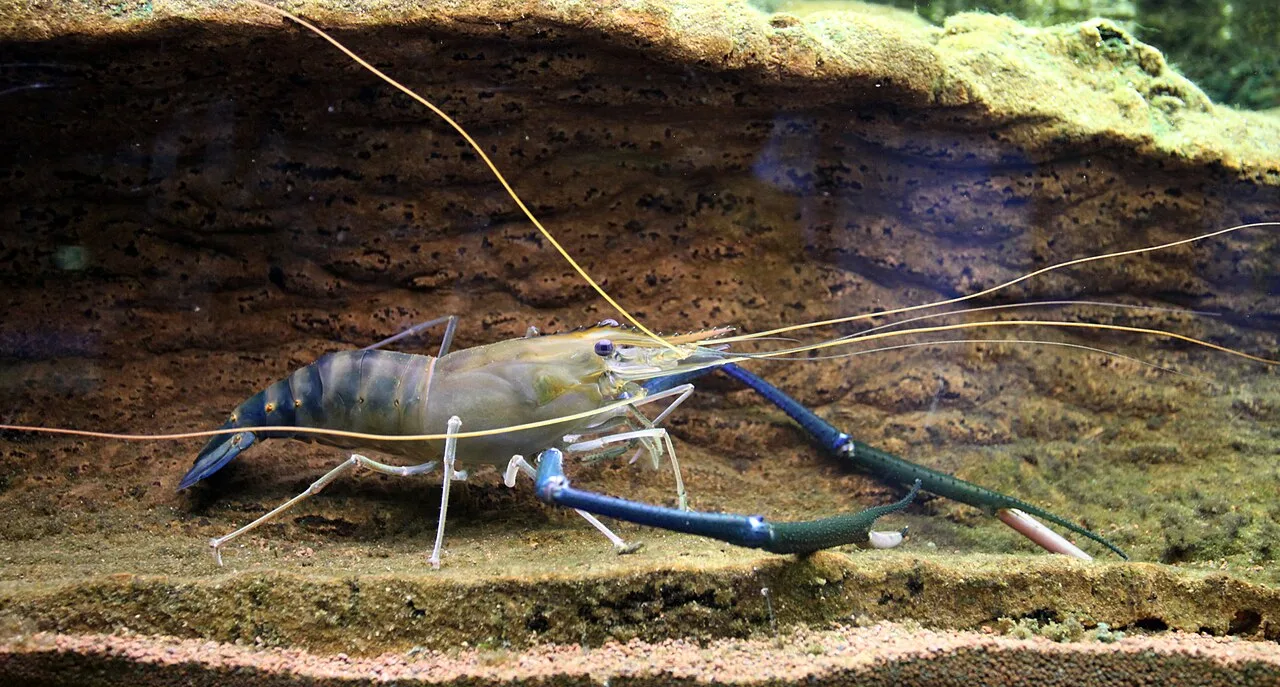
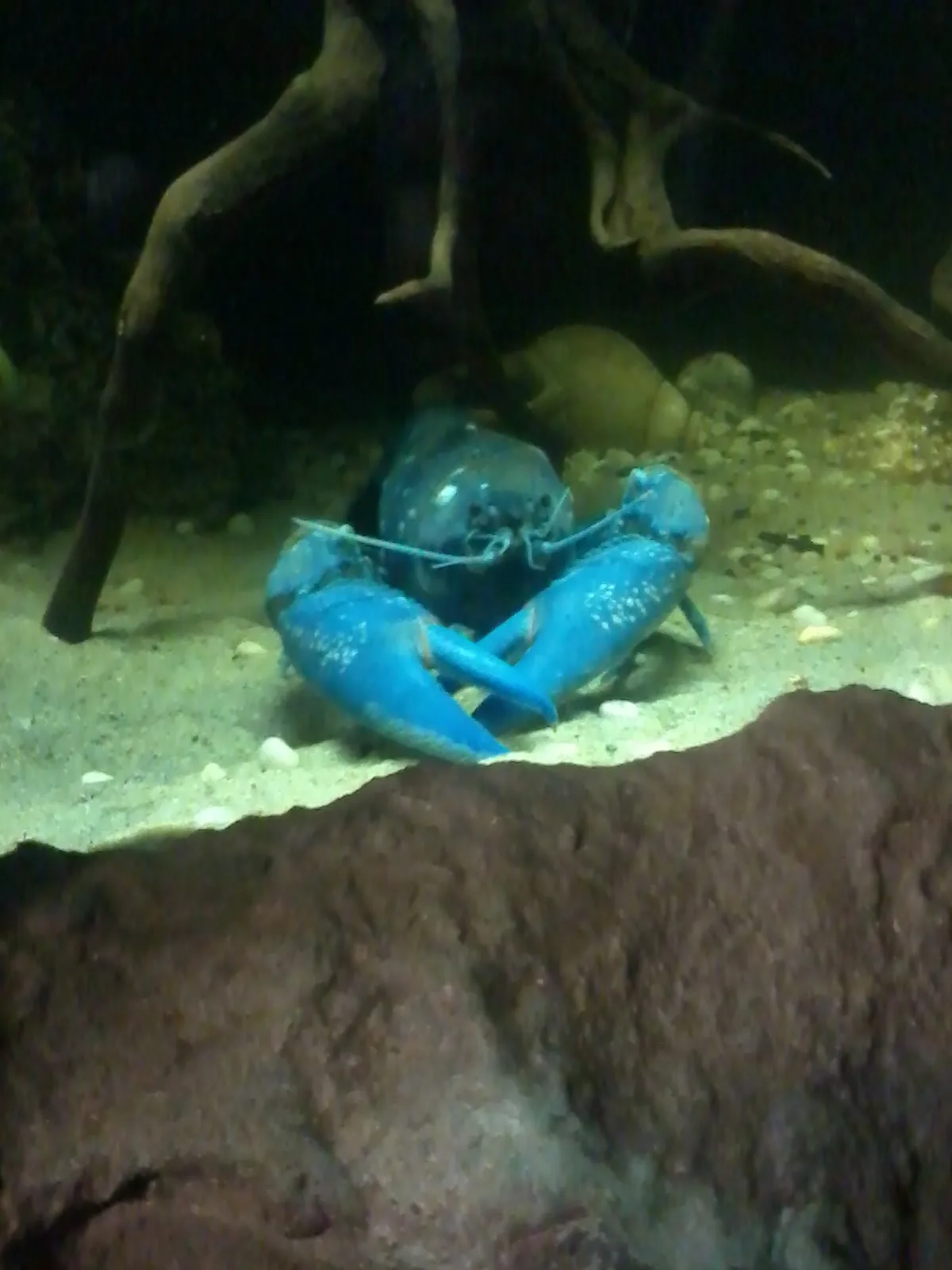
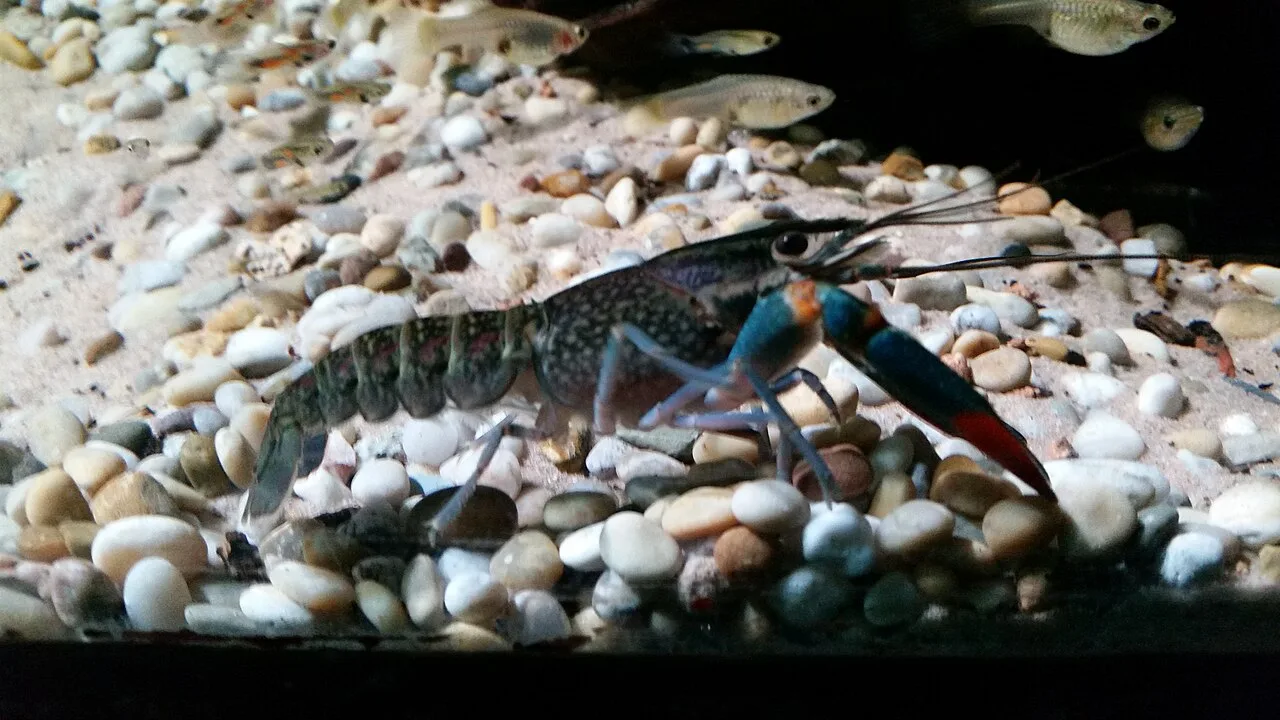
Males reach up to 30 cm including claws and about 600 g; females stay somewhat smaller. The body is greenish blue, the abdomen carries reddish stripes. Males carry crescent-shaped red patches on the outside of the claws, hence the name redclaw. In females the genital openings sit on the third pair of walking legs, in males on the fifth. The species name means with four keels.
Range and habitat
This describes the origin, not how to furnish the aquarium.
Tropical Queensland and the Northern Territory in Australia, mainly rivers draining to the Gulf of Carpentaria and some rivers of the northern Cape York Peninsula, as well as southern Papua New Guinea. It lives under stones, logs and in caves, in slightly alkaline, clean and oxygen-rich water. It has been introduced for crayfish farming to Mexico, Jamaica, China and South Africa, among others.
Keeping
Tank
One animal from about 200 litres, with several large caves, stones and roots. Heavy, tight cover.
Water
24 to 30 °C, pH 7 to 8.5, GH 8 to 20 °dH, plenty of oxygen.
Companions
Alone. Plants are taken apart, fish and snails eaten. Never release animals.
Diet
Omnivore. Food tablets, vegetables, leaves, frozen food, occasionally fish or mussel meat.
Behaviour and moulting
Nocturnal, in caves by day. Several animals fight over hiding places and can be killed after moults.
Reproduction and larvae
The females carry the eggs and the young crayfish on the abdomen. In Australia the species is bred as a food crayfish in large farms. Breeding succeeds in warm fresh water.
Gallery
More species in this group
Similar water needs
Species with a similar temperature, a similar pH and a comparable adult size. Whether their behaviour fits as well is what the compatibility check is for.