Least dwarf crayfish
Cambarellus diminutus
2 views
One of the smallest crayfish of all, usually only 1 to 2 cm long. It occurs only in Mississippi and Alabama.
- Temperature
- 18 – 25 °C
- pH
- 7 – 8 pH
- General hardness
- 6 – 18 °dH
- Maximum size
- 2 cm
- Social behavior
- Territorial
- Diet
- Omnivore
1 min read · 142 words
Fresh water
Quick facts
Further published values
- Minimum tank size
- 20 L
Place in the aquarium
Highlighted are the water layer and the spots where the species usually stays in the tank.
- Near the bottom Mostly stays just above the bottom. Food has to reach the substrate.
- Dense plants Looks for dense planting as cover, retreat or grazing ground.
- Rocks and caves Needs caves, crevices or rockwork as hiding place, territory or spawning site.
Home & range
Hatched countries are where the species occurs. It lives in particular waters there, not across the whole country. The points name known waters for orientation, not collection sites.
- Country of origin
- Water for orientation
Native
- Mississippi and Alabama
- Endemic to these two states.
Overview
Cambarellus diminutus usually reaches 1 to 2 cm. It is brownish with dark spots or stripes and looks like a very small Cajun dwarf crayfish. It belongs to the subgenus Pandicambarus.
Range and habitat
This describes the origin, not how to furnish the aquarium.
Endemic to the United States, in Mississippi and Alabama. The data are not sufficient for a classification on the IUCN Red List.
Keeping
Tank
From about 20 litres, densely planted, with leaves and small tubes. A sponge on the filter intake.
Water
18 to 25 °C, pH 7 to 8, GH 6 to 18 °dH. It tolerates slight fluctuations.
Companions
Best on its own or with small fish in the upper water. Shrimp young are not safe.
Diet
An omnivore that takes almost anything. Sinking food tablets, granules, frozen food and leaves.
Behaviour and moulting
Calm, rather shy. More tolerant of each other than larger species.
Reproduction and larvae
Reproduction all year round. The female carries the eggs, and small finished crayfish hatch. Breeding succeeds in fresh water.
More species in this group
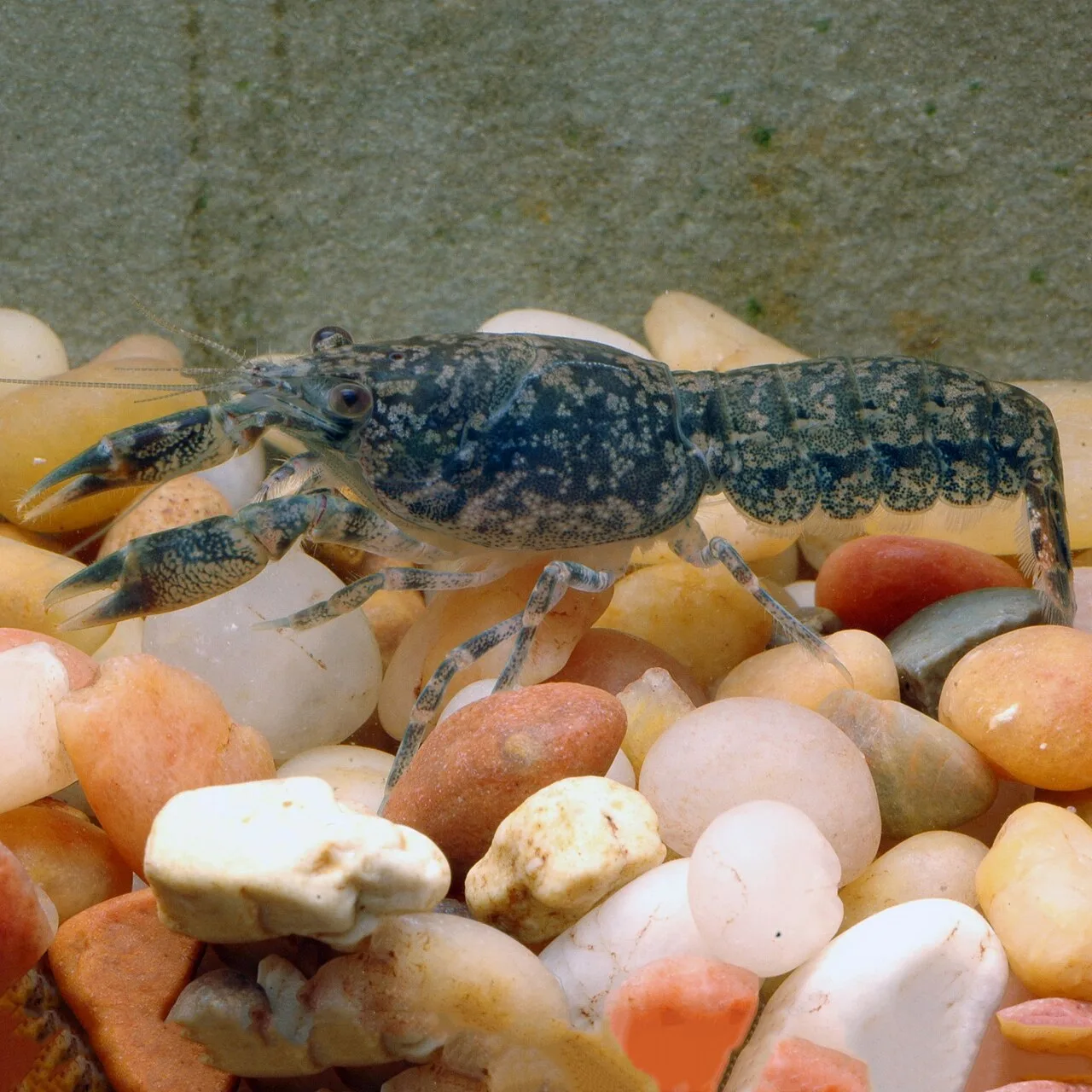
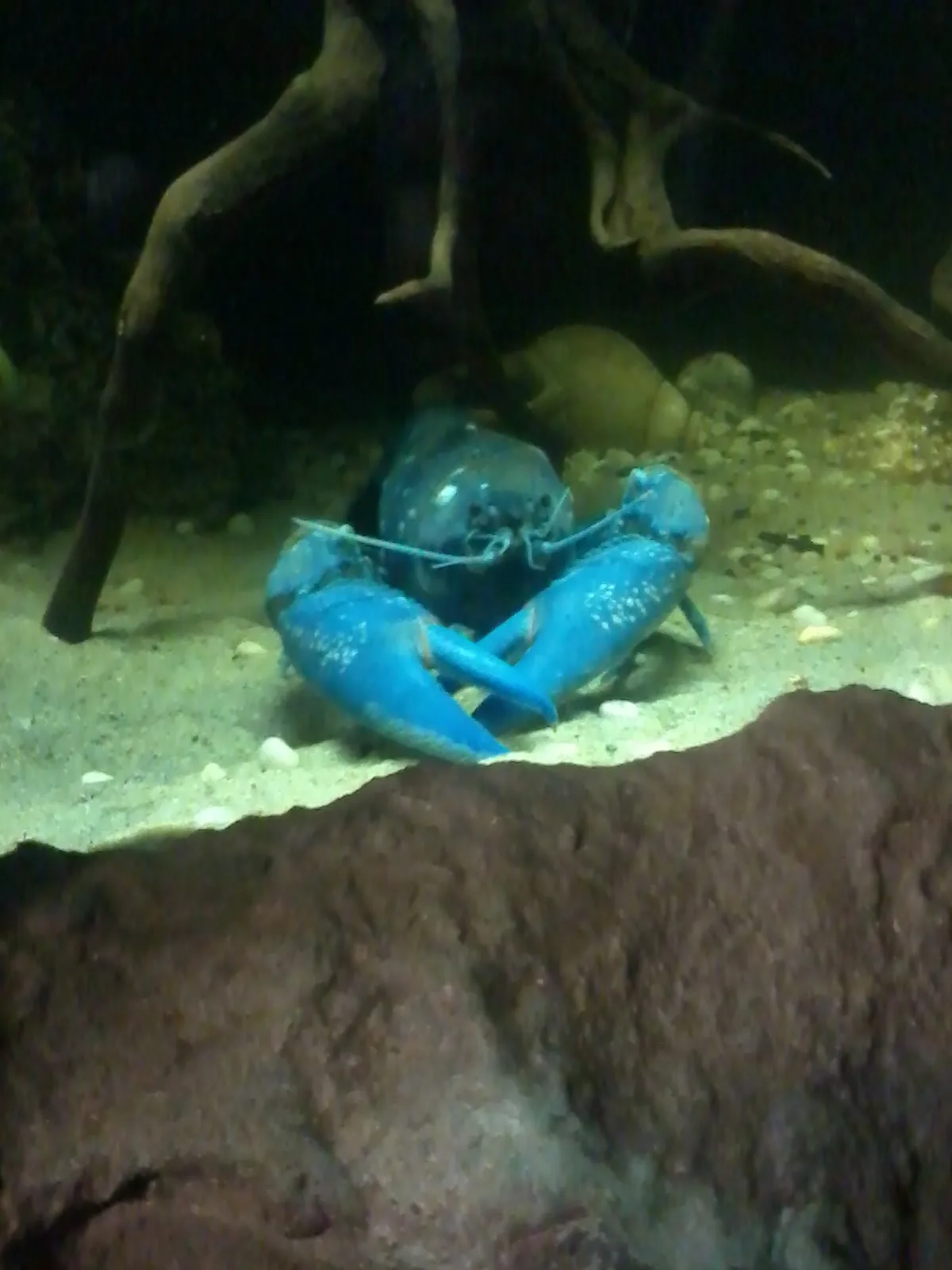
Similar water needs
Species with a similar temperature, a similar pH and a comparable adult size. Whether their behaviour fits as well is what the compatibility check is for.