Red swamp crayfish
Procambarus clarkii
3 views
A North American crayfish that changes waters worldwide. On the EU list of invasive species since 2016; keeping and trade are banned in the EU.
- Temperature
- 15 – 28 °C
- pH
- 6.5 – 8.5 pH
- General hardness
- 8 – 25 °dH
- Maximum size
- 15 cm
- Social behavior
- Solitary
- Diet
- Omnivore
2 min read · 324 words
Fresh water
Quick facts
Further published values
- Minimum tank size
- 150 L
Place in the aquarium
Highlighted are the water layer and the spots where the species usually stays in the tank.
- Near the bottom Mostly stays just above the bottom. Food has to reach the substrate.
- Rocks and caves Needs caves, crevices or rockwork as hiding place, territory or spawning site.
- Substrate Sifts through the substrate or burrows into it. Fine, rounded sand without sharp edges suits it.
Home & range
Hatched countries are where the species occurs. It lives in particular waters there, not across the whole country. The points name known waters for orientation, not collection sites.
- Country of origin
- Water for orientation
Native
- South-eastern United States and Mississippi lowlands
- North to Illinois, especially common in Louisiana. Occurrences elsewhere are introduced.
Overview
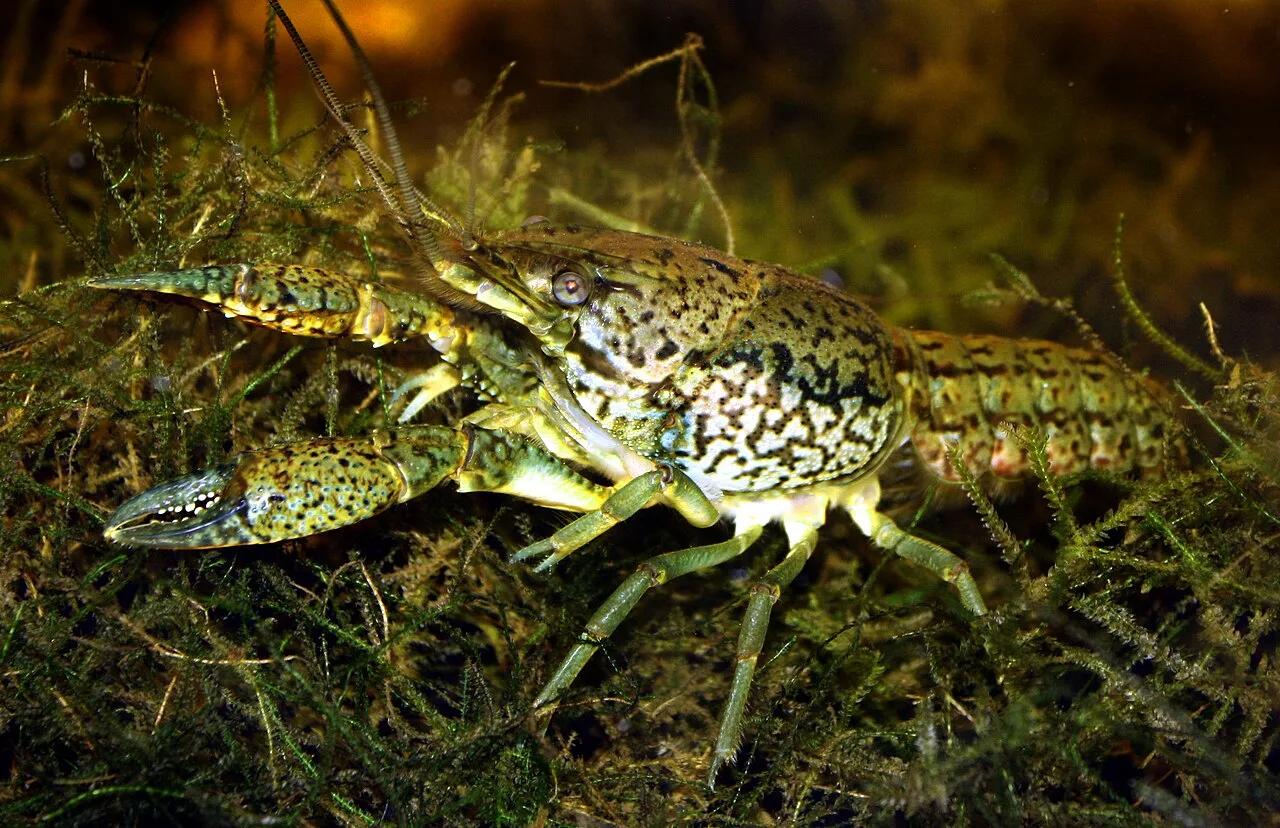
Procambarus clarkii, also called the Louisiana crayfish, reaches up to 12 cm; individual animals reach 15 cm. The body is spiny and dark red to black, sometimes grey or greenish. The claws carry bright red spines. Males are recognised by their gonopods and larger claws.
Legal situation in the EU
Since 2016 the species has been on the Union list of invasive alien species. Keeping, breeding, selling, exchanging and releasing it are therefore banned in the EU. Animals already kept before the listing may stay until their natural death, provided they cannot reproduce or escape.
Range and habitat
This describes the origin, not how to furnish the aquarium.
Native to the south-eastern United States and northern Mexico, along the Gulf of Mexico and in the Mississippi lowlands north to Illinois, especially common in Louisiana. It lives in still waters that dry out regularly, such as flood pools. Through crayfish farming and released aquarium animals it is now widespread worldwide, especially in rice fields. In Spain it turned clear, plant-rich lakes into turbid waters without plants.
Keeping
Not in EU tanks and ponds
Anyone keeping an animal from an old stock makes sure it cannot escape or reproduce. Animals must never be released or passed on. The crayfish can leave waters over land.
Crayfish plague
American crayfish often carry the crayfish plague pathogen without falling ill themselves. For noble crayfish and stone crayfish it is deadly. Water, nets and decor from its tank never come into contact with other crayfish or natural waters.
Diet
Omnivore. Marsh and aquatic plants, soft-skinned midge larvae, thin-shelled snails, fish spawn and tadpoles. It can also live on dead plant material, rotted leaves or mud alone.
Behaviour and moulting
Nocturnal. When water levels drop it digs burrows and survives dry periods of six months. It lives permanently in water with only 2 mg of oxygen per litre and tolerates some salt.
Reproduction and larvae
The females carry the eggs and later the young crayfish on the abdomen. The species reproduces quickly and in large numbers, one reason for its rapid spread.
Gallery
More species in this group
Similar water needs
Species with a similar temperature, a similar pH and a comparable adult size. Whether their behaviour fits as well is what the compatibility check is for.