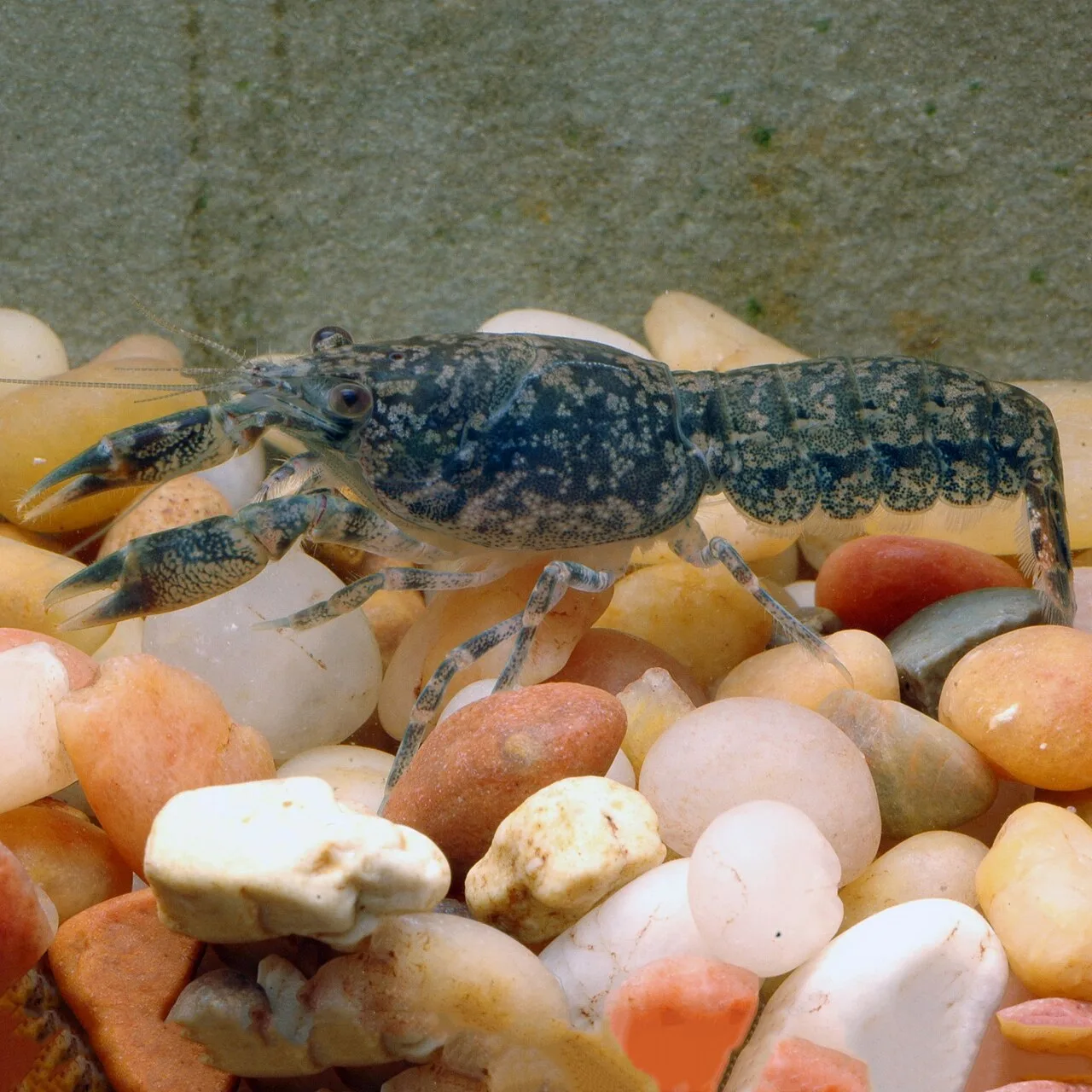
Marbled crayfish
Procambarus virginalis
4 views
A crayfish that reproduces without males. On the EU list of invasive species since 2016, so it can no longer be freely kept or traded in the EU.
- Temperature
- 18 – 26 °C
- pH
- 7 – 8.5 pH
- General hardness
- 8 – 20 °dH
- Maximum size
- 15 cm
- Social behavior
- Territorial
- Diet
- Omnivore
4 min read · 560 words
Fresh water
Quick facts
Further published values
- Lifespan
- 2 a
- Minimum tank size
- 60 L
Place in the aquarium
Highlighted are the water layer and the spots where the species usually stays in the tank.
- Near the bottom Mostly stays just above the bottom. Food has to reach the substrate.
- Rocks and caves Needs caves, crevices or rockwork as hiding place, territory or spawning site.
Home & range
Overview
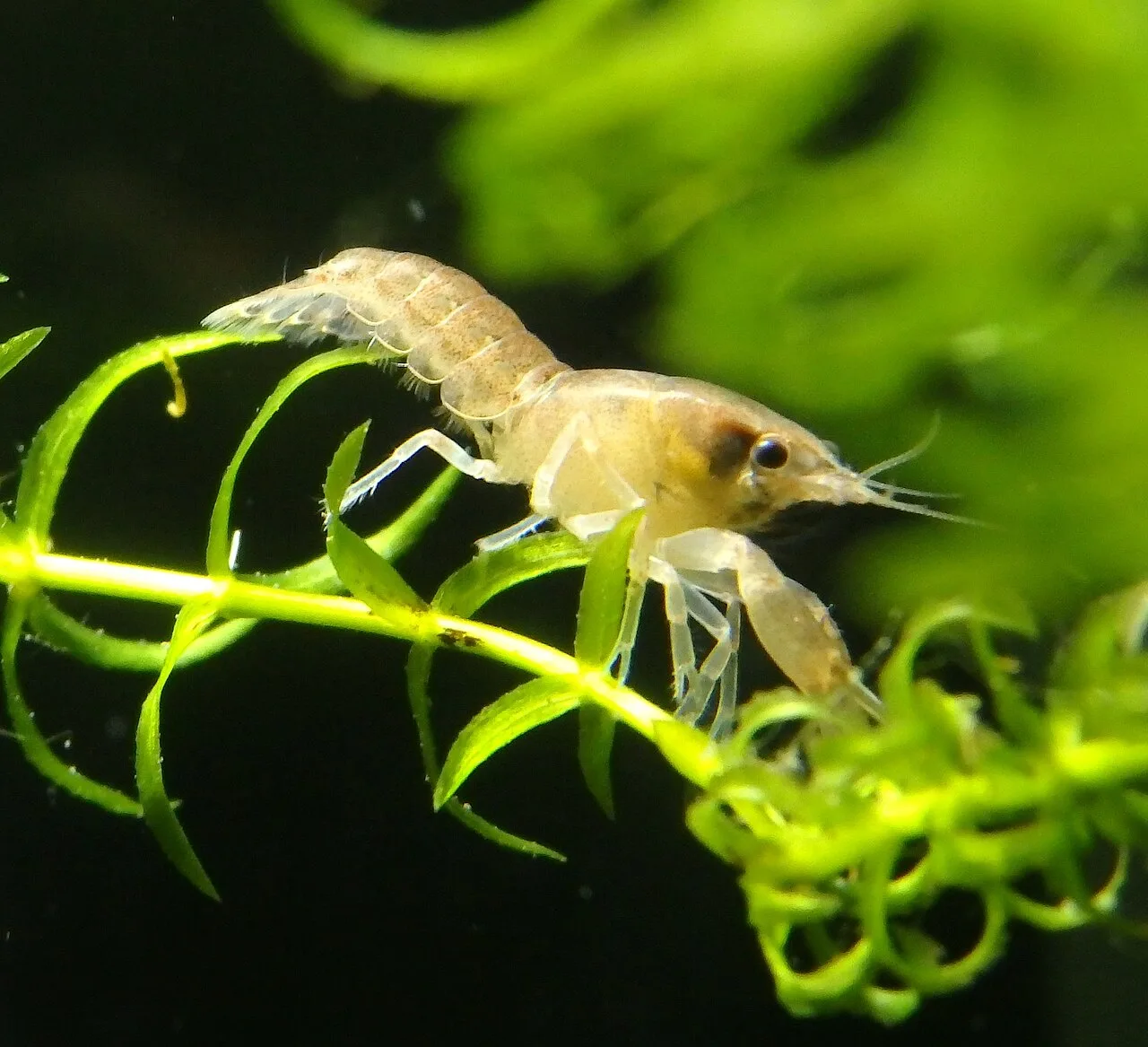
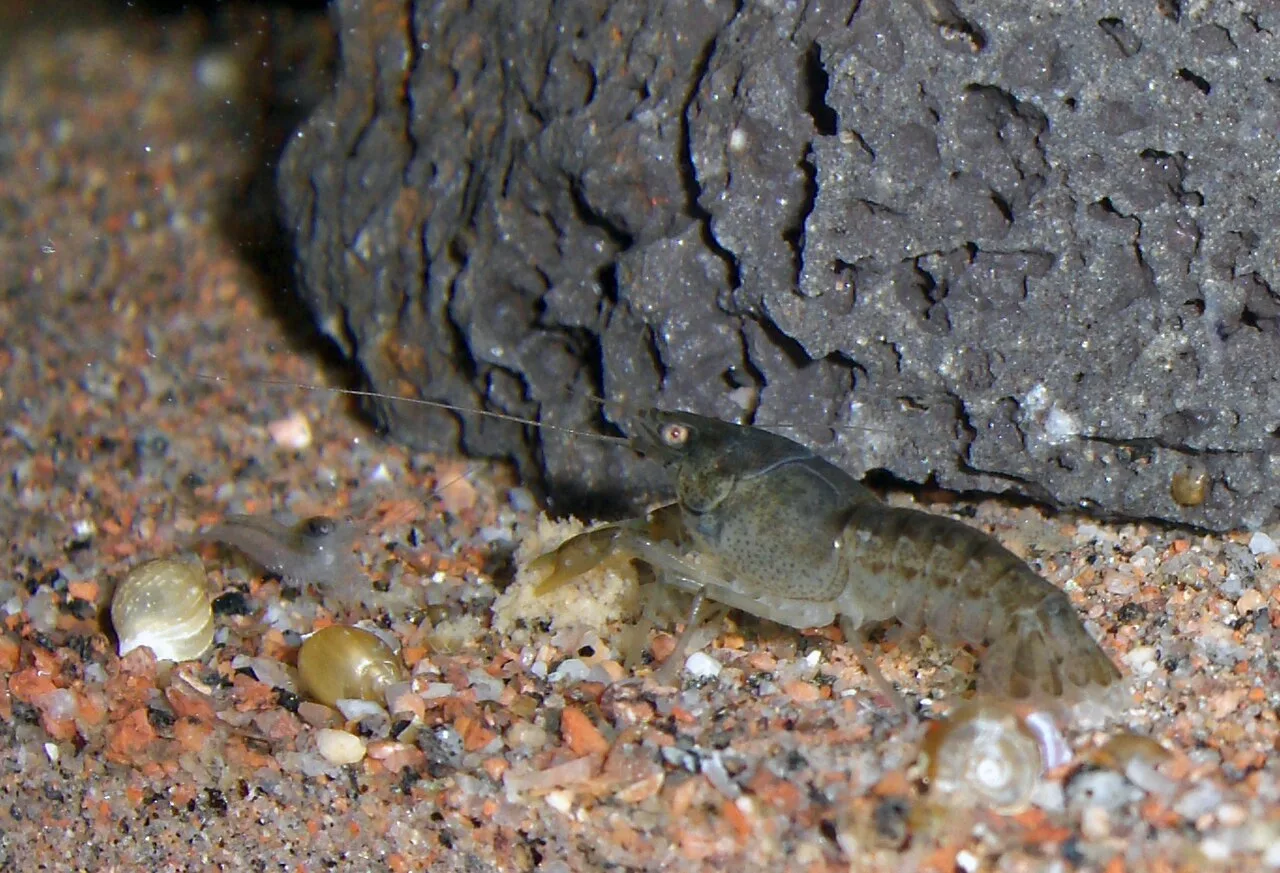
The marbled crayfish (Procambarus virginalis, also Procambarus fallax f. virginalis) is an asexual form of the North American species Procambarus fallax from Florida and Georgia. Since 2017 it has also been described as a species of its own. It became known in the mid-1990s in German aquarium shops; the origin of the animals can no longer be traced. It is named for the marbled pattern on the sides of the carapace.
Legal status
Since 2016 the marbled crayfish has been on the European Union list of invasive alien species of Union concern. All member states must take measures against its spread; in Germany monitoring and control have been under way since 2018. Anyone who already owns it or is offered it should check the rules that apply to Union-list species with the responsible authority. This profile is not a recommendation to keep it.
Features
It grows up to 15, usually twelve centimetres long and weighs 15, rarely up to 30 grams. The carapace is smooth without striking spines, with tubercles that can be felt in front of the cervical groove. The claws are comparatively small and their underside is never red.
Range and habitat
This describes the origin, not how to furnish the aquarium.
The marbled crayfish has no natural home in the proper sense. It is an anecozoon, a form that arose under human influence. The parent species lives in Florida and Georgia. As an introduced species it is now established in many countries, in flowing and still waters right down to garden ponds. In damp weather it also moves overland. In 2012 there were 15 sites in Europe, at least six with reproducing populations, mainly in Germany, plus records in Italy, Slovakia and Austria. On Madagascar it spread widely, and in 2012 a first population in Japan became known.
Keeping
Animals are usually fed flake food and oak and beech leaves. What matters is its legal status as a Union-list species. Animals must never be released or flushed down the toilet: it transmits crayfish plague to native species such as the noble crayfish and the narrow-clawed crayfish, while being largely immune itself, and could spread chytrid fungi that threaten amphibians. It is also carried into new waters as live bait by anglers.
Diet
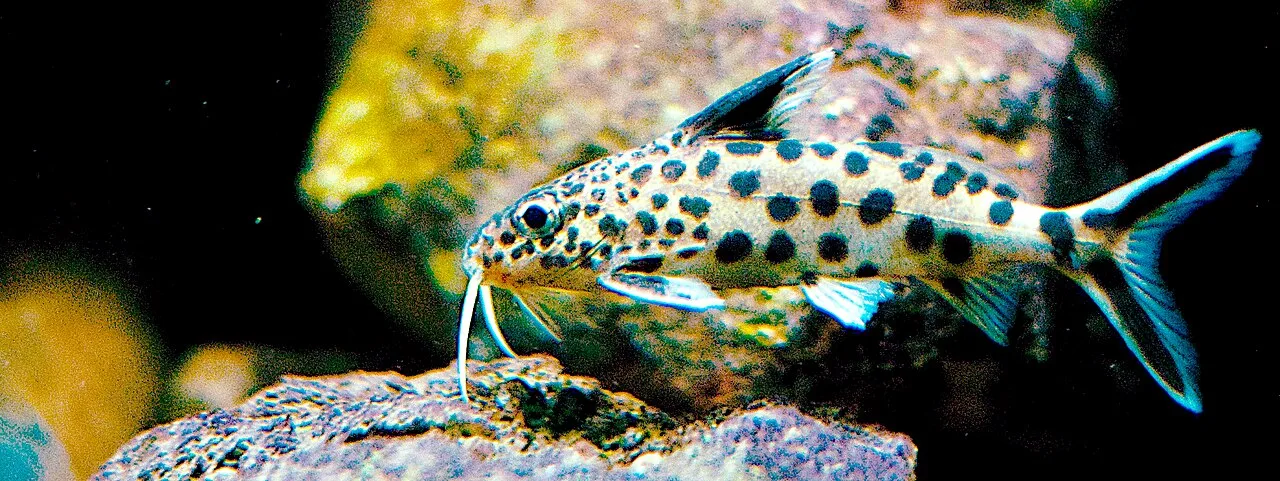
It is an omnivore, with plant food predominating. Marked predatory behaviour has not been observed. In the aquarium, however, it catches sick and some bottom-dwelling fish, such as small catfish like Otocinclus. Reports differ on how it treats plants.
Behaviour and moulting
All offspring are genetically identical but differ noticeably in appearance; each juvenile has its own pattern. This makes it a popular model organism in the laboratory, including cancer research on epigenetic factors. The meat is edible, and on Madagascar it is farmed for food.
Reproduction and larvae
It is the only known crayfish that reproduces by parthenogenesis; males are unknown. It is triploid, and meiosis is skipped when the eggs form. After three to six weeks around 120 young hatch, the record being 724, in the aquarium all year round about every eight weeks. The eggs hang on the swimmerets, and during this time the female does not eat and hides.
Development
The young are about four millimetres long and stay on the mother without feeding during the first two stages. After about four months and some 15 moults they are mature themselves. One female can produce eggs up to seven times. Lifespan is about two years, the record 1610 days. A single animal is therefore enough to found a whole population.
Gallery
More species in this group
Similar water needs
Species with a similar temperature, a similar pH and a comparable adult size. Whether their behaviour fits as well is what the compatibility check is for.