Florida crayfish
Procambarus alleni
3 views
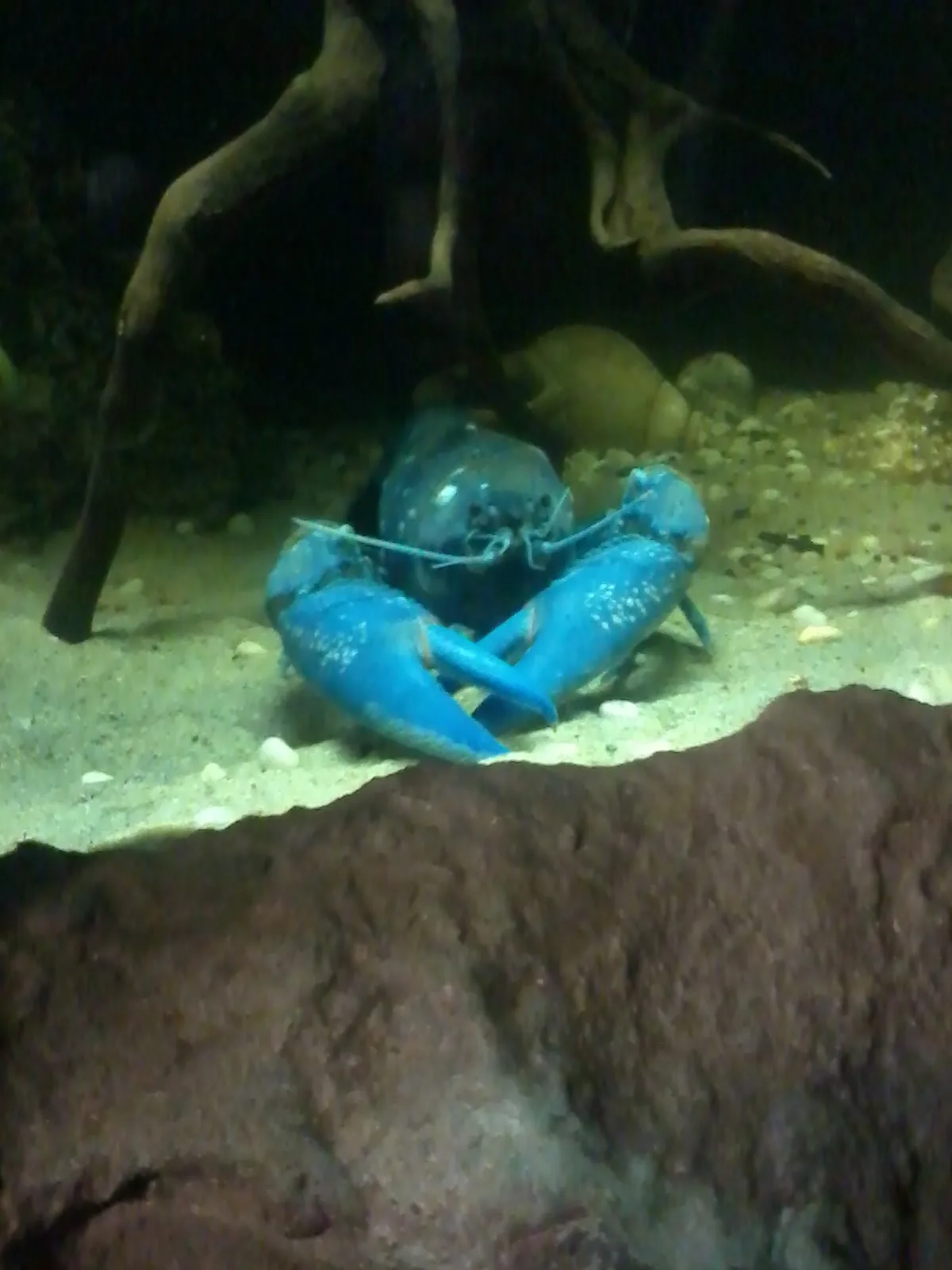
A crayfish from Florida, almost always bright blue in the aquarium hobby. It eats plants and fish and is best kept alone.
- Temperature
- 20 – 25 °C
- pH
- 7 – 8 pH
- General hardness
- 8 – 20 °dH
- Maximum size
- 15 cm
- Social behavior
- Solitary
- Diet
- Omnivore
2 min read · 244 words
Fresh water
Quick facts
Further published values
- Minimum tank size
- 60 L
Place in the aquarium
Highlighted are the water layer and the spots where the species usually stays in the tank.
- Near the bottom Mostly stays just above the bottom. Food has to reach the substrate.
- Rocks and caves Needs caves, crevices or rockwork as hiding place, territory or spawning site.
Home & range
Hatched countries are where the species occurs. It lives in particular waters there, not across the whole country. The points name known waters for orientation, not collection sites.
- Country of origin
- Water for orientation
Native
- Florida
- East of the St. Johns River and the southern peninsula.
Overview
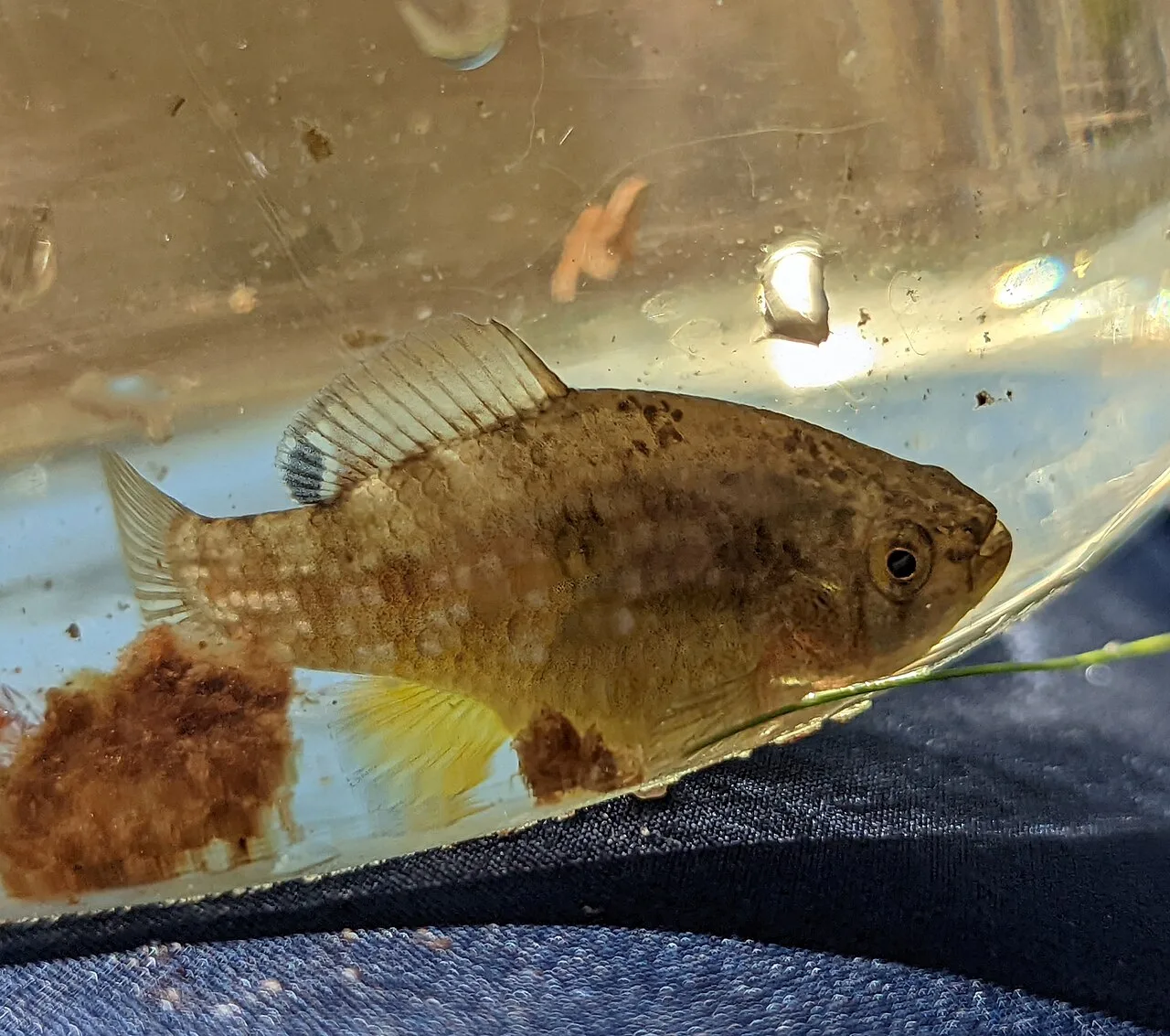
Procambarus alleni reaches 10 to 12 cm; individual animals reach 15 cm. Wild animals are usually brown; the trade almost only offers the blue form. From above the sexes are hard to tell apart. Males carry gonopods on the underside, which females lack. Unequal claws say little, because claws regrown after fights stay smaller.
Range and habitat
This describes the origin, not how to furnish the aquarium.
Mainly the area east of the St. Johns River and the whole southern peninsula of Florida. It prefers still or very slow-flowing waters and burrows when the water level drops.
Keeping
Tank
A single animal from about 60 cm edge length, a pair from one metre. Caves, gravel to dig in and a tightly closing cover; it climbs and escapes.
Water
20 to 25 °C, pH 7 to 8, GH 8 to 20 °dH. Unlike the red swamp crayfish it needs clean water at all times.
Companions
Best alone. It eats real plants, even Anubias and Java fern. Small fish that sleep on the bottom are caught. Higher temperature clearly increases its appetite.
Diet
In the wild aquatic plants, fish carrion, small live fish and fallen leaves. In the tank food tablets, carrots, cucumber, peas and occasionally frozen food.
Behaviour and moulting
Opportunistic predator and loner. Before moulting it eats little and hides. Afterwards the shell is soft for a few days, when it is particularly vulnerable.
Reproduction and larvae
Females are mature from about 3.5 cm and must be larger than the male for mating. Depending on size and condition they produce 50 to 100 young, which first stay on the mother's abdomen. Breeding succeeds in fresh water.
Gallery
More species in this group
Similar water needs
Species with a similar temperature, a similar pH and a comparable adult size. Whether their behaviour fits as well is what the compatibility check is for.