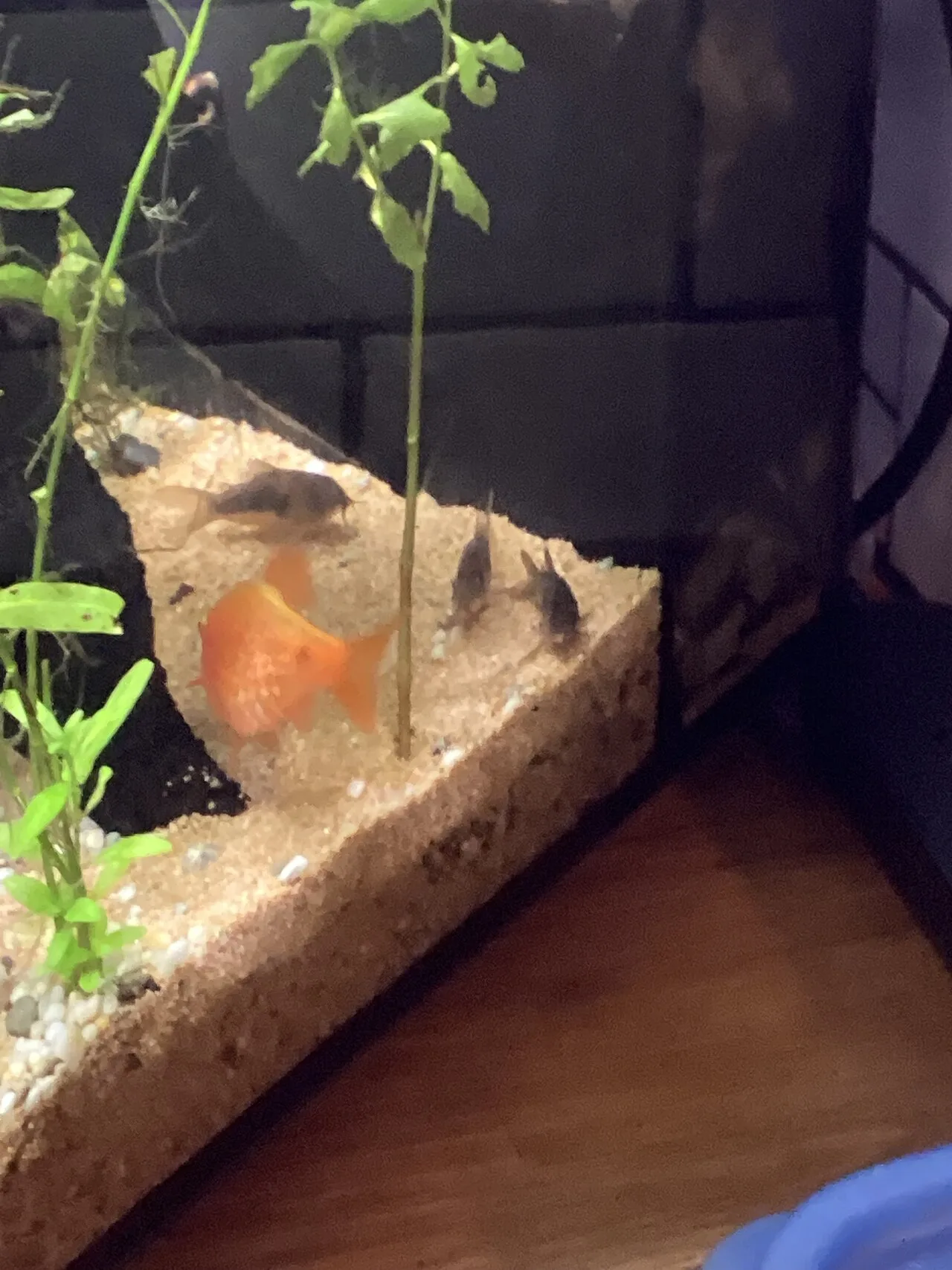
Cajun dwarf crayfish
Cambarellus shufeldtii
3 views
A striped dwarf crayfish from the southern United States. Small and calm, yet the young of dwarf shrimp are still at risk.
- Temperature
- 15 – 26 °C
- pH
- 7 – 8 pH
- General hardness
- 6 – 20 °dH
- Maximum size
- 4 cm
- Social behavior
- Territorial
- Diet
- Omnivore
2 min read · 278 words
Fresh water
Quick facts
Further published values
- Lifespan
- 1.5 – 2 a
- Minimum tank size
- 30 L
Place in the aquarium
Highlighted are the water layer and the spots where the species usually stays in the tank.
- Near the bottom Mostly stays just above the bottom. Food has to reach the substrate.
- Dense plants Looks for dense planting as cover, retreat or grazing ground.
- Rocks and caves Needs caves, crevices or rockwork as hiding place, territory or spawning site.
Home & range
Hatched countries are where the species occurs. It lives in particular waters there, not across the whole country. The points name known waters for orientation, not collection sites.
- Country of origin
- Water for orientation
Native
- Mississippi basin to south-eastern Texas
- From the Mississippi delta north to Illinois, east to Alabama.
Overview
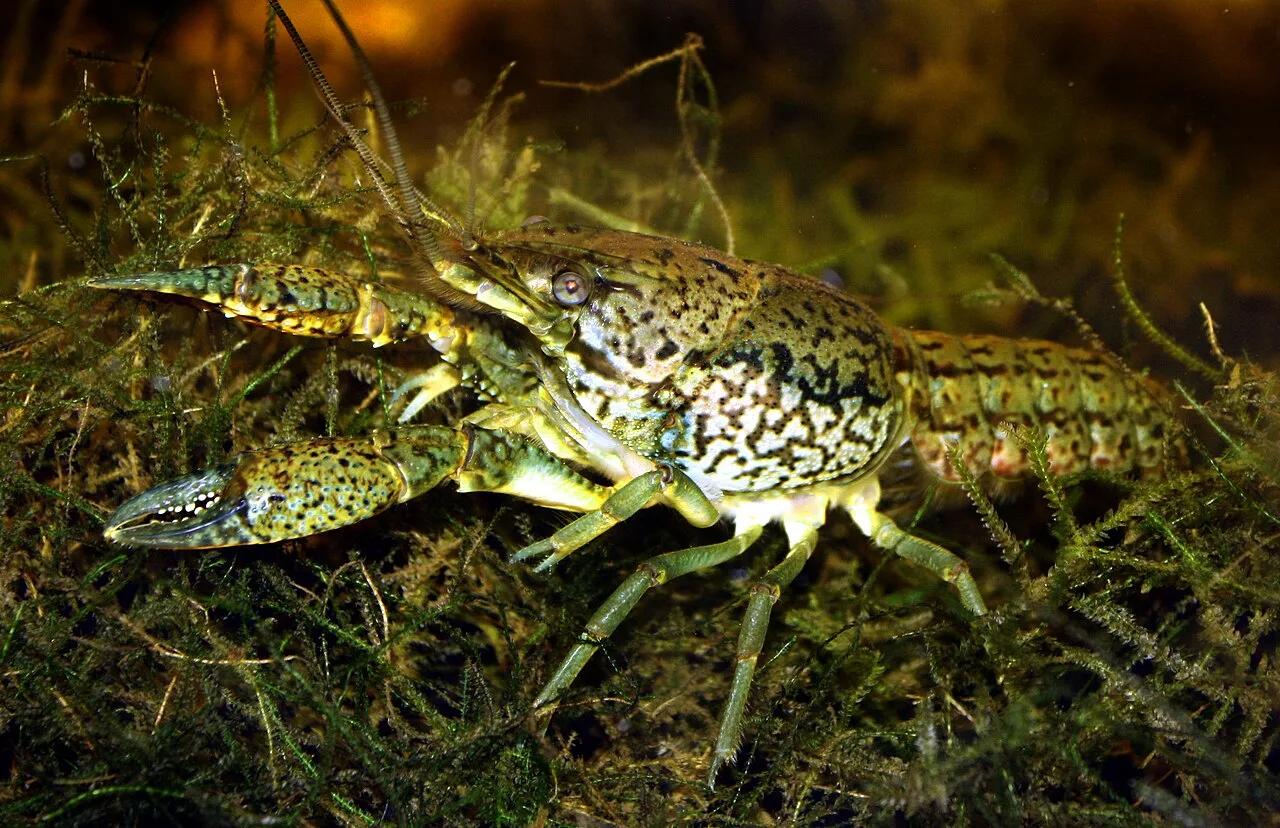
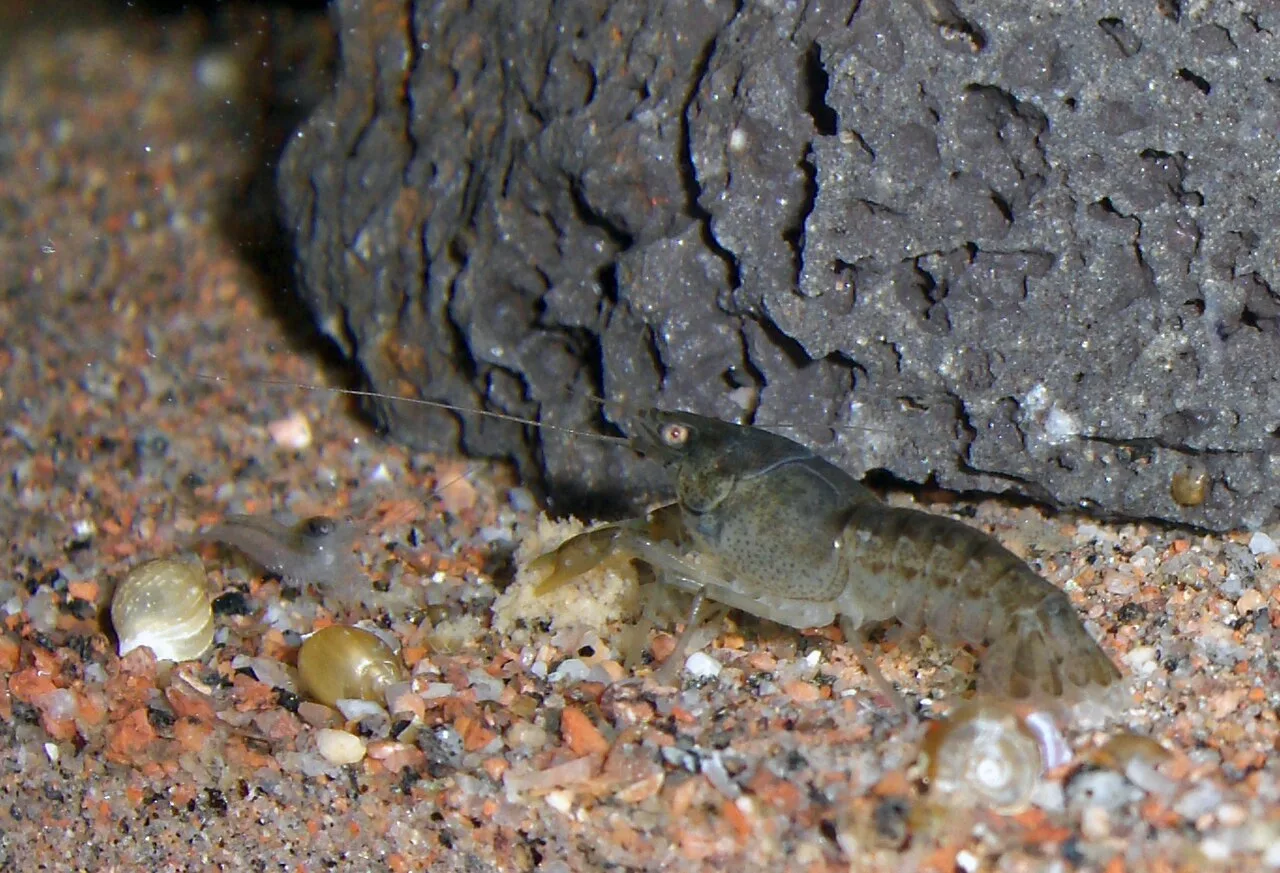
On a light brown background four dark brown longitudinal stripes run along the top and sides to the tail fan. They can be jagged and dark-edged or dissolve into rows of spots. Females are more strongly marked than males. The carapace measures 7 to 12 mm in mature males and up to 14 mm in females, making the animal about 3 to 4 cm long.
Confusion
The dwarf crayfish Cambarellus puer looks very similar. In it the three projections of the males' gonopods are bent almost at right angles; in the Cajun dwarf crayfish they are straight.
Range and habitat
This describes the origin, not how to furnish the aquarium.
From south-eastern Texas across the Mississippi basin to southern Louisiana with the Mississippi delta, east of it in Mississippi and Alabama, north to Kentucky, Arkansas, Tennessee, Missouri and Illinois. The type specimen comes from the New Orleans area. Where it meets Cambarellus puer, it prevails.
Keeping
Tank
From about 30 litres for a small group, densely planted, with leaves, tubes and caves. A cover; the animals climb out along hoses.
Water
15 to 26 °C, pH 7 to 8, GH 6 to 20 °dH.
Companions
With small fish in the upper water. Shrimp that have just moulted and juveniles are eaten. Bottom fish and snails get pinched.
Diet
Omnivore. Food tablets, frozen food, leaves and vegetables.
Behaviour and moulting
More peaceful than large crayfish. Males threaten each other but rarely get hurt if there are enough hiding places.
Reproduction and larvae
Reproduction almost all year, with peaks in winter and high summer. Adult males alternate through moults between a breeding form and a resting form. With each moult the carapace grows by about 0.45 mm; 12 to 13 moults are needed to reach maturity. The female carries the eggs under the abdomen, and small finished crayfish hatch. Breeding succeeds in fresh water.
More species in this group
Similar water needs
Species with a similar temperature, a similar pH and a comparable adult size. Whether their behaviour fits as well is what the compatibility check is for.