Zebra apple snail
Asolene spixii
2 views
A small, striped apple snail from Brazil, Argentina and Uruguay. It also eats freshwater polyps and snail eggs.
- Temperature
- 20 – 28 °C
- pH
- 7 – 8 pH
- General hardness
- 8 – 18 °dH
- Maximum size
- 2.5 cm
- Social behavior
- Peaceful
- Diet
- Omnivore
2 min read · 180 words
Fresh water
Quick facts
Further published values
- Minimum tank size
- 30 L
Place in the aquarium
Highlighted are the water layer and the spots where the species usually stays in the tank.
- Near the bottom Mostly stays just above the bottom. Food has to reach the substrate.
- Dense plants Looks for dense planting as cover, retreat or grazing ground.
- Substrate Sifts through the substrate or burrows into it. Fine, rounded sand without sharp edges suits it.
Home & range
Hatched countries are where the species occurs. It lives in particular waters there, not across the whole country. The points name known waters for orientation, not collection sites.
- Country of origin
- Water for orientation
Native
Overview
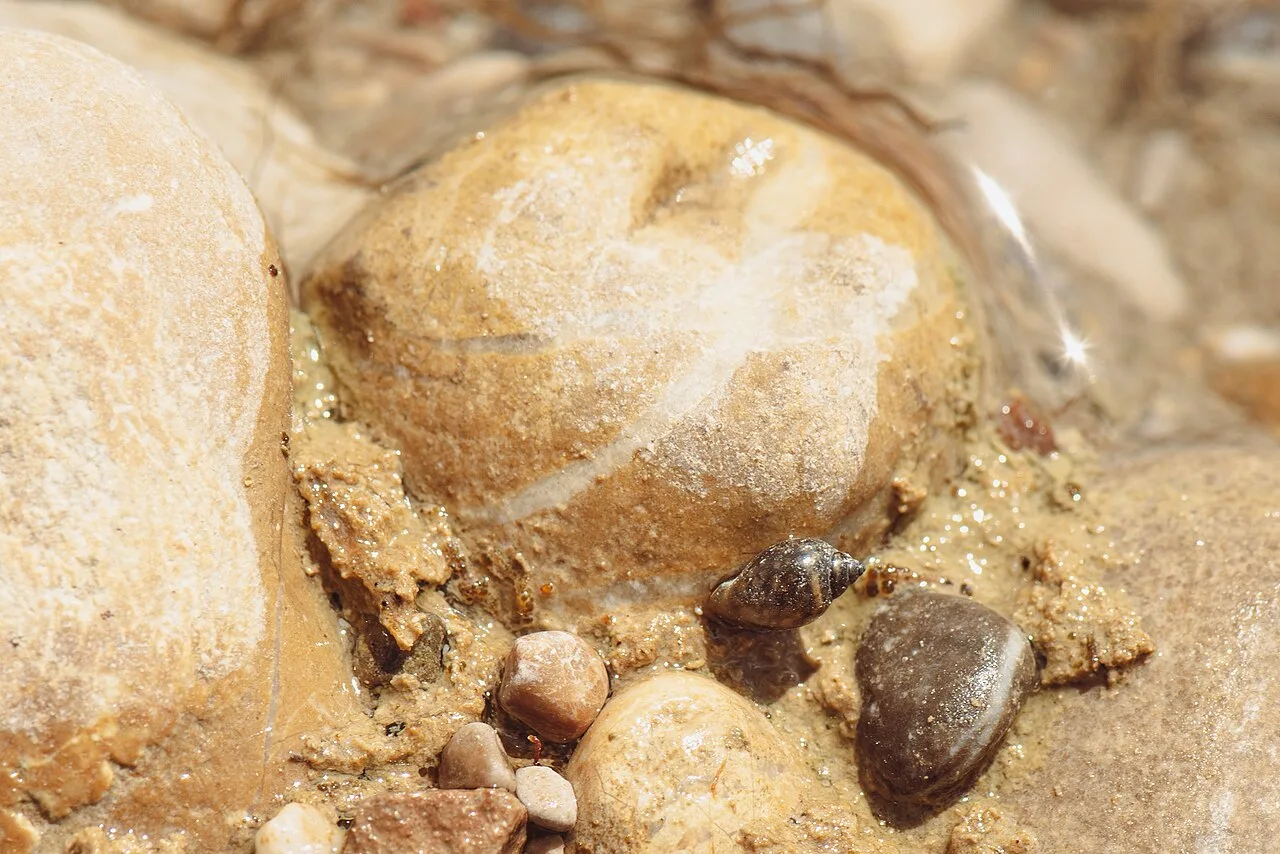
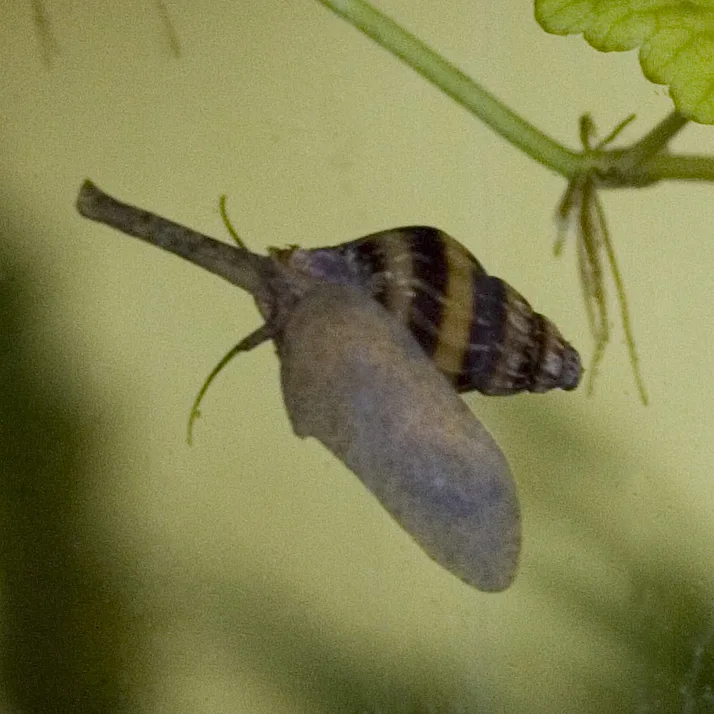
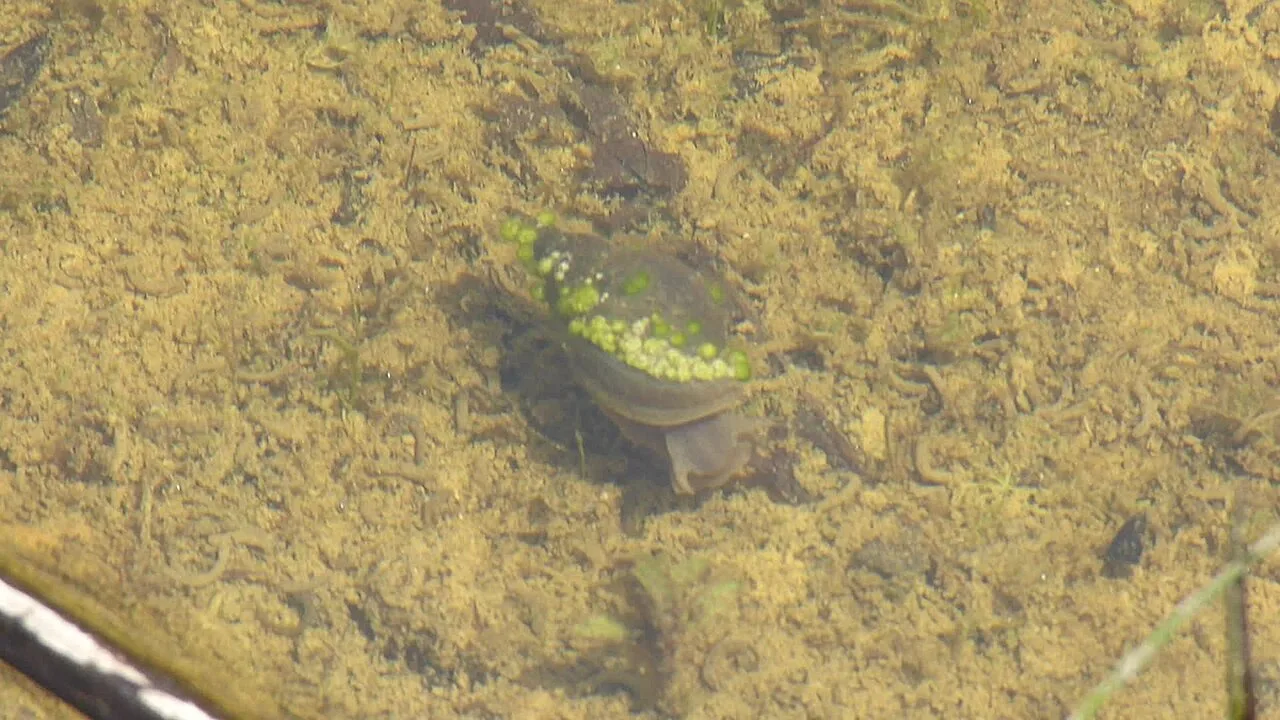
Asolene spixii carries dark spiral bands on a pale background, hence its trade name. The shell is lower than in Pomacea and reaches about 2.5 cm. The species name honours the German naturalist Johann Baptist von Spix.
It does not belong to the genus Pomacea and therefore does not fall under the EU ban on Pomacea.
Range and habitat
This describes the origin, not how to furnish the aquarium.
Brazil, Argentina and Uruguay. These countries remain the coarse origin.
Keeping
Tank
From about 30 litres with soft substrate, into which it sometimes burrows.
Water
20 to 28 °C, pH 7 to 8, GH from about 8 °dH. Calcium in the water matters for the shell.
Companions
With peaceful fish and shrimp. It eats other snails' clutches in the tank.
Diet
Omnivore with a liking for animal food. It eats freshwater polyps of the genus Hydra, snail eggs, carrion, leftovers and food tablets. Plants are usually spared.
Behaviour and moulting
Rather crepuscular and nocturnal, often half hidden in the substrate by day.
Reproduction and larvae
Separate sexes. Unlike Pomacea it lays its eggs under water, in small jelly clutches on stones, wood or glass. The young snails hatch fully formed. Reproduction is moderate and rarely gets out of hand.
More species in this group
Similar water needs
Species with a similar temperature, a similar pH and a comparable adult size. Whether their behaviour fits as well is what the compatibility check is for.