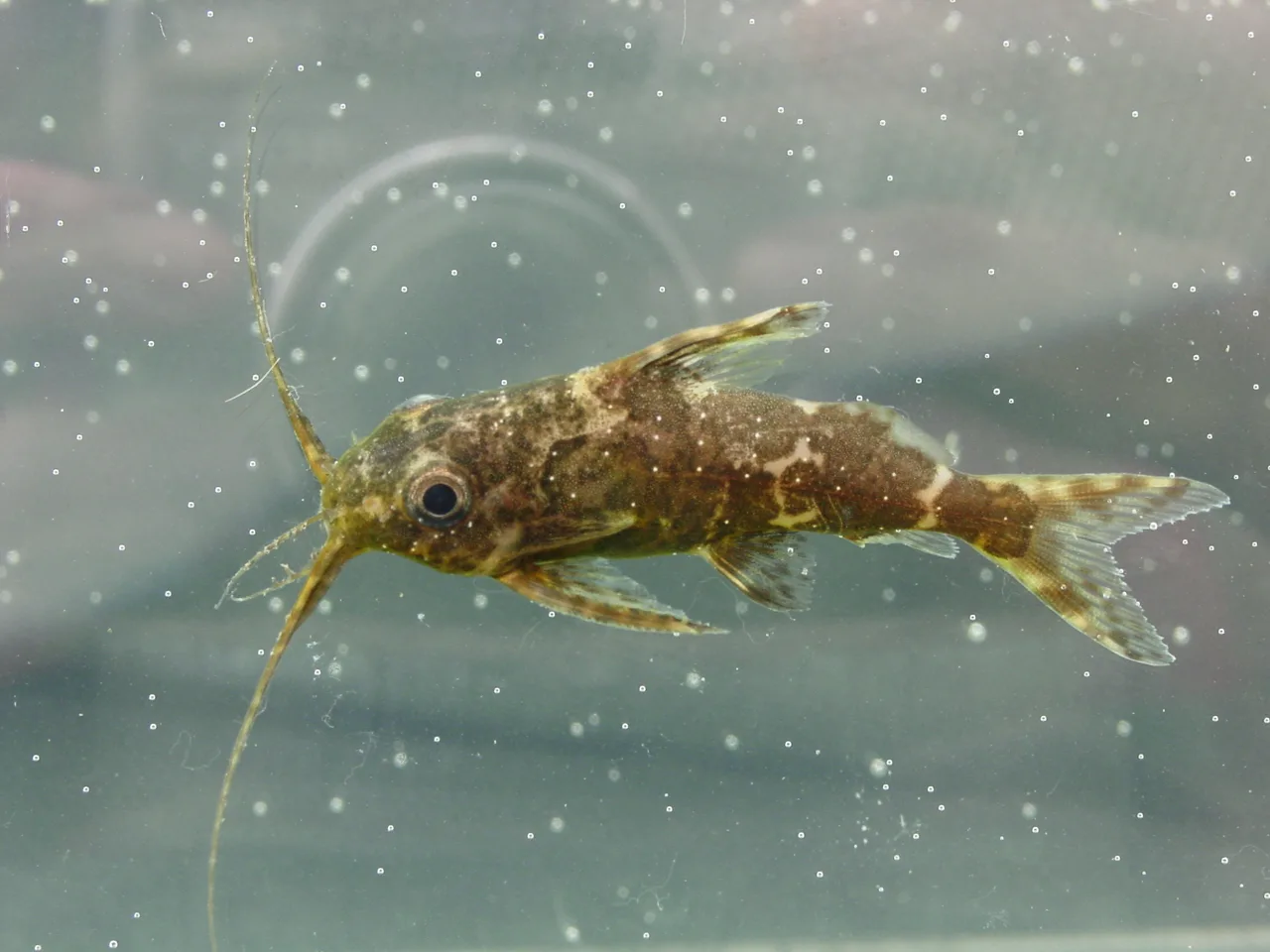
Macmaster's dwarf cichlid
Apistogramma macmasteri
1 view
A dwarf cichlid from Colombia whose male carries a red tail fin. It lives as a pair or in a small harem.
- Temperature
- 24 – 29 °C
- pH
- 5 – 7 pH
- General hardness
- 1 – 10 °dH
- Maximum size
- 7 cm
- Minimum tank size
- 80 L
2 min read · 186 words
Quick facts
Place in the aquarium
Highlighted are the water layer and the spots where the species usually stays in the tank.
- Near the bottom Mostly stays just above the bottom. Food has to reach the substrate.
- Dense plants Looks for dense planting as cover, retreat or grazing ground.
- Rocks and caves Needs caves, crevices or rockwork as hiding place, territory or spawning site.
Shrimp in the tank
Shrimplets at risk
- Not shrimp safe
- Dwarf shrimp at risk
- Shrimplets at risk
- Shrimp safe
- Adult dwarf shrimp
- Safe
- Shrimplets
- Get eaten
- Safe from shrimp size
- about 2 cm
Adult dwarf shrimp are rarely approached by Macmaster's dwarf cichlid, but juvenile shrimp are hunted deliberately. It reaches about 7 cm and eats small invertebrates on the bottom. Shrimp from about 2 cm are usually safe.
When breeding, the parents chase everything away from the cave. A shrimp group holds on only in a large tank with plenty of moss and leaf litter.
Home & range
Hatched countries are where the species occurs. It lives in particular waters there, not across the whole country. The points name known waters for orientation, not collection sites.
- Country of origin
- Water for orientation
Native
Overview
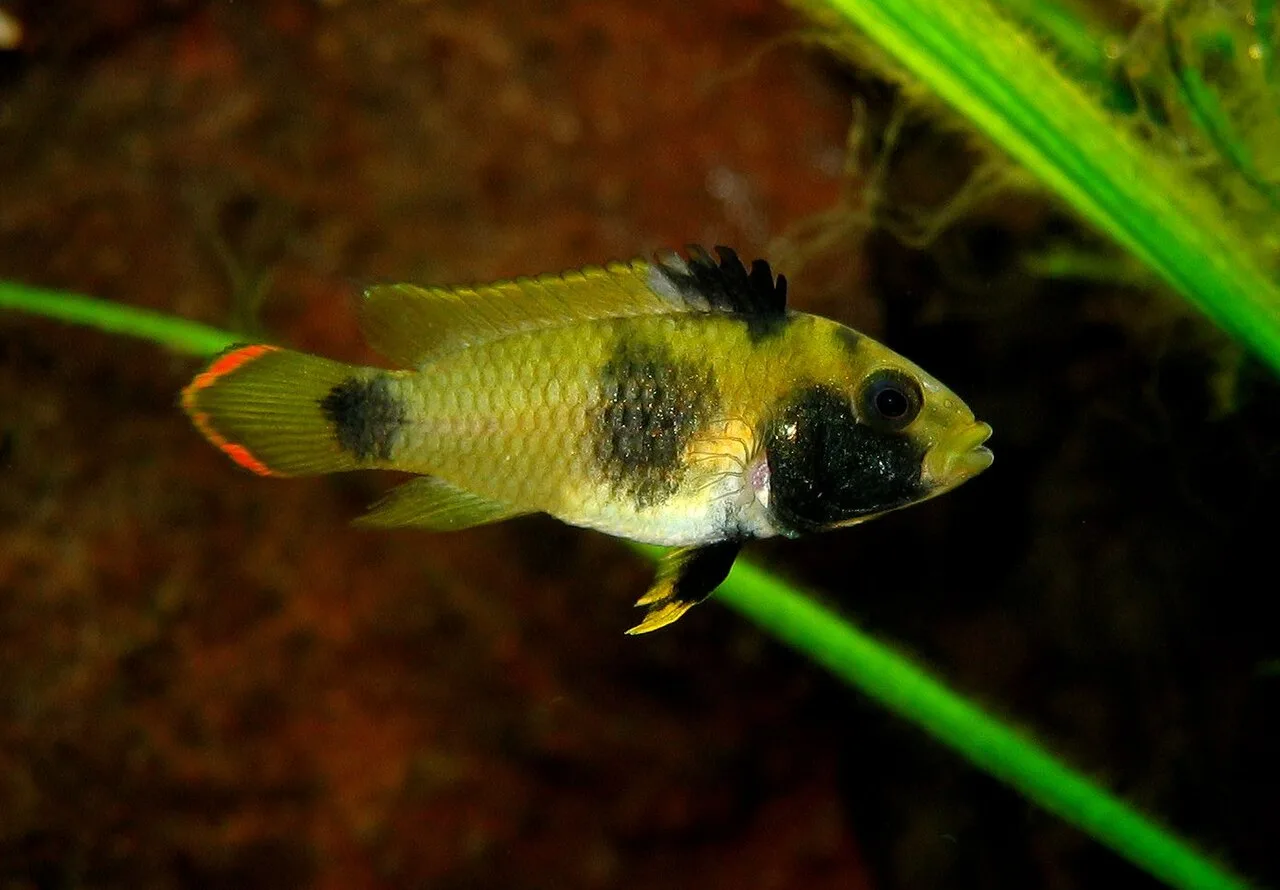
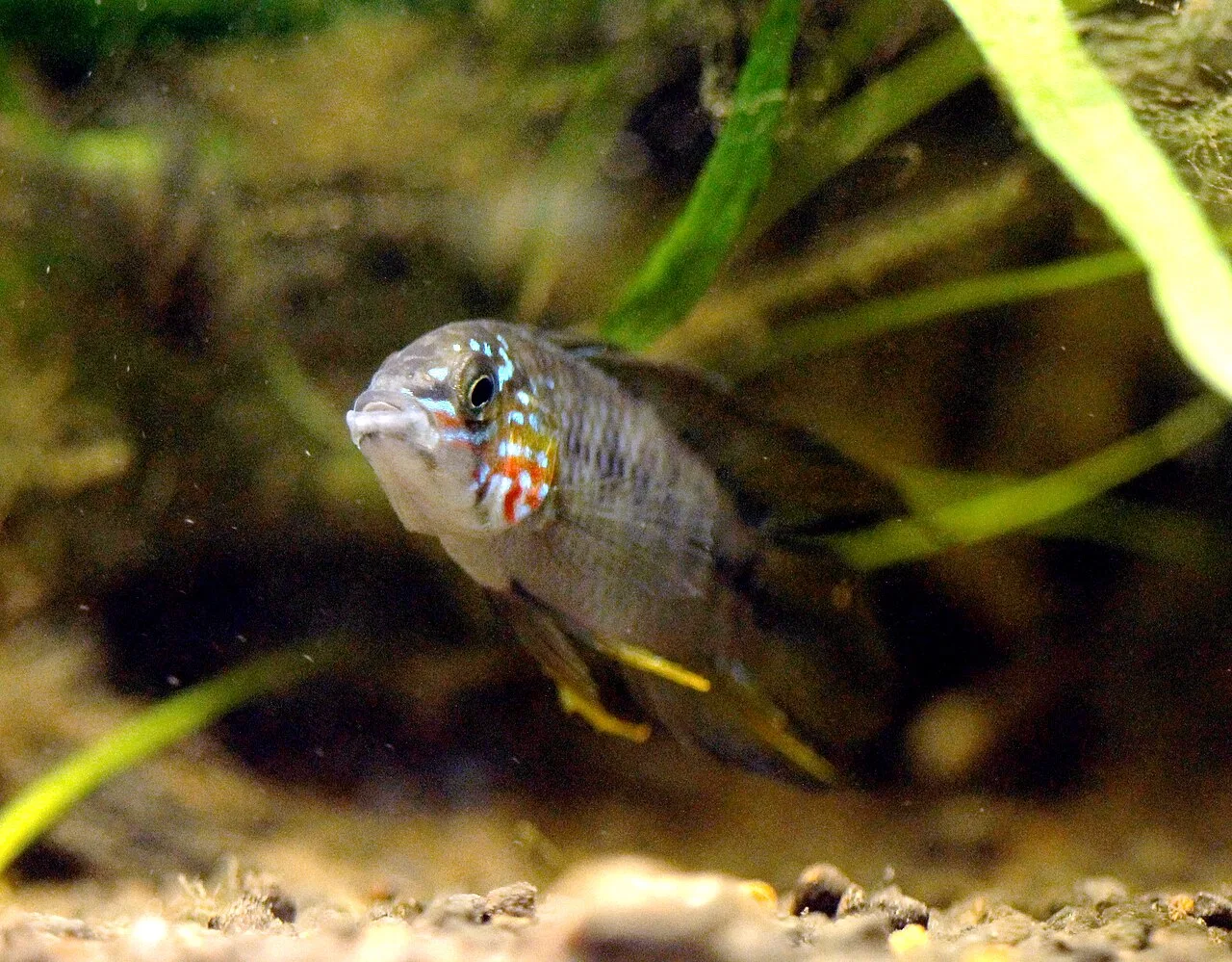
Apistogramma macmasteri reaches about 7 cm as a male, while females stay at about 5 cm. Males carry a red-edged tail fin and a tall dorsal fin, and the body is grey-blue to yellowish. Females turn yellow with black markings when breeding.
It is not Apistogramma viejita. The two look very similar, but viejita carries a different tail pattern. They get mixed up in the trade. A fish without a reliable origin is not relabelled afterwards.
Origin & habitat
This describes the origin, not how to furnish the aquarium.
Streams and lagoons in the Río Meta drainage in Colombia. The country stays the coarse origin. Soft, acidic water with leaf litter matches that.
Care
Harem
24 to 29 °C, pH 5 to 7. One male with one to three females from about 80 litres, with a cave for each female. Leaf litter, wood, plants, fine sand.
Company
Calm tetras in the upper water. Other dwarf cichlids on the bottom only with plenty of floor area.
Diet
Meaty food. Brine shrimp, mosquito larvae, cyclops, plus fine granules.
Behavior
Males claim a territory with several females. Each female defends her cave.
Reproduction
Cave spawner. The female guards eggs and larvae and leads the young. The male holds the wider surroundings.
More species in this group
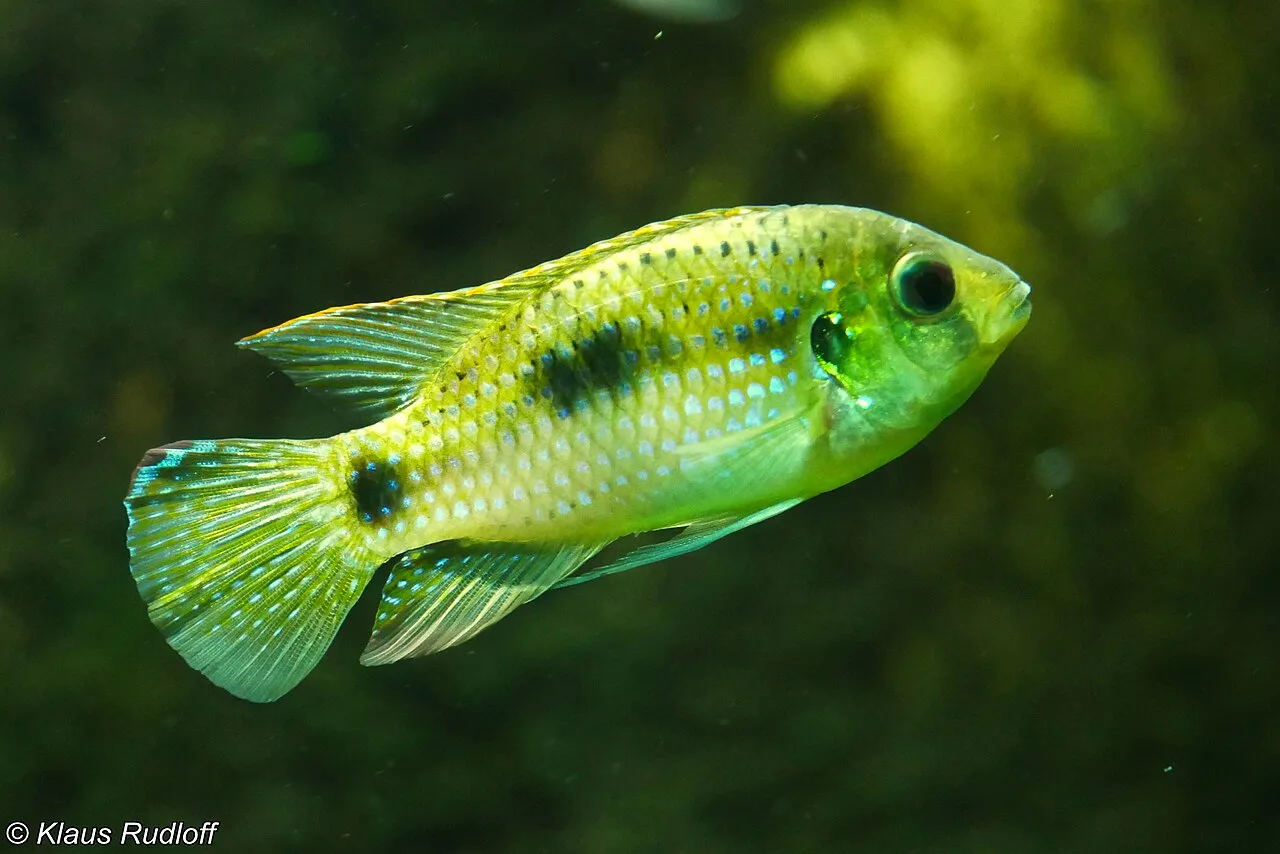
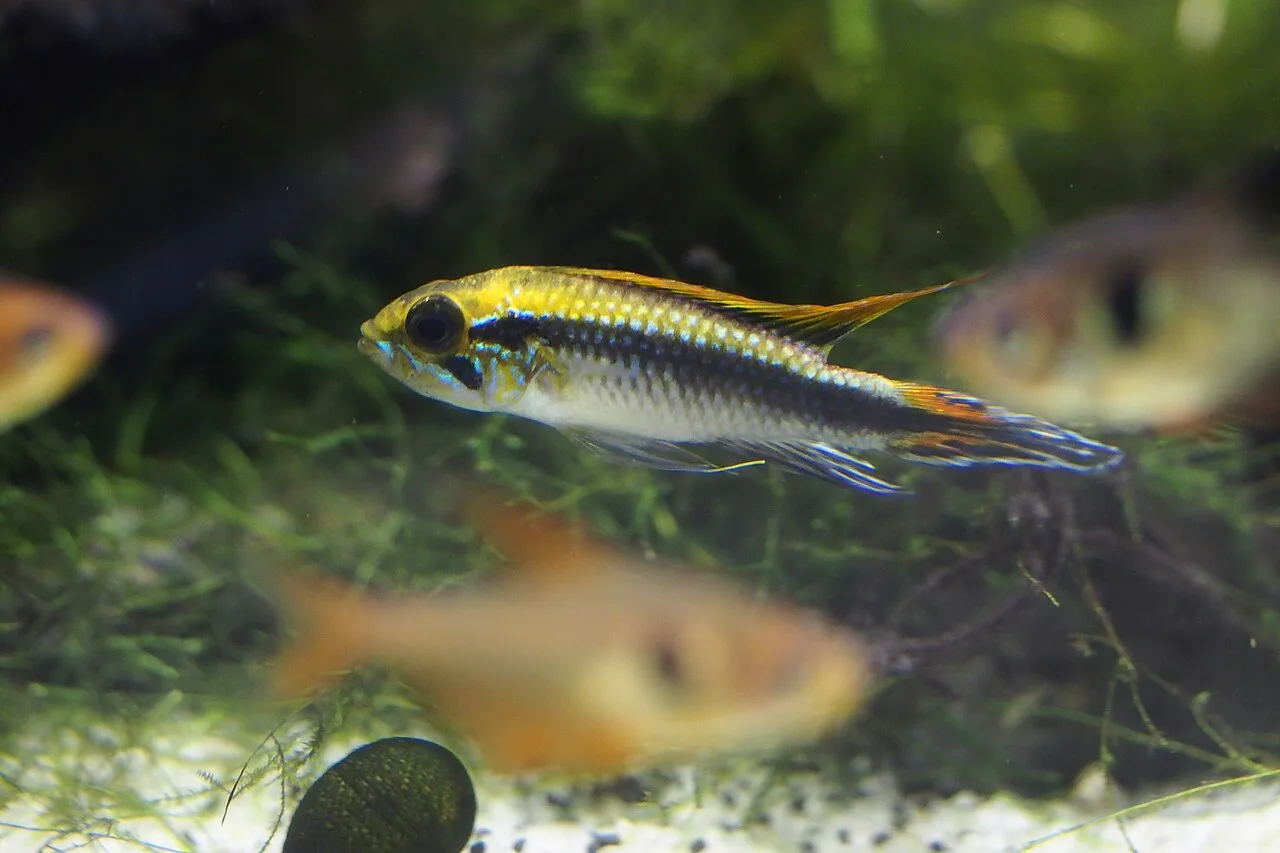
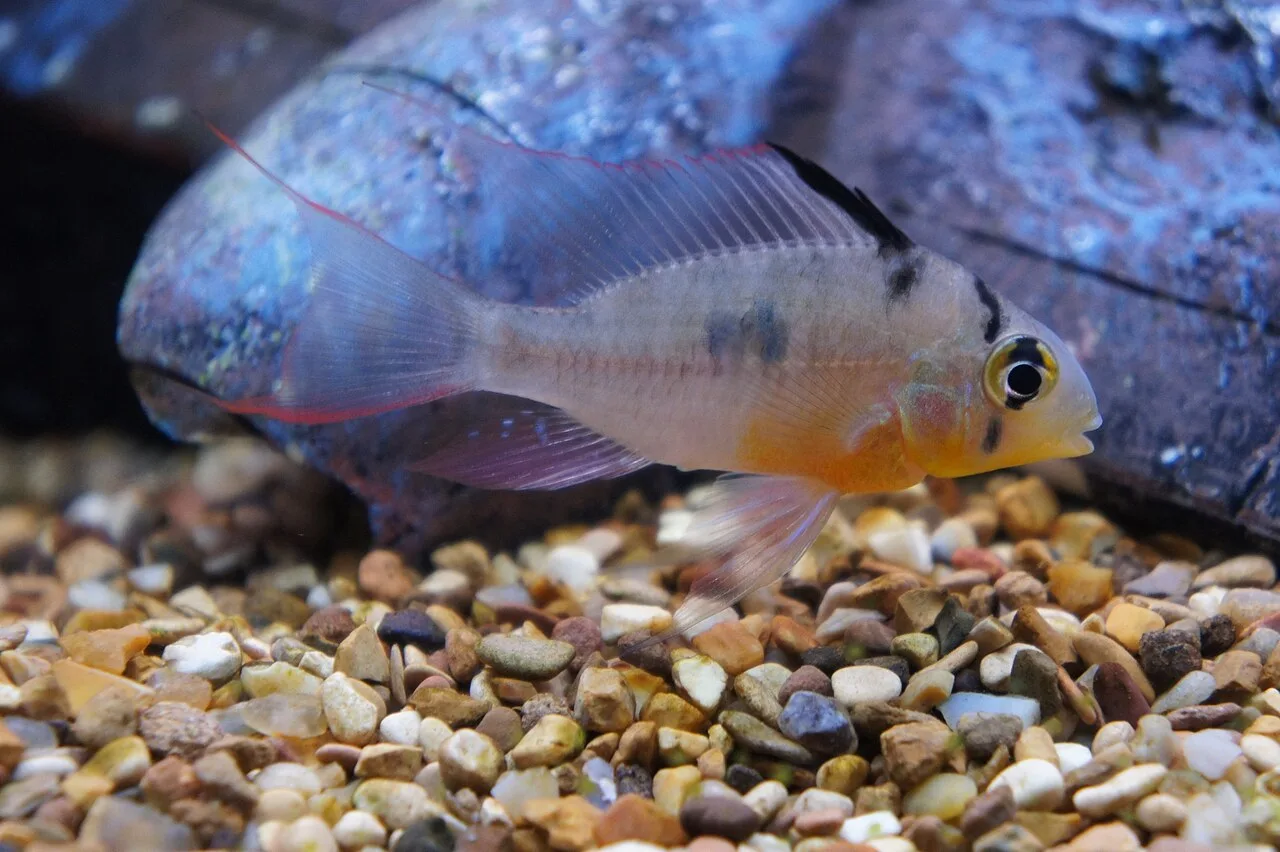

Similar water needs
Species with a similar temperature, a similar pH and a comparable adult size. Whether their behaviour fits as well is what the compatibility check is for.