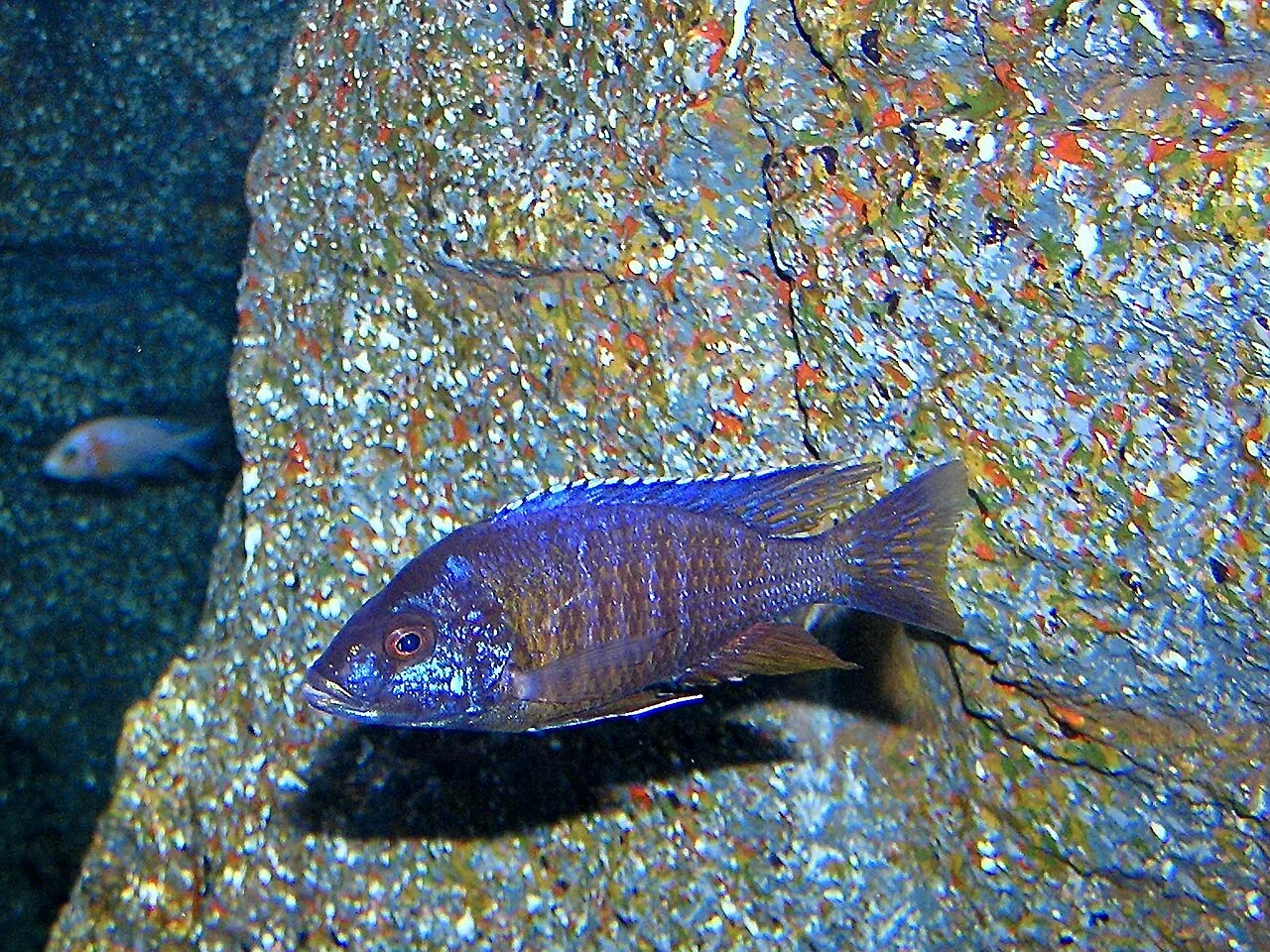
Redfin hap
Copadichromis borleyi
2 views
An open-water cichlid from Lake Malawi that feeds on plankton. Depending on origin, males carry red or yellow fins.
- Temperature
- 24 – 27 °C
- pH
- 7.5 – 8.5 pH
- General hardness
- 10 – 20 °dH
- Maximum size
- 16 cm
- Minimum tank size
- 400 L
2 min read · 186 words
Quick facts
Place in the aquarium
Highlighted are the water layer and the spots where the species usually stays in the tank.
- Middle water Usually stays in the middle of the tank, between bottom and surface.
- Open swimming space Needs an open area without plants or decor to swim at length. Tank length matters more than height.
Shrimp in the tank
Not shrimp safe
- Not shrimp safe
- Dwarf shrimp at risk
- Shrimplets at risk
- Shrimp safe
- Adult dwarf shrimp
- At risk
- Shrimplets
- Get eaten
- Safe from shrimp size
- No size is safe
Dwarf shrimp are not safe with the redfin hap. It reaches about 16 cm and eats plankton and small crustaceans. Dwarf shrimp and juveniles fit exactly into that diet.
On top of that comes the hard, alkaline water of Lake Malawi. Shrimp belong in a tank of their own.
Home & range
Hatched countries are where the species occurs. It lives in particular waters there, not across the whole country. The points name known waters for orientation, not collection sites.
- Country of origin
- Water for orientation
Native
- Malawi
- Range: Lake Malawi.
- Mozambique
- Range: Lake Malawi.
- Tanzania
- Range: Lake Malawi.
Overview
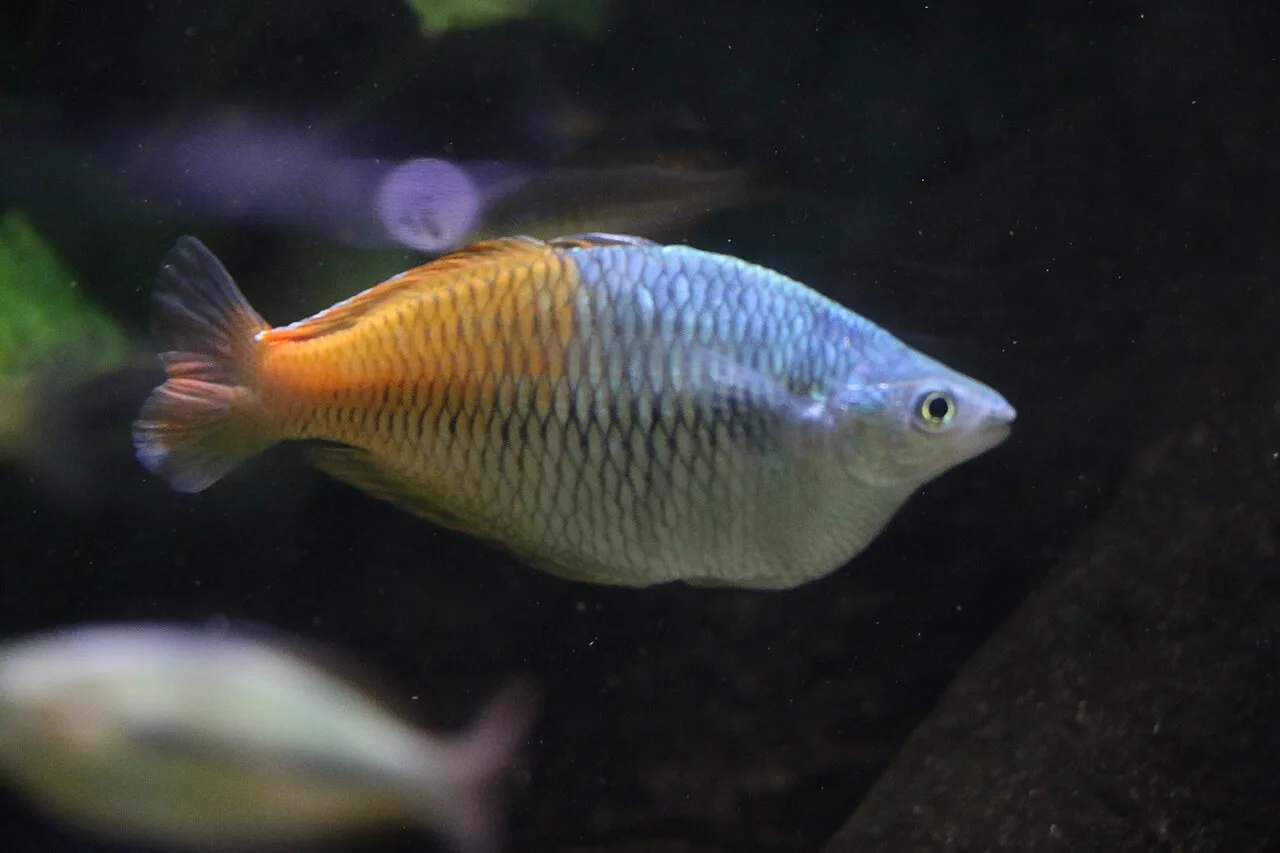
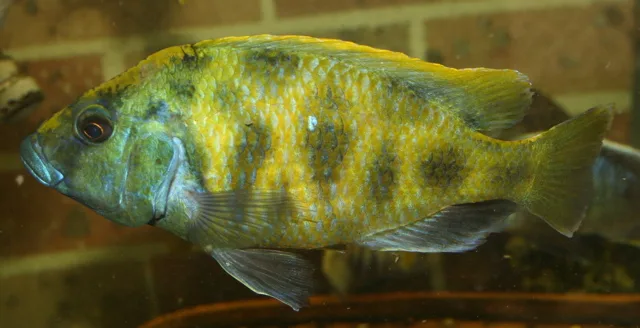
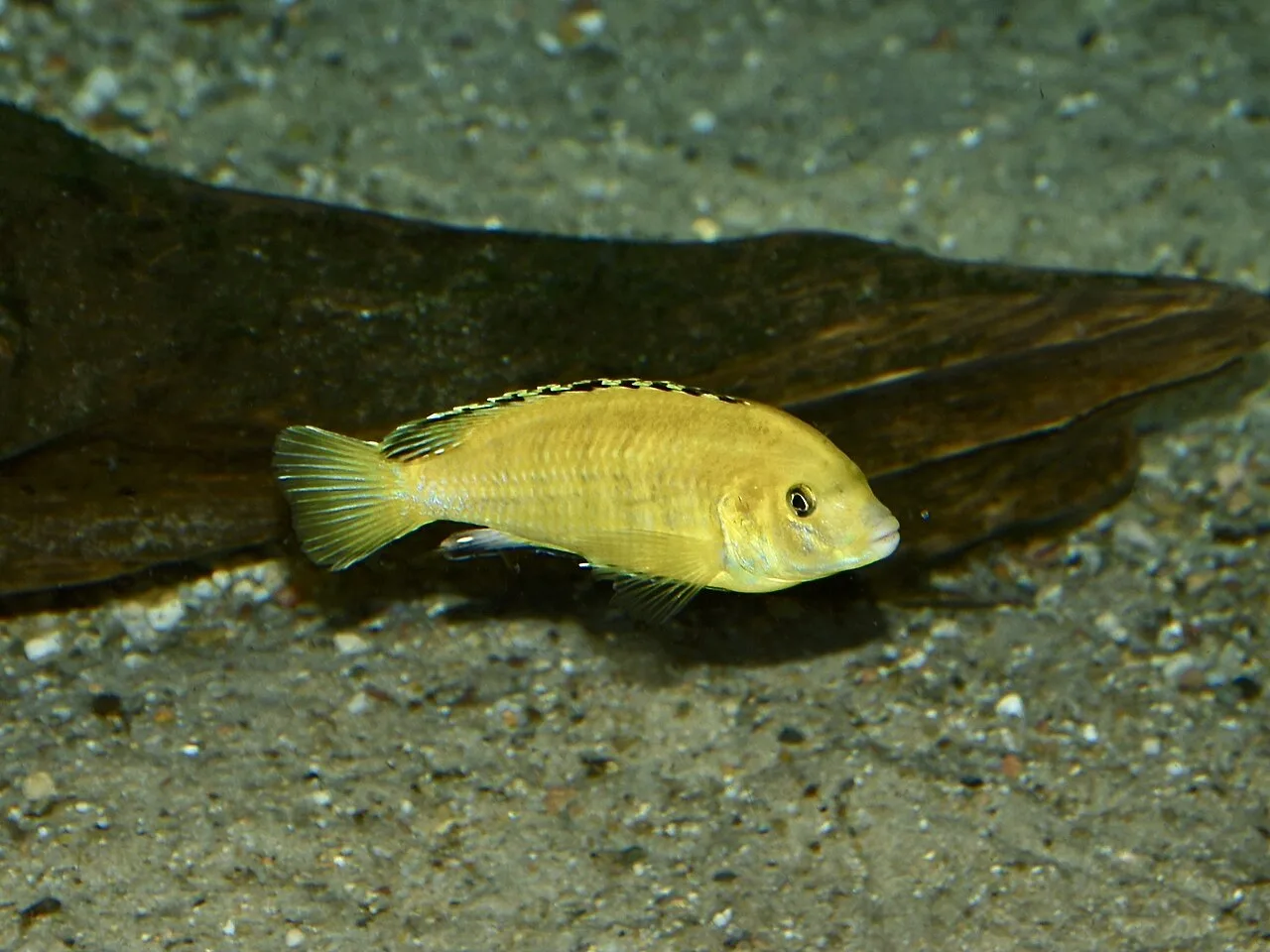
Copadichromis borleyi reaches about 16 cm. Males show a blue head and a body that turns red, orange or yellow depending on origin. Females and juveniles are silvery with three dark spots. The mouth is protrusible and built for plankton. The local forms carry names such as Kadango or Mbenji. They are regarded as one species.
It is not an mbuna. It lives in open water in front of the rocks and is clearly calmer than the rock-dwelling aufwuchs grazers.
Origin & habitat
This describes the origin, not how to furnish the aquarium.
Open water above rocks in Lake Malawi. The lake stays the coarse origin. Hard, alkaline water and swimming space match that.
Care
Space
24 to 27 °C, pH 7.5 to 8.5, hard. One male with several females from about 400 litres and 150 cm. Rock structures along the back wall, plenty of open space in front.
Company
Other calm open-water Malawi cichlids such as Aulonocara. Rough mbuna put it under pressure.
Diet
Fine meaty food. Brine shrimp, mysis, cyclops, fine granules. Several small feeds.
Behavior
Calm, males territorial toward each other. Females stand in a loose group.
Reproduction
Mouthbrooder. The female carries eggs and larvae in her mouth. The male courts over a small pit.
Gallery
More species in this group

Similar water needs
Species with a similar temperature, a similar pH and a comparable adult size. Whether their behaviour fits as well is what the compatibility check is for.