
Sterbas cory
Hoplisoma sterbai
15 views
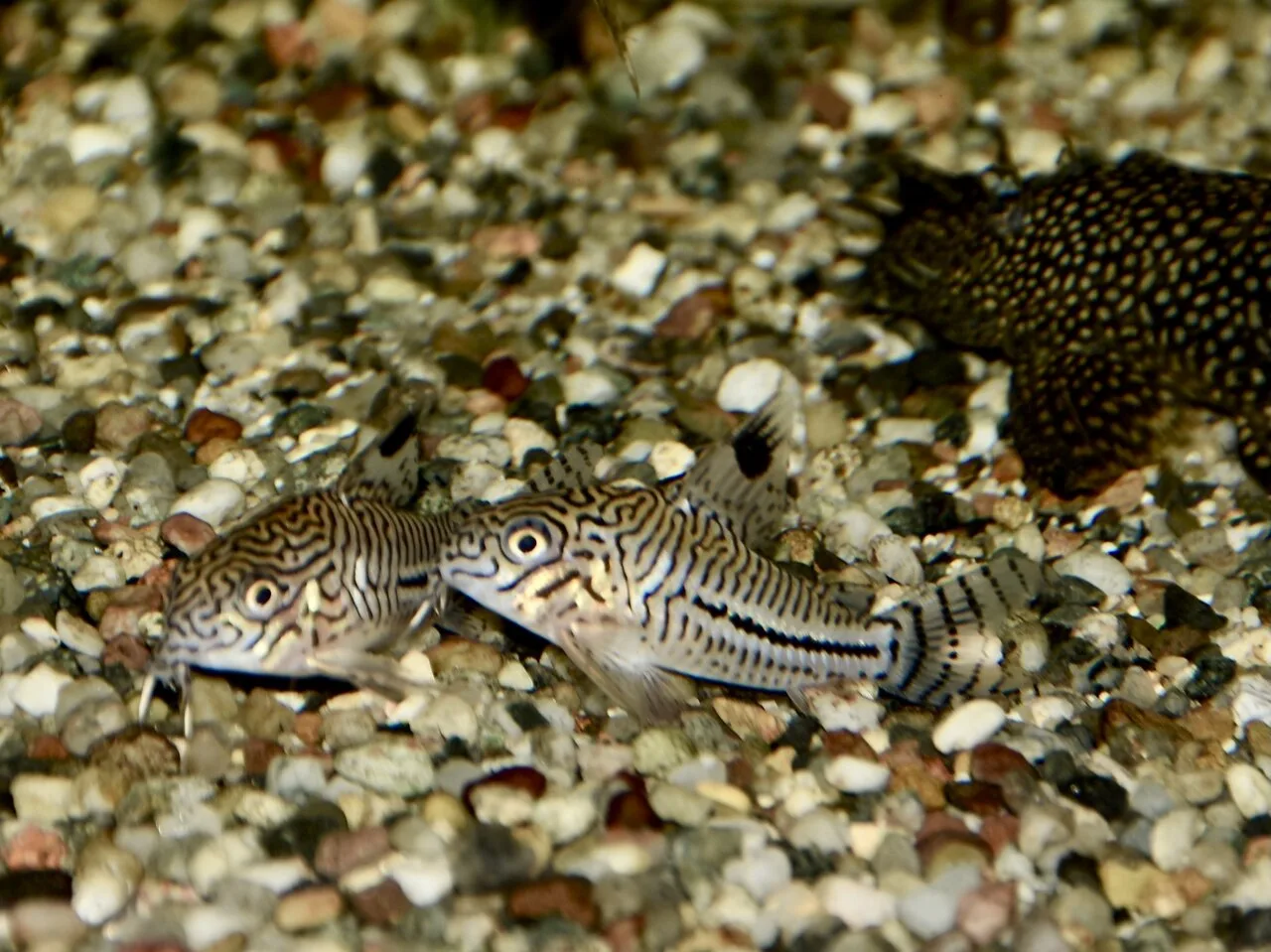
A freshwater cory from the upper Guaporé. The accepted name is Hoplisoma sterbai (Knaack, 1962), and Corydoras sterbai is the synonym. Orange-fin cory and yellow-fin cory are trade names.
- Temperature
- 24 – 28 °C
- pH
- 6 – 7.5 pH
- General hardness
- 2 – 15 °dH
- Maximum size
- 7 cm
- Minimum group size
- 5
- Minimum tank size
- 80 L
3 min read · 464 words
Fresh water
No reviewed photograph has been published for this species.
Quick facts
Place in the aquarium
Highlighted are the water layer and the spots where the species usually stays in the tank.
- Near the bottom Mostly stays just above the bottom. Food has to reach the substrate.
- Substrate Sifts through the substrate or burrows into it. Fine, rounded sand without sharp edges suits it.
Shrimp in the tank
Shrimplets at risk
- Not shrimp safe
- Dwarf shrimp at risk
- Shrimplets at risk
- Shrimp safe
- Adult dwarf shrimp
- Safe
- Shrimplets
- Get eaten
- Safe from shrimp size
- about 1 cm
Sterba's corydoras is harmless to adult dwarf shrimp. It grows to about 8 cm, has a small, underslung mouth and picks food remains, detritus, tablets and mosquito larvae from the bottom. Shrimp from about 1 cm are safe. Juvenile shrimp sitting in its way while it sifts are occasionally eaten, however.
Corydoras and shrimp share the bottom well when there are areas to retreat to. Moss cushions, roots and dense plants away from the sand let enough young grow up.
Home & range
Hatched countries are where the species occurs. It lives in particular waters there, not across the whole country. The points name known waters for orientation, not collection sites.
- Country of origin
- Water for orientation
Native
Overview
Family Callichthyidae. The species is named for Günther Sterba. The body is relatively deep. Head and back are light to dark brown with yellowish spots, the sides are brown and yellowish striped, and the belly is white to pink. The first pectoral ray is yellow to orange. Brochis haraldschultzi is separated by the head pattern: pale spots on a dark ground, not dark spots on a pale ground. Length figures range from about 5.1 to 8 cm. The fin formula is dorsal 1/8, anal 1/7, pectoral 1/10, ventral 1/6. IUCN listed the species as Least Concern in 2023.
Origin & habitat
This describes the origin, not how to furnish the aquarium.
The species lives in the upper Rio Guaporé, in the region between Bolivia and Brazil. Both describe fresh water. Wild fish are said to prefer soft, acidic water, and captive-bred fish a wider range. No hardness or pH number is taken from that description.
Care
At least five fish. Fine sand or gravel without sharp edges, so the barbels are not injured. Shade from large leaves, wood, or caves. Peaceful, but not with aggressive bottom fish when the floor is crowded. Similar-sized tetras and dwarf cichlids are suitable companions. The species does not tolerate high nitrate. When stressed or packed too tightly it can release a skin toxin, so it is not shipped with other fish.
Warmer than most corys
Sterba’s cory reaches about 6 to 7 cm and wears a spotted pattern on an often orange ground. 24 to 28 °C, pH 6 to 7.5, fine sand, a group from six, tanks from about 80 litres. It tolerates and wants warmer water than the panda cory. A permanent stay below 22 °C is the wrong keeping.
The barbels have to stay long and even. Worn barbels are a gravel problem or a bacterial one, not a normal look of the species.
Diet
Not an algae eater. It takes leftover food and detritus from the bottom. Flake only after it has sunk, plus sinking pellets or wafers. Bloodworm, daphnia, and other mosquito larvae, live or frozen, about once a week because of the protein. If midwater fish eat the food first, put it under wood or in a cave.
Frozen food and tablets on the bottom, rather in the evening. The fish do not feed from the surface. A portion the tetras take in the first minute does not reach them.
Behavior
A shoaling fish on and just above the bottom. Calmer in a group. No territory of its own toward other peaceful species.
Reproduction
During the spawning period one or two strongly adhesive eggs under large leaves every five to seven days, about 30 eggs per female in that period, hatching after about four days. For breeding, about two males per female, water changes and a temperature drop are recommended. The fry are described as sensitive. A breeding tank of 18 × 12 × 12 inches is the rearing tank, not the measure for the display tank.
More species in this group

Similar water needs
Species with a similar temperature, a similar pH and a comparable adult size. Whether their behaviour fits as well is what the compatibility check is for.




