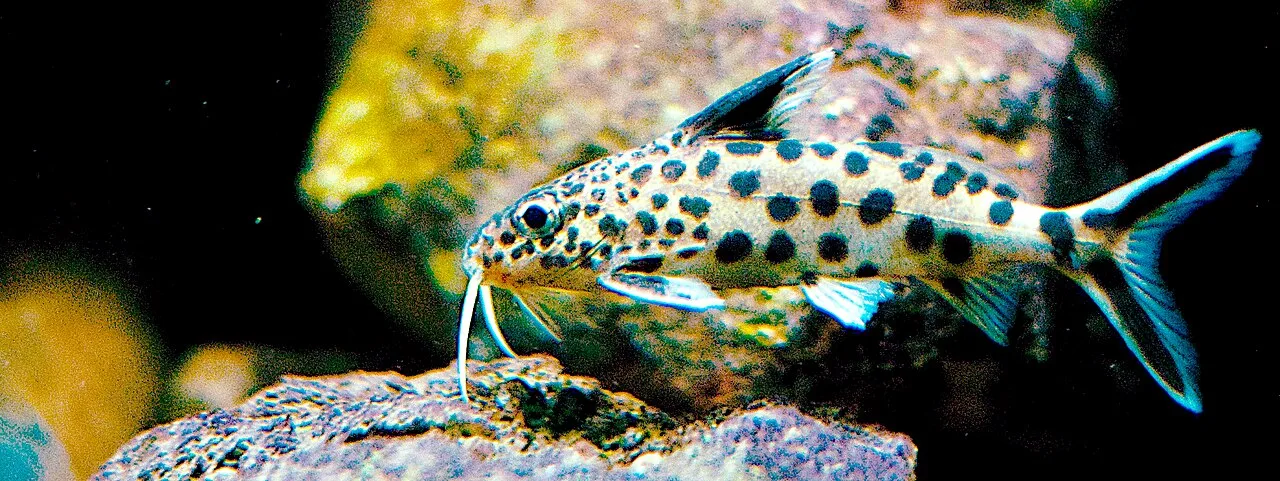
Red racer nerite
Vittina waigiensis
2 views
A nerite from the Philippines and Indonesia with a very variable red and yellow pattern. It eats algae and can live four years.
- Temperature
- 22 – 28 °C
- pH
- 7 – 8.5 pH
- General hardness
- 8 – 18 °dH
- Maximum size
- 3 cm
- Social behavior
- Peaceful
- Diet
- Herbivore
1 min read · 164 words
Fresh water, larvae in salt or brackish water
Quick facts
Further published values
- Lifespan
- 4 a
- Minimum tank size
- 30 L
Place in the aquarium
Highlighted are the water layer and the spots where the species usually stays in the tank.
- Near the bottom Mostly stays just above the bottom. Food has to reach the substrate.
- Wood and roots Uses roots as shelter or grazes biofilm from them.
- Rocks and caves Needs caves, crevices or rockwork as hiding place, territory or spawning site.
Home & range
Hatched countries are where the species occurs. It lives in particular waters there, not across the whole country. The points name known waters for orientation, not collection sites.
- Country of origin
- Water for orientation
Native
Overview
The shell reaches at most 3 cm in diameter. The pattern varies strongly in red, orange, yellow, black and white and often forms rows of arrows that resemble racing stripes. Together with other patterned nerites it is also sold as a zebra nerite, but it is not Neritina natalensis.
Range and habitat
This describes the origin, not how to furnish the aquarium.
The Philippines and Indonesia, there Sulawesi and the Moluccas. It lives in coastal waters with dense vegetation, in mangroves and river deltas, and tolerates fresh, brackish and salt water. It sometimes leaves the water.
Keeping
Tank
From about 30 litres with stones and wood. The cover must be tight.
Water
22 to 28 °C, pH 7 to 8.5, GH from about 8 °dH.
Companions
With shrimp and peaceful fish.
Diet
Algae and biofilm. With few algae, algae tablets and vegetables.
Behaviour and moulting
Peaceful, constantly grazing. It likes to crawl above the waterline.
Reproduction and larvae
Separate sexes. Clutches of 50 to 100 eggs. The larvae live in open water and survive only in brackish water. In fresh water the white egg capsules come to nothing. The animals usually live four years.
Gallery
More species in this group
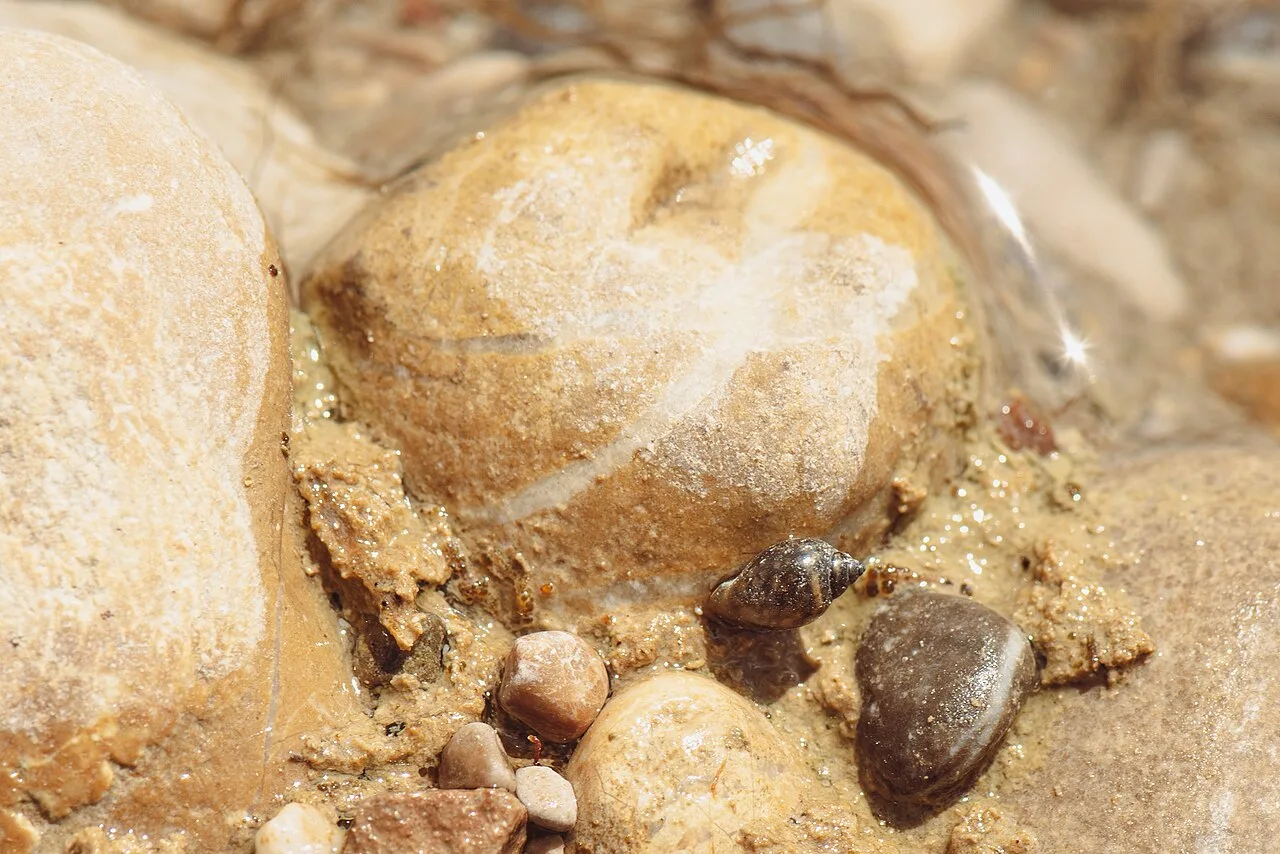
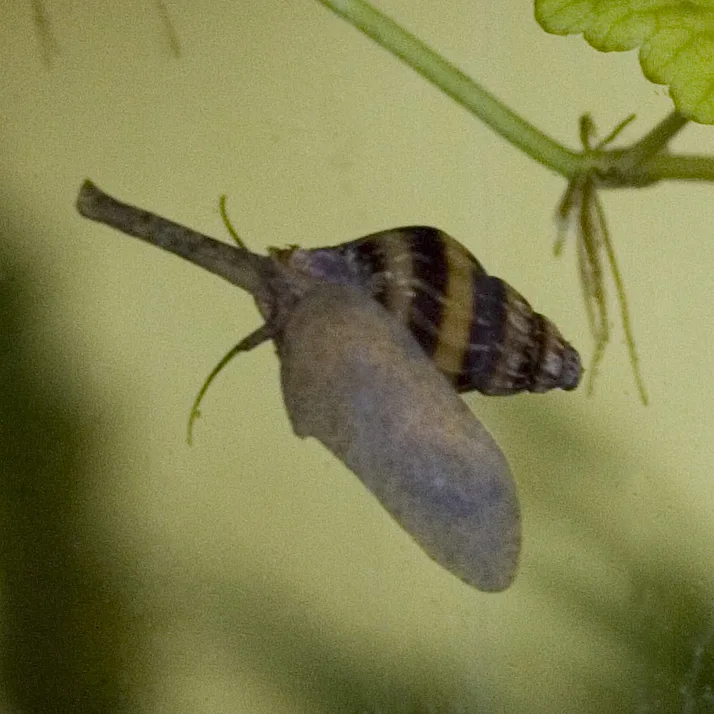
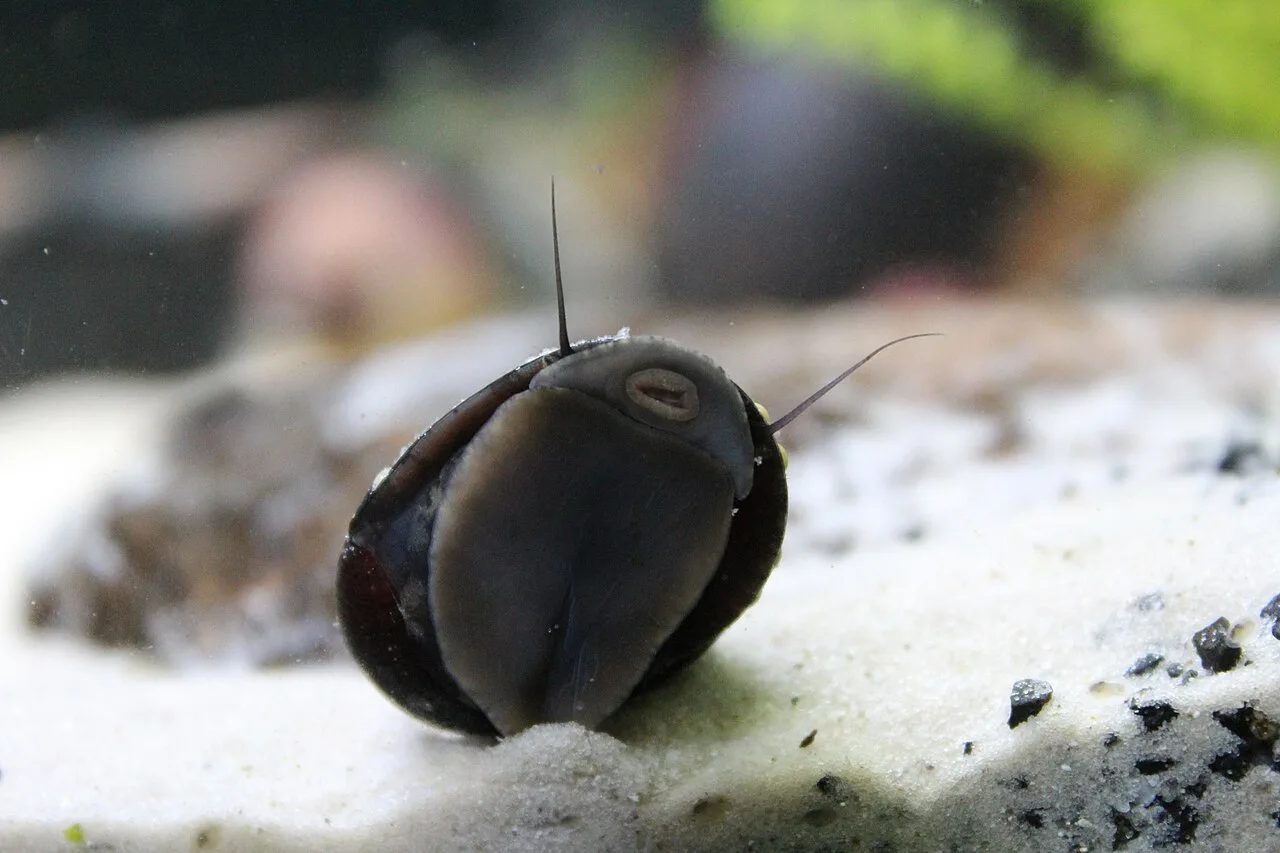
Similar water needs
Species with a similar temperature, a similar pH and a comparable adult size. Whether their behaviour fits as well is what the compatibility check is for.