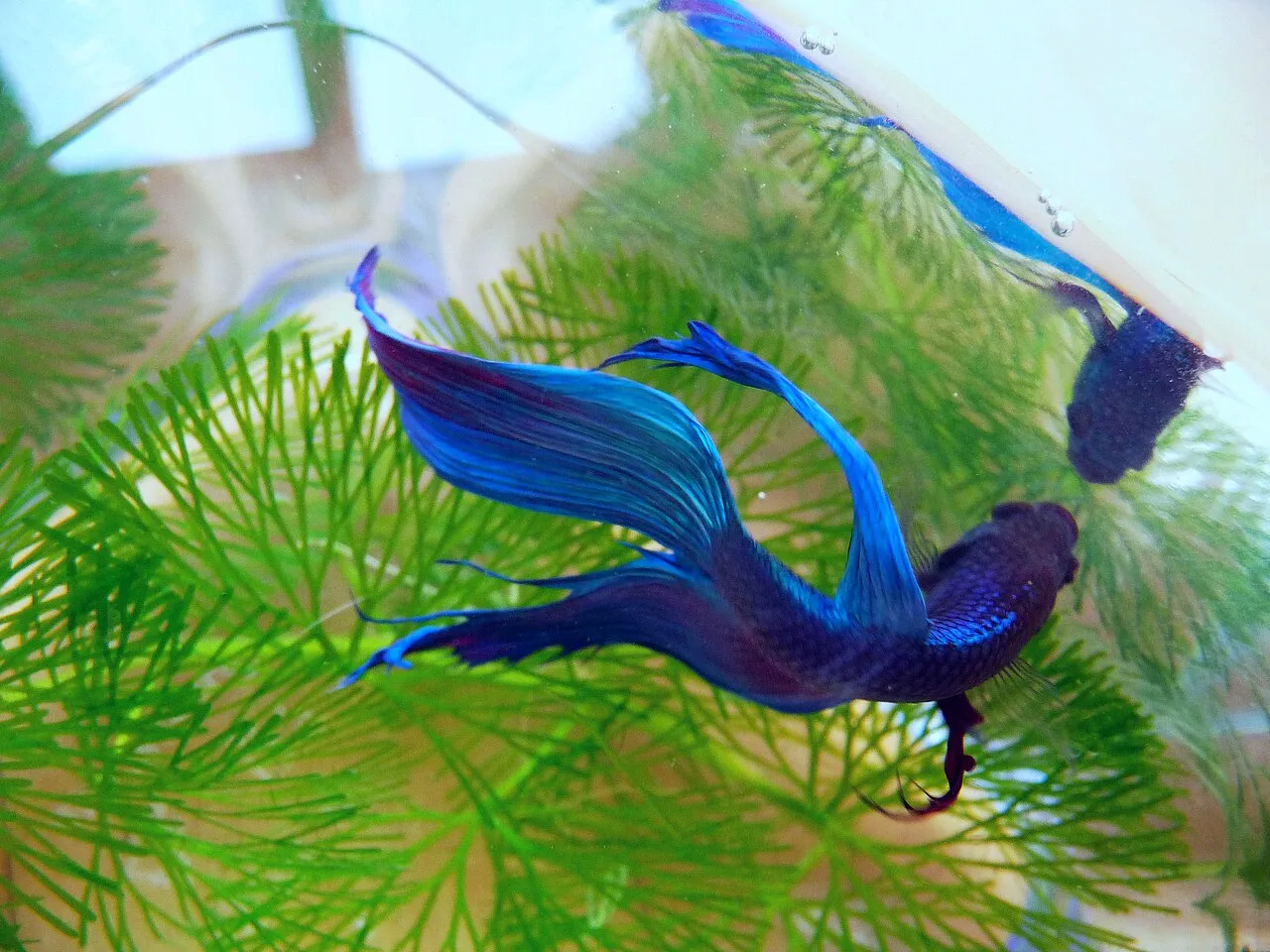
Kribensis
Pelvicachromis pulcher
19 views
A West African dwarf cichlid. It is relatively undemanding in the aquarium and easy to breed.
- Temperature
- 25 – 26 °C
- pH
- 6.5 – 7.5 pH
- General hardness
- 4 – 15 °dH
- Maximum size
- 10
- Minimum tank size
- 80 L
3 min read · 474 words
Fresh water
Quick facts
Place in the aquarium
Highlighted are the water layer and the spots where the species usually stays in the tank.
- Near the bottom Mostly stays just above the bottom. Food has to reach the substrate.
- Rocks and caves Needs caves, crevices or rockwork as hiding place, territory or spawning site.
Shrimp in the tank
Dwarf shrimp at risk
- Not shrimp safe
- Dwarf shrimp at risk
- Shrimplets at risk
- Shrimp safe
- Adult dwarf shrimp
- At risk
- Shrimplets
- Get eaten
- Safe from shrimp size
- about 4 cm
The kribensis is not safe for dwarf shrimp. Males grow to about 10 cm, and the pair digs caves and defends a territory on the bottom, especially during brood care. Besides algae and plant matter it also takes invertebrates.
Adult Neocaridina and Caridina are hunted in the territory, and baby shrimp are eaten. Larger shrimp such as Amano shrimp from about 4 cm are usually safe but get chased away. Anyone who wants to breed dwarf shrimp keeps them separately. Anyone who wants to add shrimp should choose robust, larger species and introduce them only once the tank is well run in and densely planted.
Home & range
Hatched countries are where the species occurs. It lives in particular waters there, not across the whole country. The points name known waters for orientation, not collection sites.
- Country of origin
- Water for orientation
Native
Overview
Several pairs can be kept together only in very large tanks, because of aggression within the species. Hiding places matter. Old aquarium strains tolerate water that differs from the original habitat.
Colour and sexes
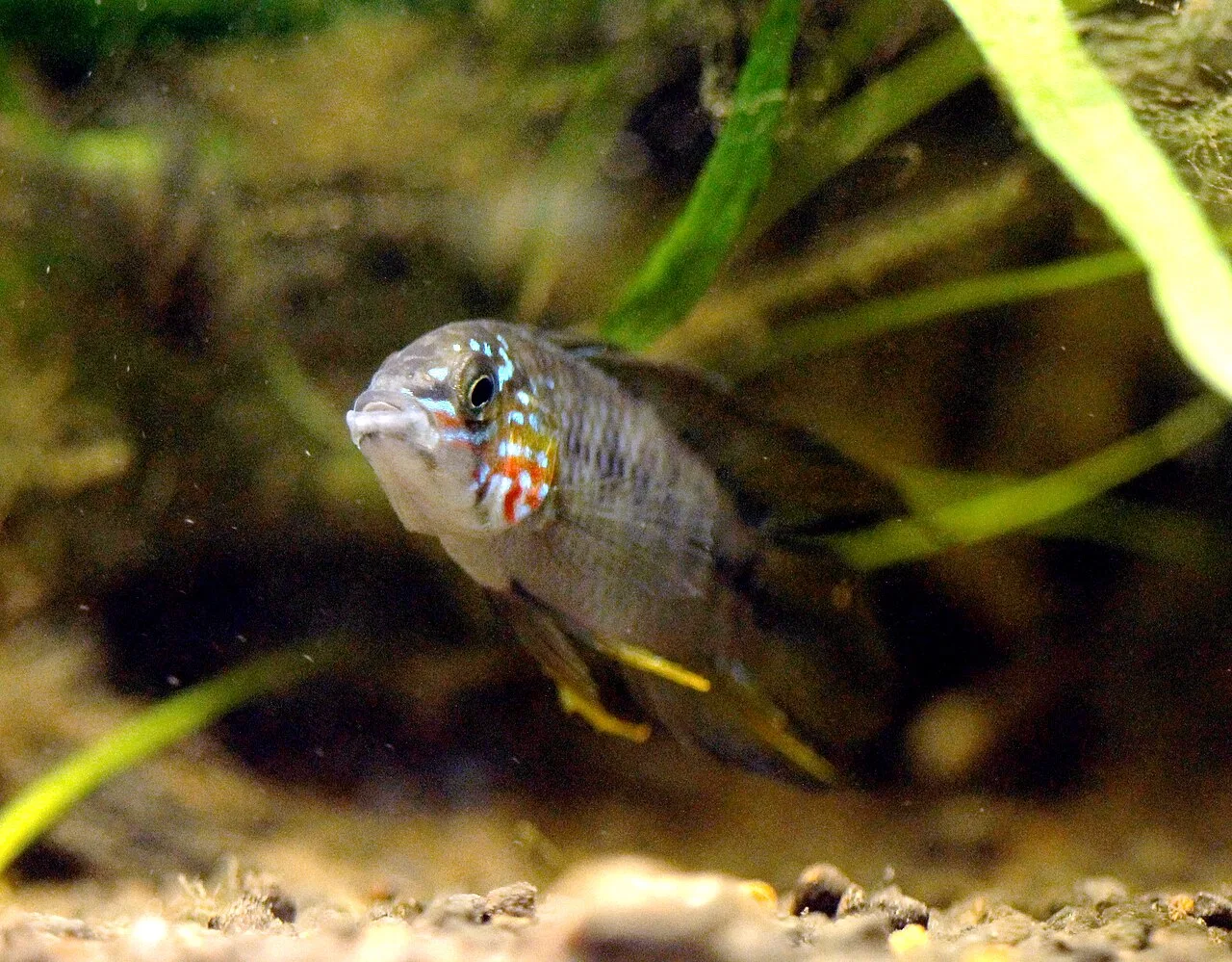
Males grow to about 10 cm and females to about 7.5 cm, wild fish somewhat larger. The colour is very variable, and at some sites there are several colour morphs of males. A dark stripe runs from the mouth to the tail, and there is almost always a blurred pale pink to blood-red belly patch. The dorsal and caudal fins may carry gold-ringed eyespots. Males have pointed dorsal and anal fins and long pelvic fins, females a yellow band in the dorsal fin, rounded fins and a rounder belly. Juveniles look alike until about six months.
Boulenger described the species in 1901 as Pelmatochromis pulcher. It is the type species of the genus Pelvicachromis, and pulcher means pretty. The trade name kribensis comes from the erroneous name Pelmatochromis kribensis. The IUCN lists it as least concern.
Origin & habitat
This describes the origin, not how to furnish the aquarium.
Southern Nigeria, eastern Benin and western Cameroon, in still and flowing water that is soft and sometimes strongly acidic, with pH below 5. That describes the home waters. Old aquarium strains are more tolerant.
The species comes from southern Nigeria, eastern Benin and western Cameroon. It lives in still and flowing, soft, weakly to strongly acidic water, with 24 to 26 °C and pH 5.6 to 6.2 measured, locally below 5, but only where vegetation is dense. There the fish dig caves under plants. Non-breeding fish often live in large aggregations.
Care
Hiding places are required. The species is relatively undemanding.
Pair and cave
The kribensis reaches about 8 to 10 cm, the males with a more pointed dorsal and, when courting, a red belly. 24 to 28 °C, pH 6 to 7.5, tanks from about 100 litres. A pair, a cave or an upturned pot, plants and an open zone above. Two males on one cave do not work.
While breeding the parents become decided and drive other fish out of a radius. Calm tetras in the upper water fit outside the breeding period. Shrimp rarely survive once young are present.
Diet
Worms, crustaceans and insects were long thought to be the main food. The stomachs of 161 wild fish, however, held mainly diatoms, green algae, plant pieces and blue-green algae, and invertebrates were fairly rare.
Behavior
Pairs are aggressive toward other pairs. Several pairs need very large tanks.
Reproduction
Breeding is easy.
In courtship the female is more active, dancing in front of the male bent into an S shape and intensely red-violet. Spawning takes place hidden in caves, the eggs stick in rows to the ceiling, and clutch sizes from 40 to 300 are given. The female tends the clutch, the male defends the territory, and then both parents lead the young for three to four weeks. In the wild harems are not rare. Higher pH gives more females.
Gallery
More species in this group

Similar water needs
Species with a similar temperature, a similar pH and a comparable adult size. Whether their behaviour fits as well is what the compatibility check is for.